Decibels Explained: How Loud Is 150 dB Really?
Decibels explained for train horns — what 150 dB actually sounds like, how SPL drops with distance, OSHA exposure limits, FRA spec at 100 ft, perception thresholds.
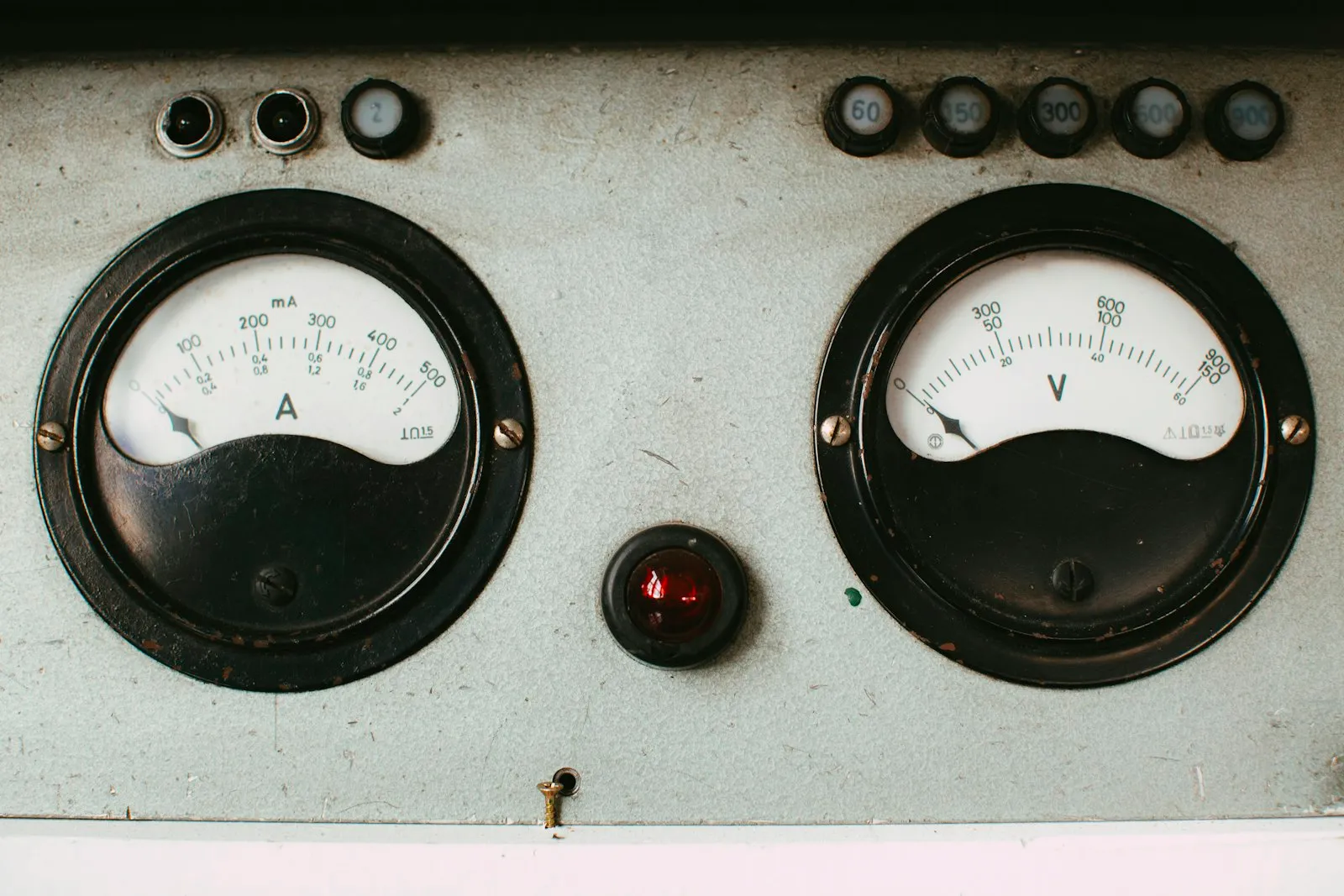
The decibel (dB) is a logarithmic unit, which is why “150 dB” doesn’t mean what most train horn buyers think it means. A 6 dB increase is perceptually about twice as loud; a 10 dB increase is physically ten times the sound power; a 20 dB increase is a hundred times the sound power. So a 150 dB train horn at the source is not “1.5× louder than a 100 dB horn” — it’s a hundred thousand times more powerful. Understanding the dB scale is the difference between buying a horn that solves your problem and one that destroys your hearing.
- dB scale
- Logarithmic
- +10 dB = 10× power
- Perceived 2×
- +6 dB
- Roughly twice as loud
- Distance rule
- −6 dB / 2× distance
- Inverse-square law
- OSHA 8-hr limit
- 90 dBA
- Permissible exposure
- Pain threshold
- 120 dB
- Damage in seconds
- Train horn ceiling
- 149.4 dB
- Nathan K5 at 3 ft
What a decibel actually measures
The decibel is a ratio, not an absolute quantity. When you read “150 dB” on a train horn spec sheet, it means the horn’s sound pressure level (SPL) is 150 dB above the reference level of 0 dB — which is the threshold of human hearing (20 micropascals). The math:
SPL (dB) = 20 × log₁₀(P / P₀)
where P is measured pressure and P₀ is the reference (20 μPa). Because of the log₁₀, every 10 dB jump means a 10× increase in sound power, not a 10% increase. Two horns at 150 dB each, played simultaneously, produce only 153 dB combined — adding 3 dB roughly doubles power, but you needed two full horns to do it.
| dB | Power vs reference | Common example |
|---|---|---|
| 0 dB | 1× | Threshold of hearing |
| 30 dB | 1,000× | Quiet bedroom at night |
| 60 dB | 1,000,000× | Conversational speech at 1 m |
| 90 dB | 10⁹× | OSHA 8-hour permissible limit |
| 110 dB | 10¹¹× | State-cap-typical horn ceiling |
| 120 dB | 10¹²× | Pain threshold; rock concert front row |
| 130 dB | 10¹³× | Jackhammer at close range; jet at 100 ft |
| 140 dB | 10¹⁴× | Loud train horn at 10 ft |
| 149.4 dB | 3×10¹⁴× | Nathan K5 at 3 ft (verified ceiling) |
A 150 dB horn isn’t 50% louder than a 100 dB conversation — it’s 100,000× more sound power. That’s the whole point of train horns: they cut through ambient noise specifically because they’re orders of magnitude above conversational SPL.
How perceived loudness scales
Sound power (the physical quantity dB measures) scales differently from perceived loudness (what your ear experiences). The standard rules:
- +3 dB = roughly 2× the sound power, but only slightly louder to most listeners.
- +6 dB = 4× the sound power, perceived as about twice as loud.
- +10 dB = 10× the sound power, perceived as roughly twice as loud by most listeners (psychoacoustic standard).
- +20 dB = 100× the sound power, perceived as about four times as loud.
This is why a 130 dB Quad horn and a 140 dB Quintuple sound very different (10 dB ≈ 2× perceived), but a 144 dB and 147 dB horn sound nearly identical (3 dB is barely audible to most listeners). Marketing departments exploit this by inflating dB numbers — small jumps look big on paper but don’t change how the horn actually sounds.
How SPL drops with distance
A train horn’s published dB rating is at a specific distance from the source — usually 3 ft (HornBlasters’ standard) or 10 ft (some older spec sheets). The SPL drops with distance under the inverse-square law:
SPL₂ = SPL₁ − 20 × log₁₀(r₂ / r₁)
In practice, that simplifies to −6 dB per doubling of distance for a free-field source. Here’s what that means for the verified-ceiling Nathan K5 at 149.4 dB at 3 ft:
| Distance | SPL | What it sounds like |
|---|---|---|
| 3 ft | 149.4 dB | Verified peak |
| 10 ft | ≈ 139 dB | Painfully loud — instant damage |
| 25 ft | ≈ 131 dB | Jackhammer-loud |
| 100 ft | ≈ 119 dB | FRA spec range (96–110 dB at 100 ft for compliant locomotive horns) |
| 500 ft | ≈ 105 dB | Loud lawnmower |
| 1,000 ft | ≈ 99 dB | Below OSHA 90 dBA limit |
| 1 mile (~5,280 ft) | ≈ 84 dB | Background traffic noise |
| 3.5 miles | ≈ 73 dB | Conversational speech |
For a calculation at any specific distance, use the decibel-distance calculator.
OSHA hearing-damage thresholds
The U.S. Occupational Safety and Health Administration publishes permissible exposure limits (PELs) for noise. Cross-referenced with where a 149.4 dB-source train horn falls:
| Threshold | dB | Where the K5 lands |
|---|---|---|
| OSHA 8-hour PEL | 90 dBA | Past about 1 mile from the K5 |
| OSHA 1-hour PEL | 100 dBA | Around 1,000 ft from the K5 |
| 15-min PEL | 115 dBA | About 200 ft from the K5 |
| Pain threshold | 120 dB | About 60 ft from the K5 |
| Instant damage | 140 dB | About 12 ft from the K5 |
Anyone within ~60 ft of an unmuffled K5 blast is being exposed to permanently-damaging SPL. Train horns are useful safety devices precisely because they project to a mile or more — but the cost is hearing-protection responsibility for anyone at the install or near it during use. See Can a Train Horn Damage Your Hearing?.
What “150 dB at the source” really means in marketing
When a portable battery horn or aftermarket truck horn advertises “150 dB,” the rating is almost always:
- Measured at the bell throat or trumpet outlet, not at 3 ft. Close-throat measurements can read 5–10 dB higher than at 3 ft.
- Peak transient, not sustained. The pressure-wave attack peak is briefly higher than the steady-state level.
- At-source / no methodology disclosed, with no test distance specified.
The published ceiling for any train horn is the Nathan K5 at 149.4 dB at 3 ft. Anything claiming higher is exaggerating the same way “0 to 60 in 4 seconds” claims for some cars are measured under conditions that don’t match the buyer’s experience.
For a full debunking and ranked list of authentic measurements, see The Loudest Train Horns in the World. For state-by-state legal caps that effectively prohibit road use of horns above 110 dB, see the legal hub.
A-weighted vs flat dB
You’ll see two notations on horn measurements: dB (unweighted) and dBA (A-weighted). They aren’t the same:
- dB (flat / unweighted): raw sound pressure across all frequencies.
- dBA (A-weighted): SPL filtered to match the human ear’s frequency response. Lower-frequency sounds get reduced in the A-weighting because the ear is less sensitive to bass at the same SPL.
For train horns, which sit in the 300–700 Hz fundamental range plus harmonics extending past 5 kHz, dB and dBA readings are nearly identical because most of the sound energy is in the human ear’s most-sensitive band. OSHA exposure limits use dBA because they’re tuned to hearing-damage risk; manufacturer dB ratings are usually unweighted.
Frequently asked questions
How loud is 150 dB compared to 130 dB?
150 dB has 100× more sound power than 130 dB. Perceptually, 150 dB is “about 4× as loud” using the psychoacoustic +10 dB ≈ 2× rule.
How loud is 150 dB compared to a jet engine?
A jet engine at takeoff produces about 140 dB at 100 ft from the airplane. A 150 dB-source train horn at 3 ft is 10 dB above that, but drops to about 119 dB at 100 ft — quieter than a jet at the same distance.
Does the inverse-square law really give exactly 6 dB per doubling?
In a perfect free-field environment (no reflective surfaces, no atmospheric absorption), yes. In real-world conditions — pavement, walls, atmospheric humidity — the actual drop is usually 4–7 dB per doubling. The 6 dB rule is the standard approximation and is accurate enough for practical horn-distance calculations.
Why doesn’t a 158 dB Vevor horn beat the Nathan K5?
It doesn’t measure 158 dB at 3 ft. The 158 dB number is either at the bell throat (where any horn measures higher) or simply made up for marketing. The published ceiling for measured train horn SPL is 149.4 dB at 3 ft (Nathan K5) — see Why Fake Decibel Ratings Mislead Buyers (HornBlasters).
Will a 130 dB horn be loud enough for tailgating?
Yes — 130 dB at 3 ft puts you well above conversational speech (60 dB) at any reasonable distance. At 50 ft you’re still around 105 dB, well above all ambient stadium noise. Going louder buys diminishing returns.
What’s the difference between sound power and SPL?
Sound power (watts) is what the source emits. SPL (dB) is what a listener at a specific distance experiences. The same horn produces different SPL at different distances even though its sound power is constant. dB always needs a reference distance to be meaningful.
Sources
- HornBlasters — Why Fake Decibel Ratings Mislead Buyers (3-ft test methodology, 149.4 dB ceiling, debunking of 150+ dB claims)
- HornBlasters — Train Horn Decibel Guide (Shocker XL 147.7 dB, K5 149.4 dB)
- Wikipedia — Decibel (logarithmic-scale math, A-weighting definition)
- Wikipedia — Sound pressure (inverse-square law, distance-attenuation formula)
- Wikipedia — Train horn (300–700 Hz fundamental range)
- Federal Railroad Administration — Train Horn Rule (96–110 dB at 100 ft locomotive spec)
- OSHA — Occupational Noise Exposure (29 CFR 1910.95) (PELs and exposure limits)
We do not perform hands-on dB testing — see our methodology for how we evaluate decibel claims.