DIY Drill-Powered Train Horn Build
Modify a battery drill to drive a small air compressor that fires a portable horn. Cool project, but pre-built portable horn kits exist at similar prices with much better output.
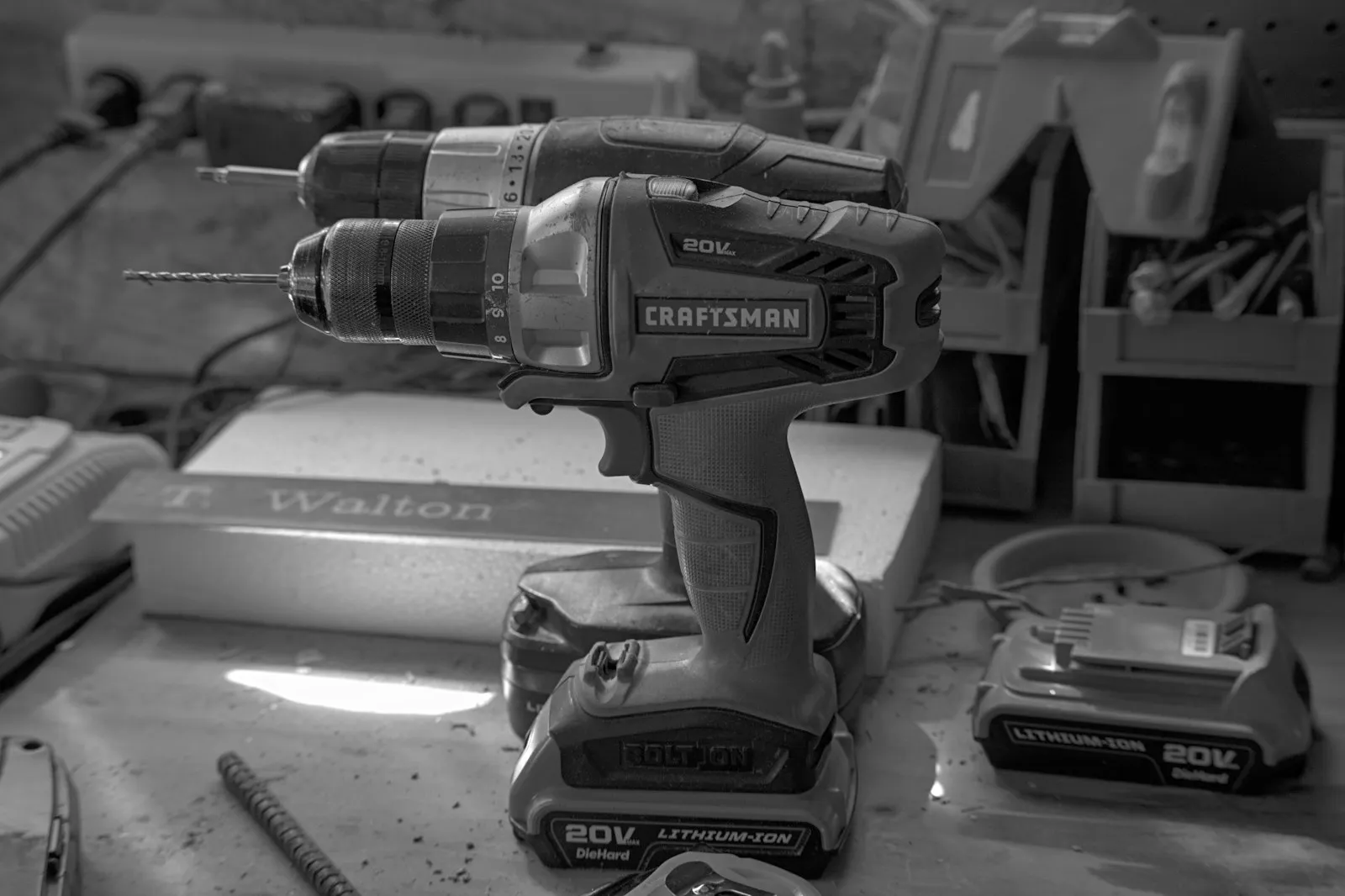
The honest take first
A "DIY drill-powered train horn" is the kind of project that sounds clever — repurpose your existing battery drill to drive a small compressor and a horn manifold. Pre-built portable horn kits already do this, just better. The BossHorn Boss Series for Milwaukee M18, DeWalt 20V, Ryobi ONE+, and Makita LXT are commercial implementations of exactly this concept — purpose-built compressor, manifold, and trumpets in a single unit that accepts your existing cordless tool battery.
For most builders, the pre-built kit at $180–$415 is faster, louder, and more reliable than DIY. We document the DIY approach for completeness, but recommend the pre-built path.
What the DIY drill horn actually does
The concept: a cordless drill's motor and gearbox produces enough torque to drive a small piston-style air compressor at modest RPM. Couple the drill output shaft to a compressor, plumb the compressor output to a small reservoir or directly to a trumpet manifold, and you have a portable horn powered by your existing tool battery.
Output is roughly 120–135 dB at the source depending on:
- Drill battery voltage (12V vs 18V vs 20V)
- Compressor displacement (typical small piston compressor: 5–15 mL per stroke)
- Trumpet count and size
- Chamber / reservoir size between compressor and horn
Materials
- 1× cordless drill (any brand, 12V or higher)
- 1× small 12V piston air compressor (cheap Amazon "tire inflator" style works)
- 1× compact air horn manifold (1–4 trumpets)
- Solenoid valve or trigger button
- Voltage step-down (if drill voltage exceeds compressor rating)
- Custom shaft coupling between drill chuck and compressor input
- Small 0.5–1 gallon reservoir tank (optional)
- Air lines, fittings, mounting bracket
Why pre-built portable kits are better
- Purpose-built compressor matched to the battery voltage exactly. No step-down converter losses.
- Engineered manifold tuned for the specific compressor output.
- Wireless remote standard at the price point — DIY would require additional radio module.
- Battery protection circuit (15% low-voltage cutoff) standard on the BossHorn 2026 Boss Series.
- Overheat protection (185°F auto-cutoff) standard.
- Warranty — pre-built kits come with 1-year manufacturer warranty.
For full pre-built kit specs see our Milwaukee M18 platform hub as a representative example.
When DIY makes sense
- You already have an unused old drill and don't want to buy a horn kit
- You want to learn how the platform works
- You need a custom form factor that pre-built kits don't offer
- You're not concerned with warranty / safety circuits