Train Horn FAQ — All Questions Answered
Common questions about train horns, organized by topic. Every answer cites a source — see the linked pages for full detail.
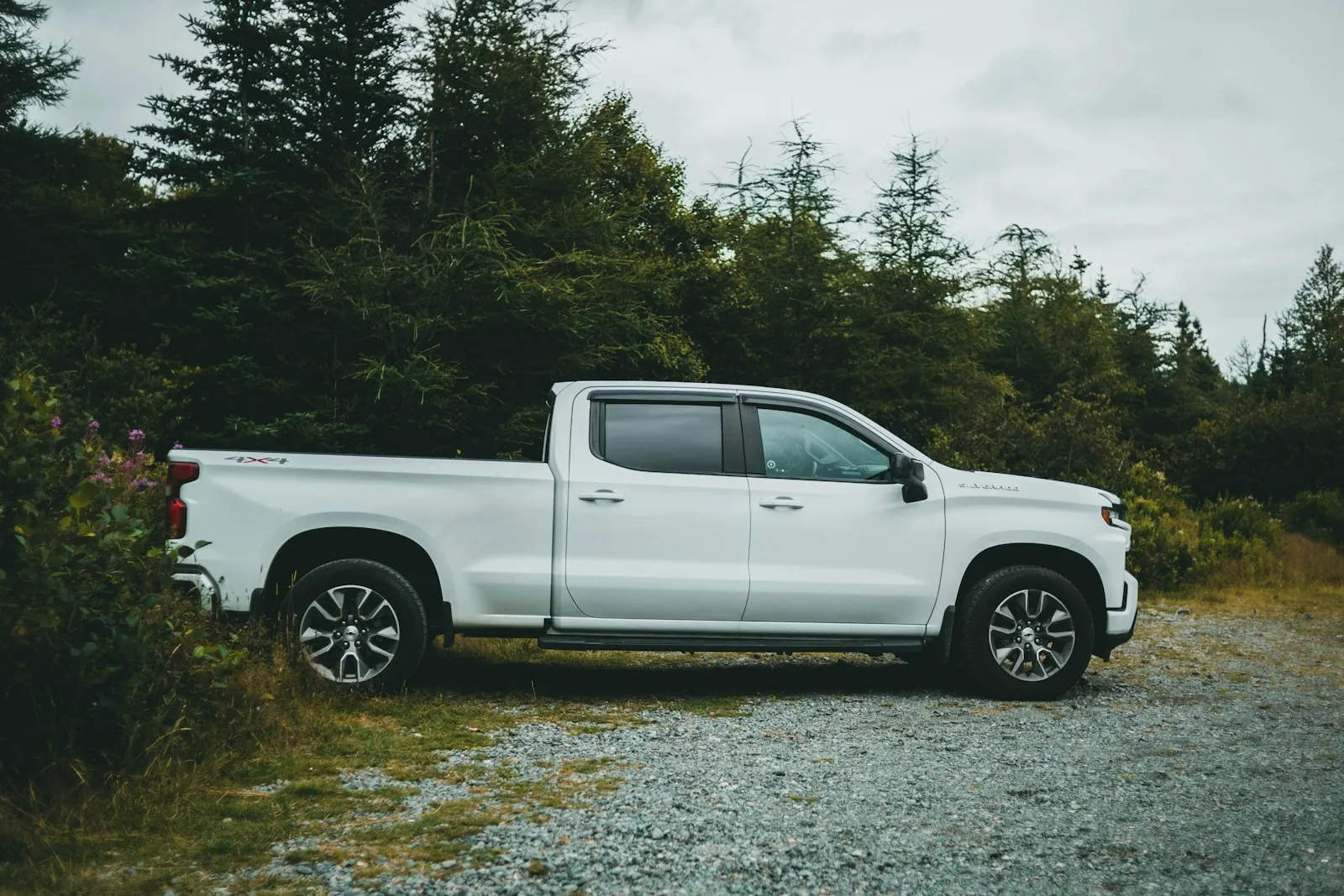
How loud are train horns?
How loud is a train horn?
Real locomotive train horns produce 96–110 dB measured 100 feet forward of the locomotive, per the FRA Train Horn Rule. The Nathan AirChime K5 has been independently measured at 149.4 dB at the source — the published ceiling for any train horn. Full answer →
What is the loudest train horn in the world?
The Nathan AirChime K5 / K5LA, at 149.4 dB at 3 feet, is the loudest train horn ever independently measured. Aftermarket truck kits like the HornBlasters Shocker XL come close at 147.7 dB. Anything advertised above 150 dB at 3 ft is marketing, not measurement. Full answer →
Is 150 dB really 1.5× louder than 100 dB?
No. The decibel scale is logarithmic. 150 dB has 100,000× more sound power than 100 dB. Perceptually, a +10 dB increase is roughly 'twice as loud,' so 150 dB is about 32× louder-perceived than 100 dB. Full answer →
How loud is a train horn at 100 feet?
A 149.4 dB-at-3-ft Nathan K5 drops to about 119 dB at 100 ft due to inverse-square attenuation. The FRA spec range of 96–110 dB at 100 ft is what locomotive horns are designed and tuned to produce. Full answer →
How does the FRA train horn rule work?
What is the FRA train horn pattern?
Long-long-short-long (— — • —), sounded 15–20 seconds before every public highway-rail grade crossing. Required by 49 CFR Part 222 for every locomotive, day or night, at all U.S. public crossings. Full answer →
Why do trains blow their horns at night?
Federal law requires it — 49 CFR Part 222 has no time-of-day exception. The horn pattern is sounded at every public grade crossing 24/7. Quiet zones can suppress routine night sounding only after the local government installs supplementary safety measures. Full answer →
What is a quiet zone?
A community-established exception under 49 CFR Part 222 where routine train horn sounding is silenced at one or more public grade crossings. Requires four-quadrant gates, channelization, or other supplementary safety measures (cost: ~$300,000–$500,000 per crossing). Full answer →
What other train horn signals exist?
About 11 patterns are documented in GCOR/NORAC rule books — long-long-short-long for grade crossings; one short for braking while standing; three short for backing up; series of shorts for warning people on tracks; and several others. Full answer →
Are aftermarket train horns legal?
Are train horns legal in the U.S.?
Installation is legal in most U.S. states. **Routine use** at full output on public roads is typically not — most state vehicle codes cap horn output around 110 dB and federal FMVSS 141 caps replacement passenger-vehicle horns at 118 dB at 2 m forward. Aftermarket train horns at 144–149 dB exceed both. Full answer →
Where are train horns illegal?
No state outright bans installation, but many states classify use as 'unreasonably loud' under state vehicle code §27001-equivalent statutes. California and other dense urban states are most likely to enforce. Off-road, agricultural, marine, and stationary use is broadly unrestricted. Full answer →
What about commercial trucks and Class 8 tractors?
Class 8 trucks may have different (typically higher) FMVSS limits than passenger vehicles. FMCSA fleet operating rules also apply. Verify with your specific state and your fleet's compliance team. Full answer →
How do train horns work?
How does a train horn make sound?
Compressed air (90–150 PSI typical) flows through a metal bell with a tuned diaphragm. The diaphragm vibrates as air rushes past it; the bell amplifies and shapes the resulting pressure wave. Multiple bells of different lengths play different notes simultaneously to produce a chord. Full answer →
What is the difference between a train horn and a train whistle?
A whistle is a steam-powered device that uses a jet of steam through a slot to produce sound — used on steam locomotives 1830s–1950s. A horn is compressed-air powered with a diaphragm and bell — used on diesel and electric locomotives 1940s–today. Full answer →
What does the AirChime K-series mean?
Nathan AirChime K-series is the modern locomotive horn family with 'kettle-drum' double-diaphragm bell design. Models include K3LA (3-chime, common on Metra), K5LA (5-chime, B major 6th, the most common North American freight horn), and several variants (K5HL, K5LLA, K5H). Full answer →
What should I buy?
What is the best train horn?
Depends on use case. For maximum measured output: HornBlasters K5LA kit ($5,000+, 149.4 dB ceiling). For maximum dB-per-dollar: HornBlasters Shocker XL kit ($1,800+, 147.7 dB). For portable / no-install: BossHorn 2026 Boss Series at 130–150 dB on Milwaukee M18 / DeWalt 20V / Ryobi / Makita batteries. Full answer →
Should I buy an air-tank kit or a portable battery horn?
Air-tank wins on max dB and sustained blast capability (5–10 sec). Portable battery wins on convenience, multi-location use, and lower cost. Battery horns are NOT limited to 1–3 second blasts — they sound as long as the battery has charge. Full answer →
What does an aftermarket kit cost?
Portable battery horns: $160–$415 (horn alone). Compact air-tank kits (HornBlasters Conductor's Special 228H): ~$650. Mid-tier kits (Shocker XL): $1,800–$2,200. Locomotive-class (Nathan K5LA full kit): $4,999–$5,199. Full answer →
Hearing damage and safety
Can a train horn damage my hearing?
Yes — significantly. OSHA's instant-damage threshold is 140 dB. A 149 dB Nathan K5 at the source is above that; anyone within ~12 ft of the horn is at risk of permanent hearing loss from a single brief exposure. Use hearing protection if you'll be near a fired horn. Full answer →
How close is too close to a train horn?
OSHA pain threshold is 120 dB; instant damage starts at 140 dB. A 149 dB-at-3-ft horn drops to 120 dB at about 60 ft and 140 dB at about 12 ft. Practical safety: stay at least 200 ft away from a firing horn, and use hearing protection within 50 ft. Full answer →
Will the OEM horn damage my hearing?
OEM passenger vehicle horns are capped at 118 dB at 2 m forward (FMVSS 141). At normal driver-distance from the windshield, your in-cabin SPL is much lower — well below pain threshold. Outside the vehicle close to the horn, brief exposure isn't safe but isn't immediately damaging.
More resources
- The Loudest Train Horns in the World (2026 Ranking)
- Complete Train Horn Buyer's Guide 2026
- Decibels Explained: How Loud Is 150 dB Really?
- Train Horn Laws & Legality by State (50-State Guide)
- State Legality Lookup Tool
- Battery-Powered Train Horns by Platform (Milwaukee / DeWalt / Ryobi / Makita / etc.)
- Vehicle Install Guides
- Train Horn Glossary