Free PVC Train Horn Plans (Cut List + Diagrams)
Printable cut list, frequency chart for the K5LA-style B major 6th chord, fitting diagram, and BOM with Home Depot SKUs. ~$60 total. Pair with our PVC build guide.

What this page is
These are the dimensional plans for the multi-chime PVC train horn described in our PVC train horn build guide. The build guide explains the physics and assembly steps; this page is the reference cut sheet you print and take to the workshop.
Target output: ~120 dB at 3 ft. Target chord: Nathan K5LA-style B major 6th (5 bells: D♯, F♯, G♯, B, D♯ octave). Total build cost: ~$60 in PVC + fittings + foam diaphragm + air source.
Cut list — 5-bell K5LA chord
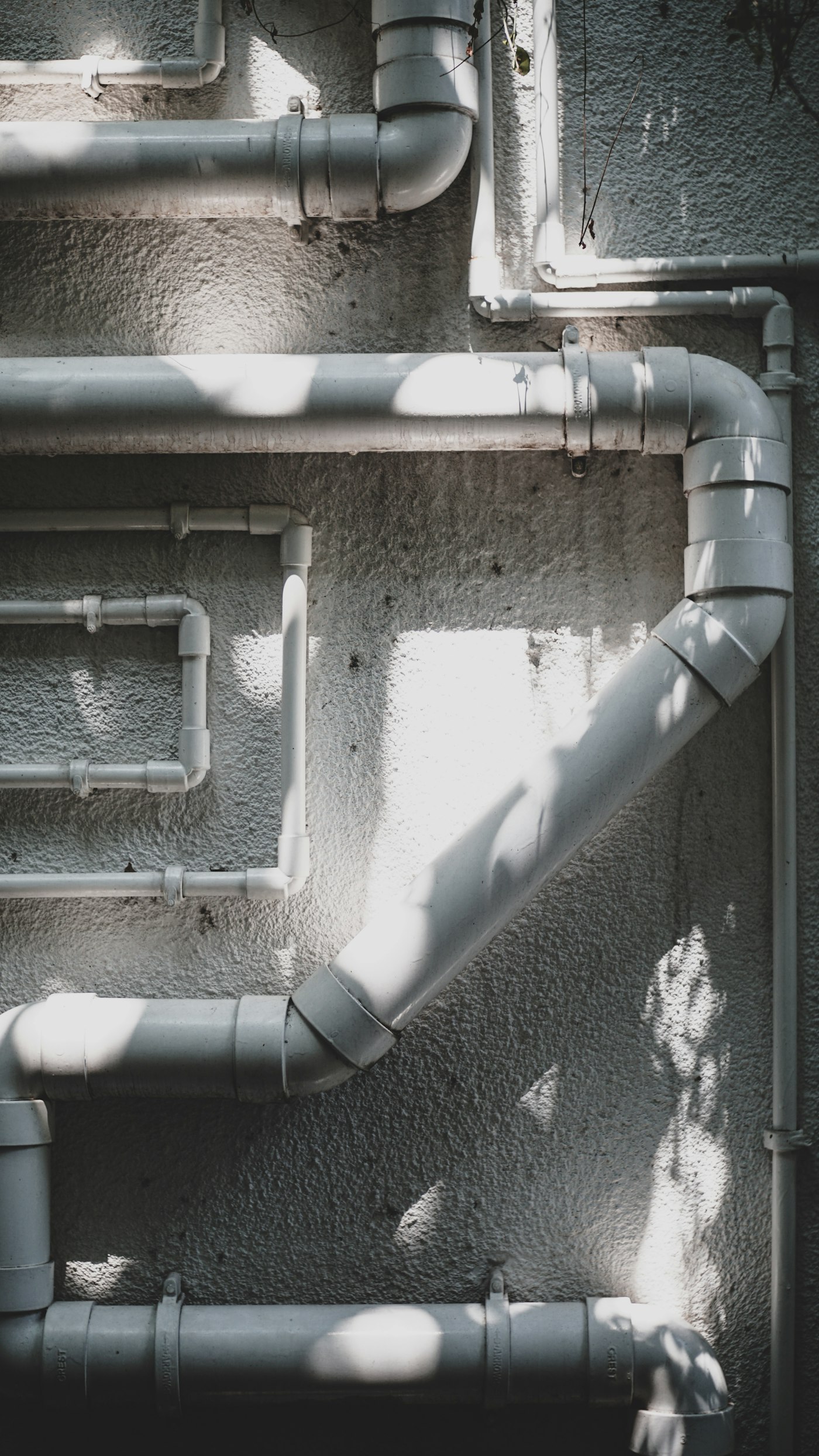
All bells use schedule 40 PVC, 1.5 inch nominal (1.9 in OD, 1.61 in ID). Bell length is measured from the diaphragm seat to the bell mouth.
| Bell # | Note | Frequency (Hz) | Length (cm) | Length (in) |
|---|---|---|---|---|
| 1 (lowest) | D♯3 | ~311 | 22 | 8.66 |
| 2 | F♯3 | ~370 | 18 | 7.09 |
| 3 | G♯3 | ~415 | 16 | 6.30 |
| 4 | B3 | ~494 | 13 | 5.12 |
| 5 (highest) | D♯4 (octave) | ~622 | 11 | 4.33 |
These lengths are starting points. Actual frequency depends on diaphragm tension and end-flare geometry. Cut each bell ~1 cm long, then trim to tune by ear. A guitar tuner app will read each pitch.
Bill of materials (BOM)
| Item | Qty | Source / SKU | ~Cost |
|---|---|---|---|
| PVC pipe, schedule 40, 1.5" × 5 ft | 2 | Home Depot SKU 22221.5 | $8 |
| 1.5" PVC reducer (1.5" → 0.5" NPT) | 5 | Home Depot plumbing aisle | $15 |
| 0.5" NPT brass tee fittings | 4 | Home Depot brass fittings | $12 |
| 0.5" → 0.25" NPT reducer (manifold to airline) | 1 | Home Depot | $3 |
| EVA foam sheet, 3 mm thick (diaphragm) | 1 sheet 8.5"×11" | Hobby Lobby / Michaels | $3 |
| Hose clamps, 2" | 5 | Hardware aisle | $5 |
| PVC primer + cement | 1 ea. | Home Depot | $10 |
| Teflon tape | 1 roll | Home Depot | $2 |
| Total (excluding air source) | ~$58 |
Air source not included: a Viair 88P portable compressor is ~$70 from Amazon, or a 5-gallon shop air tank ($30) filled at a gas station works for occasional use.
Manifold diagram (text)
Air source (compressor or tank)
        |
        v
0.25" airline -> 0.25"/0.5" NPT reducer
        |
        v
   [0.5" tee 1] -> Bell 1 (D#3, 22 cm)
        |
   [0.5" tee 2] -> Bell 2 (F#3, 18 cm)
        |
   [0.5" tee 3] -> Bell 3 (G#3, 16 cm)
        |
   [0.5" tee 4] -> Bell 4 (B3, 13 cm)
        |
   [end cap]   -> Bell 5 (D#4, 11 cm)
                  (last reducer threads into end of run)
Each bell is a piece of 1.5" PVC with a 1.5"→0.5" NPT reducer at the throat end. The reducer threads into a brass tee on the air manifold. Diaphragm (3 mm EVA foam disk) sits between the reducer and the bell — held in place by the threaded fit.
Diaphragm cut
From the EVA foam sheet, cut 5 disks at 1.6 in diameter (matches PVC ID). Use a cookie cutter, hole saw, or a sharp utility knife with a circle template.
Foam thickness affects pitch and tone:
- 2 mm foam — easier to vibrate, brighter tone, slightly sharper pitch
- 3 mm foam — recommended starting point
- 4 mm foam — needs more air pressure to start vibrating, deeper tone, slightly flatter pitch
Tuning workflow
- Cut all 5 bells ~1 cm long (use longer length from cut list as starting point).
- Assemble the manifold — glue with PVC cement, thread fittings with Teflon tape.
- Connect air source. Sound each bell individually (block the others temporarily).
- Open a guitar tuner app on your phone. Each bell should hit its target frequency within a few cents.
- If a bell is sharp (too high pitch), it's too short — recut a longer one. If flat (too low), trim 2–4 mm at a time and retest.
- Once each bell hits target, sound all 5 simultaneously. Listen for the chord — should sound thick and "train-like".
- If individual bells dominate the chord, adjust diaphragm tension by re-seating the reducer.
Variations
- 3-bell minor chord — Bells 1, 3, 5 only. Cheaper, simpler, sounds like an Atlantic Coast Line K3LA.
- 4-bell K3HL — Bells 1–4 only.
- Single-bell single-tone — One Bell 3 (G♯) by itself. Simple "blast" rather than a chord.
- Custom voicing — Pick any chord. Use the bell-length-to-frequency relationship from our how-it-works guide to compute lengths for arbitrary notes.