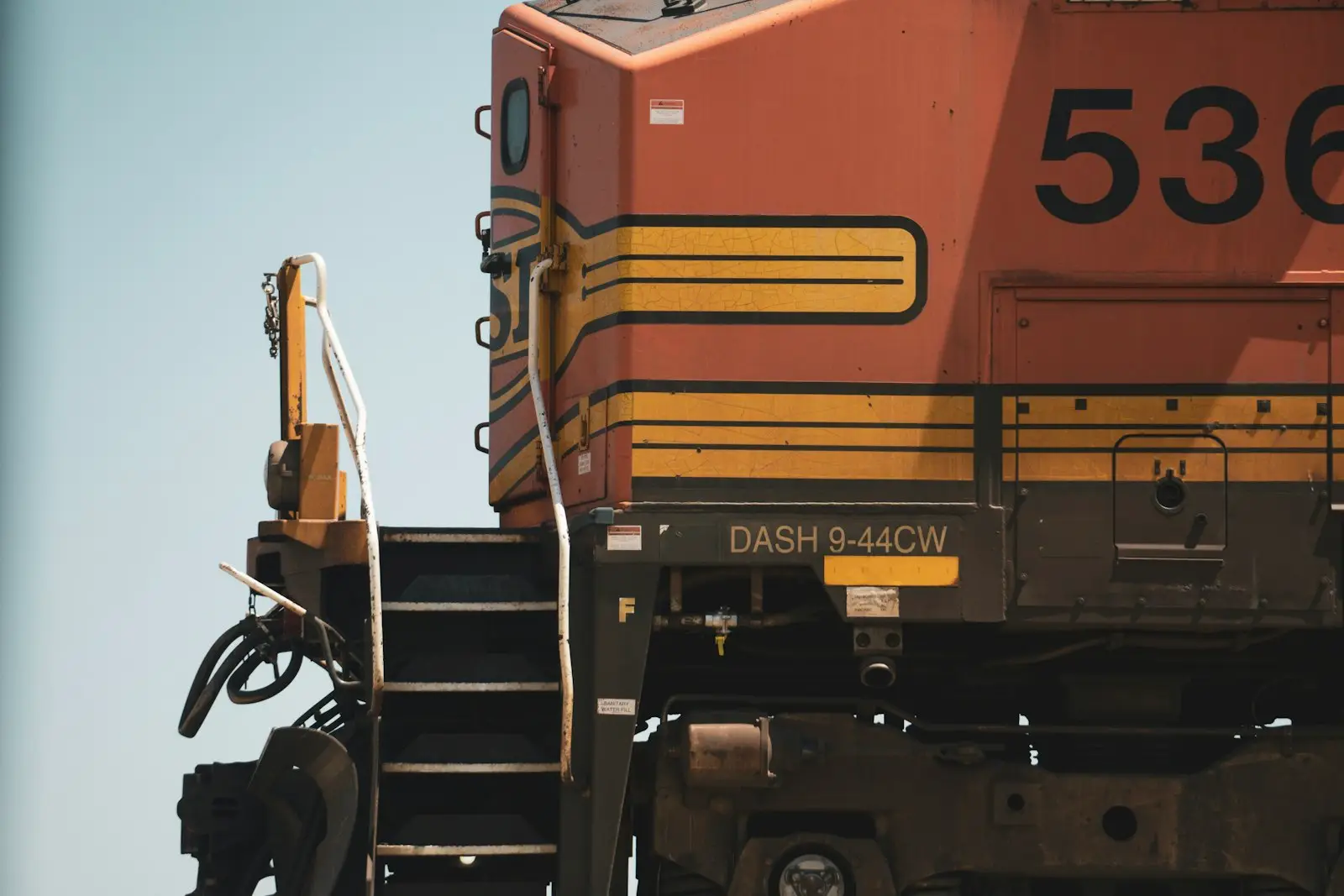
Why Do Trains Blow Their Horns at Night?
Why trains sound their horns at night — FRA Train Horn Rule mandates the long-long-short-long pattern at every public grade crossing 24/7, no exception for night.
The short answer is that trains are required by federal law to sound their horns at every public highway-rail grade crossing, regardless of time of day. The Federal Railroad Administration’s Train Horn Rule (49 CFR Part 222) doesn’t have a “no horn at night” exception — locomotives have to sound the long-long-short-long pattern 15–20 seconds before reaching every public crossing, whether it’s 3 AM or 3 PM. The rule’s safety logic is straightforward: a train approaching a crossing is dangerous to whoever is on the road regardless of the hour, and a horn is the most reliable way to warn people who can’t see the train.
- Federal regulation
- 49 CFR Part 222
- FRA Train Horn Rule
- Time-of-day exception
- None
- 24/7 mandate at public crossings
- Horn pattern
- — — • —
- Long-long-short-long
- Advance window
- 15–20 sec
- Before the crossing
- High-speed cap
- 1/4 mile
- Max advance > 60 mph
- Quiet zone
- Local exception
- Requires SSM upgrades
Why the law mandates 24/7 horn sounding
The FRA’s safety logic anchors on three observations:
- Trains can’t stop quickly. A loaded freight train moving at 60 mph needs roughly a mile to stop in emergency braking. By the time the engineer sees a vehicle on the crossing, it’s far too late to stop. The horn is the only warning method that reaches the crossing in time for the driver/pedestrian to clear the tracks.
- Crossings get traffic at all hours. Even a “quiet” rural crossing sees occasional vehicles, pedestrians, and farm animals at night. The horn warns them all.
- Visual signals fail at night. Standard crossing flashers and gates work day and night, but they can be ignored, malfunction, or be obscured by weather. The horn is the audible backup that doesn’t depend on driver attention to lights.
These reasons predate the FRA rule by decades — railroads were sounding horns at night because their own operating rules already required it. The FRA Train Horn Rule — finalized in 2005 and in full effect nationwide since December 2006 — formalized the practice as federal regulation.
The actual horn pattern
Per FRA Train Horn Rule, every locomotive approaching a public grade crossing must sound:
- Long-long-short-long (— — • —)
- 15–20 seconds before reaching the crossing
- For trains over 60 mph, no more than a quarter mile in advance (even if that’s less than 15 sec)
- Repeated as necessary until the locomotive clears the crossing
This is the same pattern day and night. It’s not louder at night — the FRA cap is 96–110 dB at 100 ft for locomotive horns regardless of hour. What changes at night is ambient noise: highway traffic, construction, and air conditioning are all quieter at 3 AM, so the horn carries further and is more noticeable.
For a full breakdown of the pattern see Train Horn Pattern (glossary).
Why night horn sounding feels louder
Common night-noise observations:
- Lower ambient noise floor. A 110 dB horn measured at 100 ft is the same SPL day or night, but with ambient traffic at 50 dB instead of 70 dB, the horn stands out by 60 dB instead of 40 dB. Subjectively this is “much louder.”
- Atmospheric inversion. On clear cold nights, atmospheric layers can act as a reflector that bends sound back toward the ground rather than letting it dissipate upward. Sound travels further at night for this reason.
- Less wind dispersion. Daytime convective wind dissipates sound; calm night air doesn’t.
- You’re trying to sleep. Subjective annoyance scales with how much you wanted quiet.
These factors combine to make a horn that’s quantitatively the same SPL feel subjectively much louder at night. That’s not a hallucination — it’s real psychoacoustics. But the train and the horn aren’t doing anything different.
Quiet zones — the only legal exception
Communities can establish quiet zones under 49 CFR Part 222 by installing supplementary safety measures (four-quadrant gates, channelization, etc.) at every public crossing in the proposed zone. In a quiet zone, the routine long-long-short-long pattern is silenced at all hours — including night.
Engineers retain authority to sound the horn in any emergency, but the FRA’s mandatory routine sounding is suppressed. See our quiet-zone glossary entry for the establishment process and SSM requirements.
If you live near a railroad and the night horn sounding is a quality-of-life problem, the path is establishing a quiet zone with your local government — not asking the railroad to stop. The railroad can’t unilaterally stop sounding the horn; the law requires it.
Train operators have no time-of-day discretion
Some common misconceptions:
- “The engineer is laying on the horn.” No. The engineer is following a standardized 4-blast pattern that takes 15–20 seconds. They don’t blast the horn longer at night than during the day.
- “They could quiet down at night if they wanted.” No. Federal law requires the routine pattern. Engineers face FRA enforcement and railroad disciplinary action for missing the pattern, not for sounding it.
- “Different railroads use different rules.” No. All Class I freight, Class II, short-line, passenger, and commuter operators in the U.S. follow 49 CFR Part 222.
The pattern only varies in a few narrow ways: emergency horn use (engineer discretion), quiet-zone designation (community-established), and trains that have stopped right next to a crossing. An FRA amendment published August 31, 2026 lets an engineer restarting near a crossing sound the horn for less than 15 seconds and vary the pattern, but only if the crossing is clear and either the gates are fully down or no traffic is approaching. The same amendment clarifies that horn use at passenger stations is left to railroad operating rules. None of this creates a night-time exception at public crossings.
What you can do if night horn noise affects you
- Verify it’s really nightly. Most freights don’t run a fixed schedule; if the noise is once a night, it might be one freight at the same hour every night, but if it’s multiple times the rail line is likely seeing higher traffic than you noticed.
- Check your distance. The horn at 100 ft is 96–110 dB; sound drops roughly 6 dB with every doubling of distance, so the level a mile away is far lower. Use the decibel-distance calculator for your specific distance.
- Talk to your local government about quiet-zone establishment. If multiple residents have the same complaint, a city council request can start the process. Note the cost — commonly upwards of $250,000 per crossing for four-quadrant gates (a common SSM), and often much more once roadway changes like medians are added.
- Soundproof selectively. Window glazing and bedroom-side acoustic insulation reduce indoor SPL by 15–25 dB. Cheaper than relocating; effective at the boundary level.
- Don’t try to legally restrict the railroad. Federal preemption under the FRA rule means state and local noise ordinances can’t restrict horn sounding at public crossings. The railroad will win any such suit.
Frequently asked questions
Are trains allowed to use the horn at night?
Required, not just allowed. 49 CFR Part 222 mandates horn sounding at every public grade crossing, day and night, with no time-of-day exception.
How long is each horn sounding?
The full pattern (two long, one short, one long) takes 15–20 seconds. Long blasts are 2–3 sec each; the short blast is about 1 sec. The pattern repeats as necessary until the locomotive clears the crossing, so a long crossing may have the pattern repeated several times.
Why is it louder during the night?
Lower ambient noise, atmospheric inversion bouncing sound back to ground, calm air not dispersing sound — and the listener’s annoyance threshold is lower at 3 AM. The horn’s actual dB output is the same.
Can a railroad voluntarily stop sounding at night?
No, not at public grade crossings. Federal law mandates the routine pattern. The only legal mechanism for silencing routine horns is a quiet zone, which must be established by local government with SSM upgrades.
Do passenger trains and freight trains follow the same rules?
Yes. Amtrak, commuter rail (Metra, NJ Transit, MARC, etc.), and freight all follow 49 CFR Part 222 at public crossings.
Why does it sometimes sound like the horn is louder than usual?
Three possibilities: (1) atmospheric conditions favor sound propagation that night, (2) the train is closer to your house than usual (different track, different line, different timing), or (3) you’re awake and noticing because it woke you up. Locomotive horn output doesn’t vary by night vs day.
Is there any advance notice required?
Yes — 15–20 seconds before the locomotive reaches the crossing. The pattern starts ahead of the crossing, not at the crossing.
Sources
- Federal Railroad Administration — Train Horn Rule & Quiet Zones (49 CFR Part 222) (federal regulation, 96–110 dB locomotive spec, 15–20 sec advance)
- Union Pacific — Railroad Safety: Train Horns and Grade Crossing Signals (operational pattern reference)
- Wikipedia — Train horn (full GCOR/NORAC signal vocabulary)
- 49 CFR § 222.21 — When must a locomotive horn be used? (Cornell LII) (pattern, 15–20 sec advance, 60 mph quarter-mile cap; stopped-train provision as amended at 91 FR 55767, Aug. 31, 2026)
- 49 CFR § 222.7 — What is this regulation’s effect on State and local laws? (Cornell LII) (federal preemption — state/local laws cannot restrict horn sounding at public crossings)
We do not perform hands-on testing — see our methodology.
Frequently asked questions
Quick answers to the questions people ask most about this topic.
- Are trains allowed to blow their horns at night?
- They are required to, not just allowed. The FRA's Train Horn Rule (49 CFR Part 222) mandates horn sounding at every public highway-rail grade crossing day and night, with no time-of-day exception.
- What horn pattern do trains sound at a crossing?
- Every locomotive approaching a public grade crossing must sound a long-long-short-long pattern, starting 15 to 20 seconds before reaching the crossing and repeated as necessary until the locomotive clears it. For trains over 60 mph the advance is capped at no more than a quarter mile.
- Why does the train horn sound louder at night?
- The horn's actual output is the same, but at night the ambient noise floor is lower, atmospheric inversion can bounce sound back toward the ground, and calm air does not disperse the sound. A listener's annoyance threshold is also lower when trying to sleep, so the same SPL feels subjectively much louder.
- Can a railroad voluntarily stop sounding the horn at night?
- No, not at public grade crossings. Federal law mandates the routine pattern, and the only legal mechanism for silencing it is a quiet zone, which must be established by local government with supplementary safety measure upgrades at every public crossing in the zone.
- Do passenger trains and freight trains follow the same horn rules?
- Yes. Amtrak, commuter rail operators such as Metra, NJ Transit, and MARC, along with all Class I freight, Class II, and short-line operators, follow 49 CFR Part 222 at public crossings.
- What can I do if night horn noise affects my home?
- The path is establishing a quiet zone with your local government, not asking the railroad to stop, since the railroad can't unilaterally stop sounding the horn. You can also soundproof selectively, since window glazing and bedroom-side acoustic insulation can reduce indoor SPL by 15 to 25 dB.
Related reviews & guides
Why Train Horns Sound Louder at Night and in Cold Weather

FRA Quiet Zones Explained: Why Trains Don't Honk in Some Towns

Why a Train Horn Changes Pitch as It Passes: Doppler Effect Explained

Why Some Train Horns Are Louder Than Others: Trumpet Size & Hz

Advertised vs Real-World Decibels: Why '150 dB' Horns Aren't