How to Install a Train Horn on Any Motorcycle
Universal motorcycle train horn install — compact 12V air horn mounting, relay wiring to OEM horn signal, fairing/seat/radiator mount options, weatherproofing.
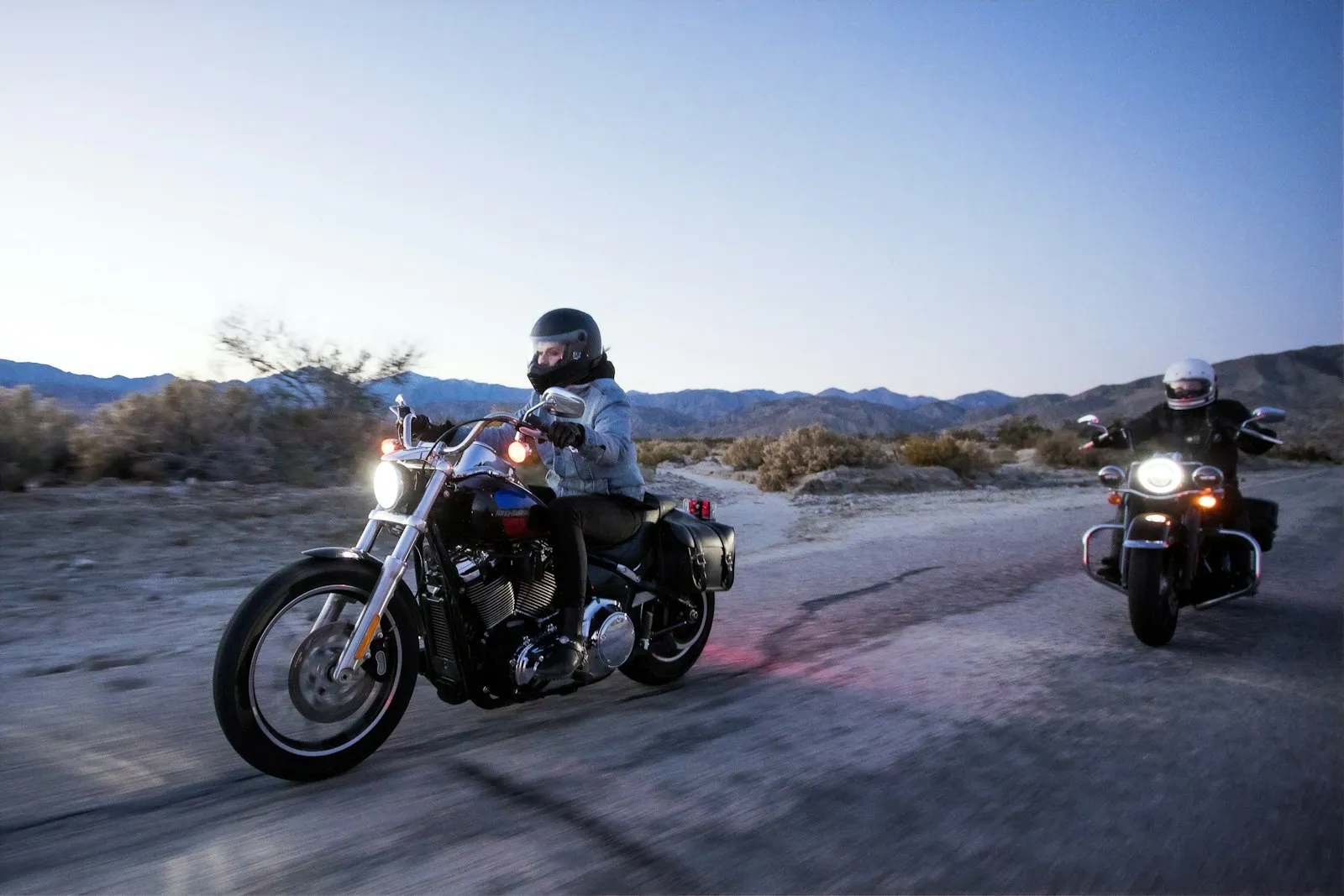
A motorcycle train horn install is fundamentally different from a pickup install: there’s no spare tire well, no large fuse box, no body cavities for a 5-gallon tank. Motorcycle installs use a compact tank-less or tiny-tank horn unit (typically 123–142 dB at 3 ft), mount it under the seat / inside the fairing / behind a side cover, and tap into the OEM horn signal via a relay rather than a fuse box. This guide consolidates HornBlasters’ motorcycle horn page, the MotoHorn user manual, and forum threads from Trike Talk, the12volt installbay, and Endless Sphere.
- Difficulty
- Moderate
- Tight spaces, fairing access
- Time
- 2–3 hours
- Once you locate the OEM horn
- Cost
- $80–$300
- Compact kits
- Best mount
- Under seat or fairing
- Or behind side cover
- Output
- 123–142 dB
- Compact horn at 3 ft
- Air system
- Tankless or 0.5 gal
- Onboard mini-compressor
Quick stats
- Difficulty: Moderate. The challenge is fitment — finding mount space and routing wiring on a motorcycle’s exposed frame is fiddly. Electrically the install is straightforward.
- Time: 2–3 hours if you can quickly locate the OEM horn and have a clean mount spot picked. Add 1–2 hours if you’re removing a fairing.
- Cost: $80 entry-level Amazon-tier compact horns up to $300+ for a HornBlasters Outlaw 127H or premium MotoHorn unit.
- Tools: Standard motorcycle tool kit, wire crimpers, multimeter, heat-shrink tubing.
- Best mount option for most builds: Under the seat (touring, cruiser, sport-tourer) or behind a side cover (sport bike). Fairing space is good but limited; check vibration and heat.
Why motorcycle installs are different
A typical truck train horn install commits 5–8 gallons of tank space, a 1NM-class compressor, and 25 A of continuous electrical draw. None of that fits on a motorcycle. The aftermarket has converged on compact, tankless or tiny-tank horns that integrate the compressor and air reservoir into a single unit smaller than a car battery. Output is lower than a truck install (typically 123–142 dB at 3 ft vs 144–149 dB on truck kits) because the compressor is small and there’s no air reservoir to sustain pressure for long blasts.
Output is lower than a truck-mounted tank-fed install, but unlike a tank-fed kit, a battery-driven compact horn isn’t limited by tank pressure — it sounds as long as you hold the trigger, with runtime ultimately bounded by battery charge.
Where to mount on common motorcycle types
The right mount location depends on bike geometry. Per the MotoHorn user manual and HornBlasters / forum guidance:
| Bike type | Best mount location | Why |
|---|---|---|
| Cruiser (Harley, Indian, etc.) | Under the seat or in the saddlebag | Open frame, accessible, weather-protected |
| Sport bike | Behind a side fairing panel | Weather-protected, but tight; remove fairing for access |
| Touring (Goldwing, Road Glide, etc.) | Inside the fairing or saddlebag | Lots of space; route wiring along existing harness |
| Adventure / Dual-Sport | Behind side cover or under seat | Mud and water exposure — extra weatherproofing matters |
| Naked / Standard | Under the seat or behind battery box | Visible mounting OK; verify heat clearance from engine |
| Trike | Saddlebag, trunk, or rear cargo area | Treat like a small motorcycle install — relay to OEM horn |
Across all types, follow these universal placement rules:
- Stay away from heat sources. Engine, exhaust, oil cooler. Compressor cooling fins need open air; air-cooled cases dump hot air around the cylinders.
- Stay above water lines. Motorcycle electrical isn’t all weather-sealed. Mount the horn high enough that it doesn’t go underwater in a deep puddle.
- Avoid pinch points on suspension travel. Verify the mount doesn’t get crushed when the suspension fully compresses.
- Air outlet faces forward or sideways, never directly at the rider. The horn is loud — direct rearward exposure damages hearing fast.
Recommended kits
Three kits ordered by price tier:
- HK Compact 150 dB Snail Electric Train Horn — ~$80 budget Amazon listing (Amazon). Comes with relay and harness. dB claim is at-source and likely overstated; expect 130–135 dB at 3 ft realistic. Entry-level option.
- HornBlasters compact motorcycle horns — ~$130–$200 (HornBlasters Motorcycle Horns page). Includes the Compact Loud Motorcycle Horn at 123.7 dB measured. More honest spec, better build quality.
- MotoHorn premium motorcycle train horn — varies by model (MotoHorn user manual). Engineered specifically for motorcycle vibration / weather environments. Detailed install documentation.
For portable / off-bike use cases, see Milwaukee M18 and DeWalt 20V MAX battery-powered horn hubs.
Step-by-step (compact horn + relay on a generic motorcycle)
This sequence is platform-agnostic — adapt mount location and OEM horn access per your specific bike. Total time: 2–3 hours.
- Disconnect battery negative terminal and let any electrical capacitors discharge.
- Locate the OEM horn. Usually mounted near the headlight/front fairing on cruisers, behind the front fairing on sport bikes, or in front of the radiator on adventure bikes. Trace its two wires.
- Test-fit the train horn in your chosen mount location. Verify clearance from heat, water, and suspension travel.
- Mount the train horn with the supplied bracket or fabricate one. Use rubber-isolated mounts to absorb vibration; motorcycles see far more vibration than cars.
- Mount the relay in a dry, accessible area near the battery. Leave the OEM horn in place — the train horn supplements it, not replaces it.
- Run the high-current power wire (12 AWG) from the battery positive through a 10 A inline fuse (within 12″ of the battery) to relay Pin 30. Ground sleeve and route along the OEM frame harness with zip ties.
- Run the load wire (12 AWG) from relay Pin 87 to the train horn’s positive terminal.
- Ground the train horn’s negative terminal to the battery negative or chassis ground. Do not skimp on the ground wire — undersizing the ground is the #1 cause of weak horn output.
- Wire the relay coil to the OEM horn signal. Per HornBlasters’ motorcycle wiring guide: connect Pins 85 and 86 of the relay to the OEM horn’s two wires. Polarity does not matter — both wires get hot when the OEM horn fires, so the coil energizes regardless of which way you connect them.
- Do NOT splice into the OEM horn wires directly. Use 18 AWG wire spliced into both OEM horn wires with butt connectors and heat-shrink, then run those two wires to relay 85 and 86. Direct splice into the OEM wires causes voltage drops and intermittent operation.
- Heat-shrink every connection. Motorcycle electrical sees rain, road spray, and vibration. Bare butt connectors corrode and fail within a season.
- Reconnect the battery, prime any tank (compact horns with a small reservoir take 10–15 sec to fill on first power-up).
- Test by pressing the OEM horn button. Both OEM horn and train horn should fire together. The train horn is loud — wear hearing protection during testing.
- Adjust mount and check tightness after a 50-mile shakedown ride. Vibration finds loose fittings on motorcycles fast.
Wiring diagram (motorcycle-specific)
[Battery + 12V] ── 12 AWG ── 10A inline fuse ── Pin 30 ─── Relay ─── Pin 87 ── 12 AWG ── [Compressor +]
                                                              │                                │
                                                              ▼                                ▼
                                                          Pin 85 / 86                  [Compressor − ] ── 12 AWG ── chassis or battery −
                                                              │
                                                              │  (18 AWG, both wires)
                                                              ▼
                                                  [OEM horn + and − wires]
                                                              │
                                                              ▼
                                                  When OEM horn fires (12V across its terminals),
                                                  the relay coil energizes and the train horn fires too.
For the universal wiring topology and 5-pin SAE relay reference, see /install/by-task/wiring-diagram/.
Common problems
Distilled from Trike Talk, the12volt installbay, Endless Sphere, and HornBlasters wiring guide:
- Train horn fires whenever the bike is on, not just when the OEM horn is pressed. Relay coil is connected to a constant-12V wire instead of the OEM horn signal. Fix: trace the OEM horn wires properly with a multimeter (they should only see 12V when the horn button is pressed).
- Weak horn output. Either undersized ground wire, low battery voltage, or the compressor is in too tight a space without cooling airflow.
- Horn intermittently fires. Direct splice into OEM horn wires causing voltage drops. Re-wire with butt connectors and heat-shrink as described in step 9–10.
- Relay clicks but compressor doesn’t run. Reversed compressor polarity. Swap +/− at the compressor.
- Corroded connections after rainy season. Heat-shrink all connections; consider dielectric grease at every connector.
- Vibration loosens fittings. Use thread-locker on every NPT connection. Re-check tightness after the first 50-mile shakedown.
- Horn output unbearable to rider. Re-aim the trumpet outlet forward or sideways, never rearward toward the rider.
Legal reminder
State vehicle codes apply to motorcycles too. A 130–142 dB horn exceeds typical state caps (~110 dB at the source) and the federal FMVSS 141 ceiling (118 dB at 2 m forward). Train horn installation on a motorcycle is broadly legal; routine use at full output on public roads is not. See the legal hub and state legality lookup.
Sources
- HornBlasters — Wiring the Motorcycle & Truck Electric Air Horns (relay pin assignments, OEM-horn-tap procedure, polarity-free coil wiring)
- HornBlasters — Motorcycle Horns landing page (Compact Loud 123.7 dB)
- MotoHorn — User Manual (motorcycle-specific install guidance)
- MotoHorn — Vehicle install manual (cross-platform install reference)
- Amazon — HK 150 dB Train Horn for Motorcycle/Truck (entry-level reference; dB claim is at-source)
- Trike Talk — How to connect air horn to existing 12V wiring (community-sourced trike install)
- the12volt — Air horns, wiring is confusing! (common-mistake catalog)
- Endless Sphere — How to install 12V motorcycle horn on ebike (ebike adaptation of motorcycle install)
We do not perform hands-on installs. This guide aggregates publicly available install documentation and community discussions. Verify all wiring against your specific motorcycle’s service manual before powering up.