Air-Tank vs Battery-Powered Train Horns Compared
Air-tank kits vs battery-powered portable train horns — peak dB, blast duration, install cost, portability, total cost of ownership. Which is right for which use.
The biggest decision when shopping a train horn is air-tank vs battery-powered. Air-tank kits ship with a 5–8 gallon tank, a 1NM-class compressor, a solenoid valve, and a wiring harness — they go into a vehicle permanently and produce 144–149 dB at 3 ft. Battery-powered kits accept a Milwaukee M18 / DeWalt 20V / Ryobi ONE+ / Makita LXT (etc.) battery you already own, weigh 3–4 lb, and produce 130–150 dB-claimed at the source. Both can be loud; only one is portable. Neither is universally “better” — they target different use cases. This guide breaks down the trade-offs.
- Air-tank peak
- 147–149 dB
- Shocker XL / K5LA at 3 ft
- Battery peak
- 130–150 dB
- Manufacturer-claimed at source
- Air-tank install
- 3–8 hours
- Vehicle-specific bracket
- Battery install
- 0 minutes
- Insert pack, blast
- Air-tank cost
- $580–$5,200
- Kit + bracket + parts
- Battery cost
- $160–$405
- Horn alone; battery extra
The two categories at a glance
| Aspect | Air-tank kit | Battery-powered portable |
|---|---|---|
| Peak dB at 3 ft | 144–149 dB (verified) | 130–150 dB (manufacturer-claimed) |
| Blast duration | 4–20 sec per fill (1.5- to 8-gallon tank), then refill | Short blasts; total runtime bounded by battery capacity and compressor heat |
| Tank refill time | ≈ 6:45 from 0 → 150 PSI on 1NM compressor | N/A (no tank) |
| Install effort | Permanent on one vehicle, 3–8 hours | None — insert battery, blast |
| Weight | 50–100+ lb (tank + compressor + horn) | 3–4 lb (horn only) |
| Total cost | $580–$5,200 (kit + bracket + parts) | $160–$405 (horn alone) |
| Portability | None — fixed to vehicle | Total — carry anywhere |
| Cab vs OEM horn | Tap OEM steering wheel button via fuse | Wireless remote (160–2,000 ft) |
| Power source | 12 V vehicle battery + alternator | 18 V cordless tool battery |
| Best at | Peak SPL, sustained blasts, vehicle install | Convenience, multi-location use |
When air-tank wins
Air-tank kits are the right choice when you need:
- Maximum verified output. The 149.4 dB Nathan AirChime K5 (locomotive) and 147.7 dB HornBlasters Shocker XL are both air-tank kits. No portable battery-powered kit reaches those measured numbers (HornBlasters: World’s Loudest Train Horns).
- Sustained 10–20 second blasts. Tank-fed kits can release the full air reservoir in one continuous blast. HornBlasters rates the 5-gallon 544 Nightmare at 10–12 sec per fill and the 8-gallon 844K at up to 20 sec.
- Permanent vehicle install. If the horn lives on one truck and you’re not planning to move it, the air-tank install is the long-term durable solution.
- Integration with the OEM steering wheel button. Air-tank installs typically tap the OEM horn fuse via a MICRO2 add-a-circuit adapter, so the train horn fires whenever you press the steering wheel button.
For air-tank kit reviews see the HornBlasters Shocker XL (147.7 dB), HornBlasters Conductor’s Special 228H (147.7 dB on a smaller 2-gallon tank), and Nathan AirChime K5LA Kit (real locomotive horn).
When battery-powered wins
Battery-powered portables are the right choice when you need:
- Multi-location use. Take the horn from the truck to the boat to the tailgate to the campsite without permanent installs anywhere.
- No vehicle modification. No drilling, no wiring, no fuse-tap. Hand the horn to anyone with a compatible battery and they can use it.
- Existing battery ecosystem leverage. If you already own Milwaukee M18, DeWalt 20V MAX, Ryobi ONE+, Makita LXT, Bauer 20V, RIDGID 18V, Kobalt 24V, or Craftsman V20 batteries, the horn cost is just the horn — see the Milwaukee M18, DeWalt 20V, Ryobi, Makita, Bauer, RIDGID, Kobalt, and Craftsman hubs.
- Lower entry cost. A $160 portable Dual at 130 dB is cheaper than any complete air-tank kit.
- More cumulative runtime per session. Counter-intuitively, portable battery horns can deliver more total blast time per outing than air-tank kits because there’s no tank to drain. Runtime is bounded by the battery’s energy capacity and the compressor’s thermal limit — BossHorn’s own FAQ notes that continuous compressor run isn’t realistic on any portable horn. A 6 Ah pack is good for “500+ short blasts or ~200 sustained 2-second blasts” per BossHorn’s published spec.
The peak-dB comparison: locomotive >> air-tank > portable
Where these categories actually rank in measured SPL:
- Nathan AirChime K5 (locomotive) — 149.4 dB at 3 ft (measured, HornBlasters: World’s Loudest Train Horns). The published ceiling.
- HornBlasters Shocker XL (air-tank) — 147.7 dB at 3 ft (HornBlasters’ published “Actual dB” rating; as of September 2026 the figure appears on the brand’s Amazon listings rather than on hornblasters.com).
- HornBlasters Outlaw 127H (single-trumpet) — 142.7 dB at 3 ft (third-party test cited by HornBlasters).
- Portable battery (manufacturer-claimed) — 130–150 dB at source. The “150 dB” figure is at the trumpet throat or close-source, not at 3 ft. Realistic 3-ft measurement is likely 130–145 dB depending on configuration.
Per HornBlasters’ own debunking page (HornBlasters: Why Fake Decibel Ratings Mislead Buyers), portable claims of “150+ dB” are often measured right at the bell opening — where sound pressure is at its maximum — and would read noticeably lower at the standard 3-ft distance. See The Loudest Train Horns in the World for the full ranking.
Total cost of ownership
A 5-year ownership comparison, assuming you already own one battery for the portable case:
| Cost item | Air-tank Shocker XL kit | Battery-powered Quad (existing battery) |
|---|---|---|
| Horn / kit purchase | $580–$1,210 (127H to 844K) | $215–$235 |
| Vehicle-specific mount | $300–$700 (Goliath) | None |
| Install labor (DIY) | 0 (your time, 3–8 hr) | 0 |
| Install labor (paid) | $200–$500 (shop) | 0 |
| Wiring + fittings | $50–$100 | None |
| Battery + charger (if needed) | None | $90–$160 if you don’t own one |
| Fuel cost (added vehicle weight) | ~$5/yr at 50 lb on 12k mi/yr | None |
| 5-year total (DIY) | $930–$2,010 | $215–$395 |
| 5-year total (paid install) | $1,130–$2,510 | $215–$395 |
Battery-powered is roughly 2–9× cheaper over 5 years if you already own a compatible battery. Air-tank wins on raw output and sustained-blast capability.
Air-tank weaknesses people don’t talk about
Common drawbacks of the air-tank category that don’t get mentioned in marketing:
- Tank refill time. Once you’ve blasted through 5 gallons, you wait ~6:45 for the 1NM compressor to refill (or about 2 min to recover from 110 → 150 PSI on the 544; ≈ 55 sec from 110 → 145 PSI on the 2-gallon 228H). During that time you have an OEM-volume horn only.
- Fuel economy hit. A typical 5-gallon HD-544K kit adds ~50 lb to the truck. Over 12,000 miles a year, that’s roughly $5–$10 in fuel cost.
- Air-leak risk. Every NPT fitting in the air system is a potential slow leak. Without periodic tank-pressure check, the system can drift down to inoperable pressure.
- Compressor failure mode. If the compressor dies, you have a tank that drains to atmosphere. Replacement compressors are $150–$300.
- Vibration noise into cab. The 1NM compressor under the spare tire well runs ~2 sec per cycle and is audible from inside the cab on most pickups.
- Increased install risk. Drilling into the frame is permanent. A poorly-located bracket can interfere with the spare tire winch, exhaust heat shield, or factory wiring.
Portable-battery weaknesses people don’t talk about
Common drawbacks of the battery-powered category:
- Wireless remote dependency. The 433 MHz remote is the standard activation method. If it fails, the trigger button on the horn body is the fallback — not as convenient as an OEM steering wheel button.
- Battery cold weather. Lithium-ion cell discharge capacity drops 10–20% below 32°F. A 6 Ah pack might give 400 short blasts in winter vs 500 in summer.
- Aftermarket battery quality variance. Aftermarket cells vary widely in cycle life and continuous-discharge spec. Genuine OEM packs are recommended for sustained use.
- No OEM-button integration. Unlike air-tank installs, you can’t trigger the train horn from the steering wheel — it’s wireless remote or trigger button only.
- Compressor heat after extended blasting. The 2026 Boss Series ships with auto-cutoff at 185 °F; older portable units without overheat protection can damage the compressor on long blast sessions.
Hybrid options
Some buyers run both — an air-tank kit on their daily-driver pickup, plus a portable battery-powered horn for the boat or tailgate. The two categories don’t replace each other; they cover different use cases. The full $5,000+ K5LA kit on the truck plus a $215 portable Quad gives you maximum SPL where it’s mounted and convenience everywhere else.
Frequently asked questions
Are battery-powered horns really louder than air-tank kits?
No, on independent third-party measurements. The Nathan K5 (149.4 dB at 3 ft) is the verified ceiling for any train horn category — air-tank or portable. Manufacturer claims of “150 dB at source” on portable units are usually measured at the bell throat, not at the standard 3-ft test distance.
Can I install an air-tank kit and a portable battery-powered horn on the same vehicle?
Yes — they don’t conflict. The air-tank kit lives in the spare tire well; the portable lives in the bed or cab and runs on a battery you carry. Most buyers don’t need both.
Which one is louder per dollar?
Battery-powered, by a wide margin. A $160 Dual at 130 dB-claimed beats a roughly $1,050 five-gallon Shocker XL kit (544 Nightmare) on dB-per-dollar even though the Shocker XL is louder at 3 ft. The trade-off is sustained blast capability and vehicle integration.
Does a portable battery horn need to be plugged in?
No. It runs entirely on the cordless tool battery. No 12 V vehicle wiring, no shore power, no charging while in use. Battery → horn → blast.
How long can a portable horn actually blast continuously?
The onboard compressor runs as long as you hold the trigger and the battery has charge. The 2026 Boss Series ships with a 15% low-voltage cutoff that ends the session before the cells go below safe SOC. On a 6 Ah pack, that’s roughly 500 short blasts or 200 × 2-sec sustained blasts of total cumulative compressor runtime — well above what an air-tank kit’s tank can deliver between refills.
Will an air-tank kit drain my truck battery?
Not in normal use. The 1NM compressor draws 25 A continuous while pumping; that’s well within the alternator’s continuous output on any modern truck. If the engine is off, repeated blasting can drain the starter battery. The battery drain calculator can model your specific scenario.
Can I use an air-tank kit at a tailgate without driving?
Yes — but the compressor will only refill the tank a few times before the truck battery sags. Best practice is to leave the engine running so the alternator is feeding the system.
Which one is legal on the road?
Both exceed typical state caps (~110 dB) and FMVSS 141 (118 dB at 2 m forward). Installation is broadly legal; routine use at full output on public roads typically violates state vehicle code. Off-road, agricultural, marine, and stationary use is broadly unrestricted. See the legal hub and state legality lookup.
Sources
- HornBlasters — World’s Loudest Train Horns (Nathan K5 149.4 dB, Shocker XL 147.7 dB)
- HornBlasters — Why Fake Decibel Ratings Mislead Buyers (3-ft test methodology, marketing-claim debunking)
- HornBlasters — Conductor’s Special 228H Train Horn Kit (compact-tank kit specs, fill rate, recovery time)
- HornBlasters — Conductor’s Special 544 Nightmare Edition Train Horn Kit (5-gallon kit price, 1NM fill/recovery times, 25 A draw, 10–12 sec honk time)
- HornBlasters — Outlaw Train Horn Kit (142.7 dB at 3 ft third-party figure, 127H air-system specs)
- HornBlasters — Goliath Train Horn Mount product page (vehicle-specific bracket pricing)
- BossHorn — Milwaukee M18 collection (portable kit pricing)
- BossHorn — Dual Train Horn for Milwaukee M18 (2026 model) (6 Ah runtime claim, 185 °F overheat cutoff, 15% low-voltage cutoff)
- Wikipedia — Nathan Manufacturing (Nathan K5/K5LA background and history)
- Federal Railroad Administration — Train Horn Rule (96–110 dB at 100 ft locomotive spec)
Pricing and product availability verified September 15, 2026. Manufacturer-claimed decibel ratings have not been independently verified by Train Horn. We do not perform hands-on testing — see our methodology for how we evaluate decibel claims.
Frequently asked questions
Quick answers to the questions people ask most about this topic.
- Are battery-powered train horns really louder than air-tank kits?
- No, not on independent third-party measurements. The Nathan K5 at 149.4 dB at 3 ft is the verified ceiling for any train horn, and no portable battery-powered kit reaches that measured number. Manufacturer claims of 150 dB at the source on portable units are usually measured at the bell throat, not at the standard 3-ft test distance.
- How long can a portable battery train horn actually blast continuously?
- The onboard compressor runs as long as you hold the trigger and the battery has charge, so runtime is bounded only by battery capacity rather than a tank draining. On a 6 Ah pack that is roughly 500 short blasts or about 200 sustained 2-second blasts of cumulative compressor runtime, which is more than an air-tank kit can deliver between refills.
- Which train horn is louder per dollar, air-tank or battery?
- Battery-powered, by a wide margin. A roughly $160 portable Dual at 130 dB-claimed beats a roughly $1,050 five-gallon Shocker XL kit on decibels per dollar even though the Shocker XL is louder at 3 ft. The trade-off is sustained blast capability and vehicle integration.
- Does a portable battery train horn need to be plugged in?
- No. It runs entirely on a cordless tool battery such as Milwaukee M18, DeWalt 20V, Ryobi ONE+, or Makita LXT, with no 12V vehicle wiring, shore power, or charging while in use.
- Can I install both an air-tank kit and a portable battery horn on the same vehicle?
- Yes, they don't conflict. The air-tank kit lives in the spare tire well while the portable lives in the bed or cab and runs on a battery you carry, though most buyers don't need both.
Related reviews & guides
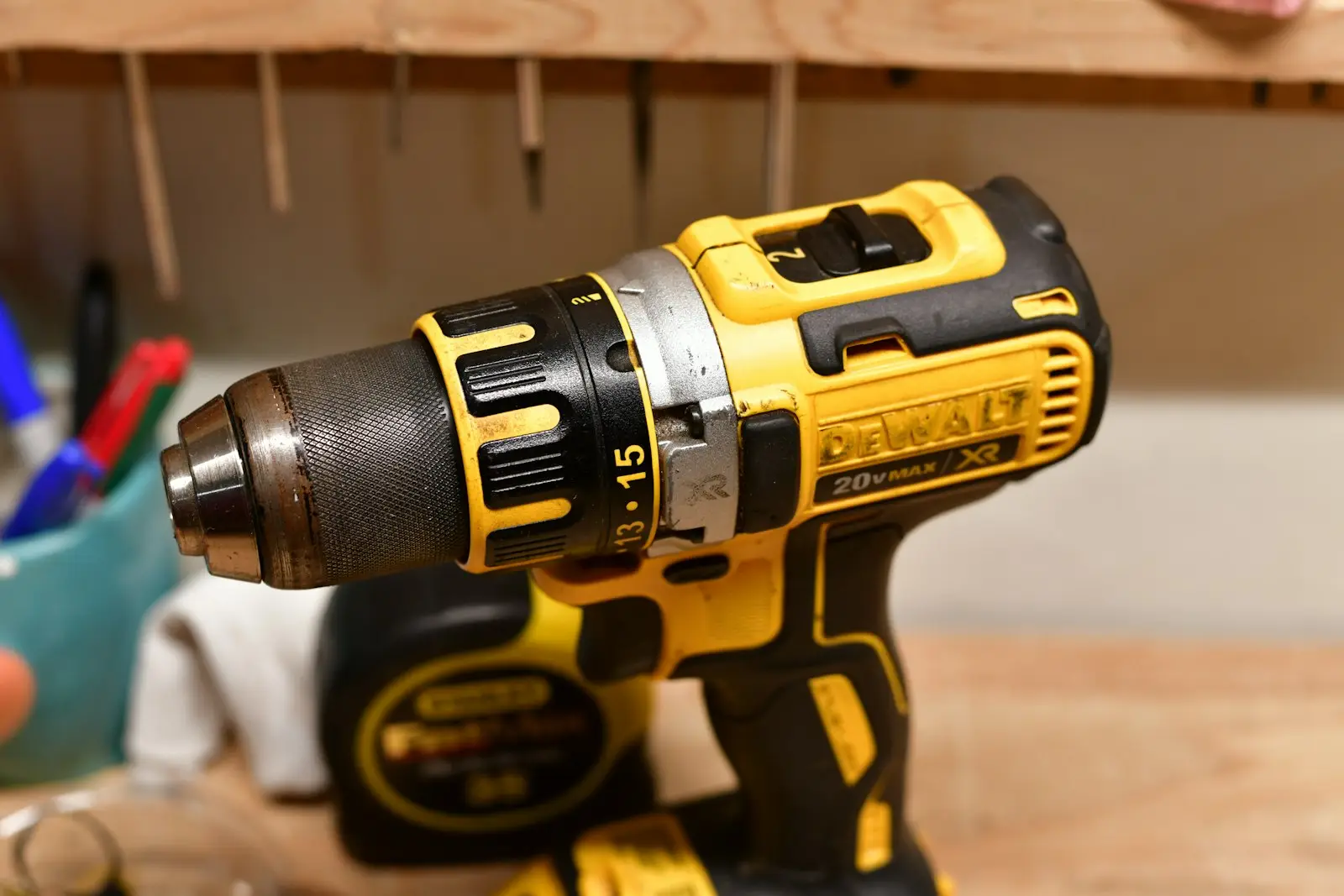
Milwaukee M18 vs DeWalt 20V vs Ryobi 18V Battery Train Horns
Vevor vs Vixen vs Viking: Budget Train Horn Brands Compared (2026)
CO2 Tank vs Air Compressor for Train Horns: Which Wins?
Tankless Train Horns Explained: No-Tank vs Onboard-Air Kits
HornBlasters vs Vixen Horns: Turnkey Kits vs Budget Trumpets