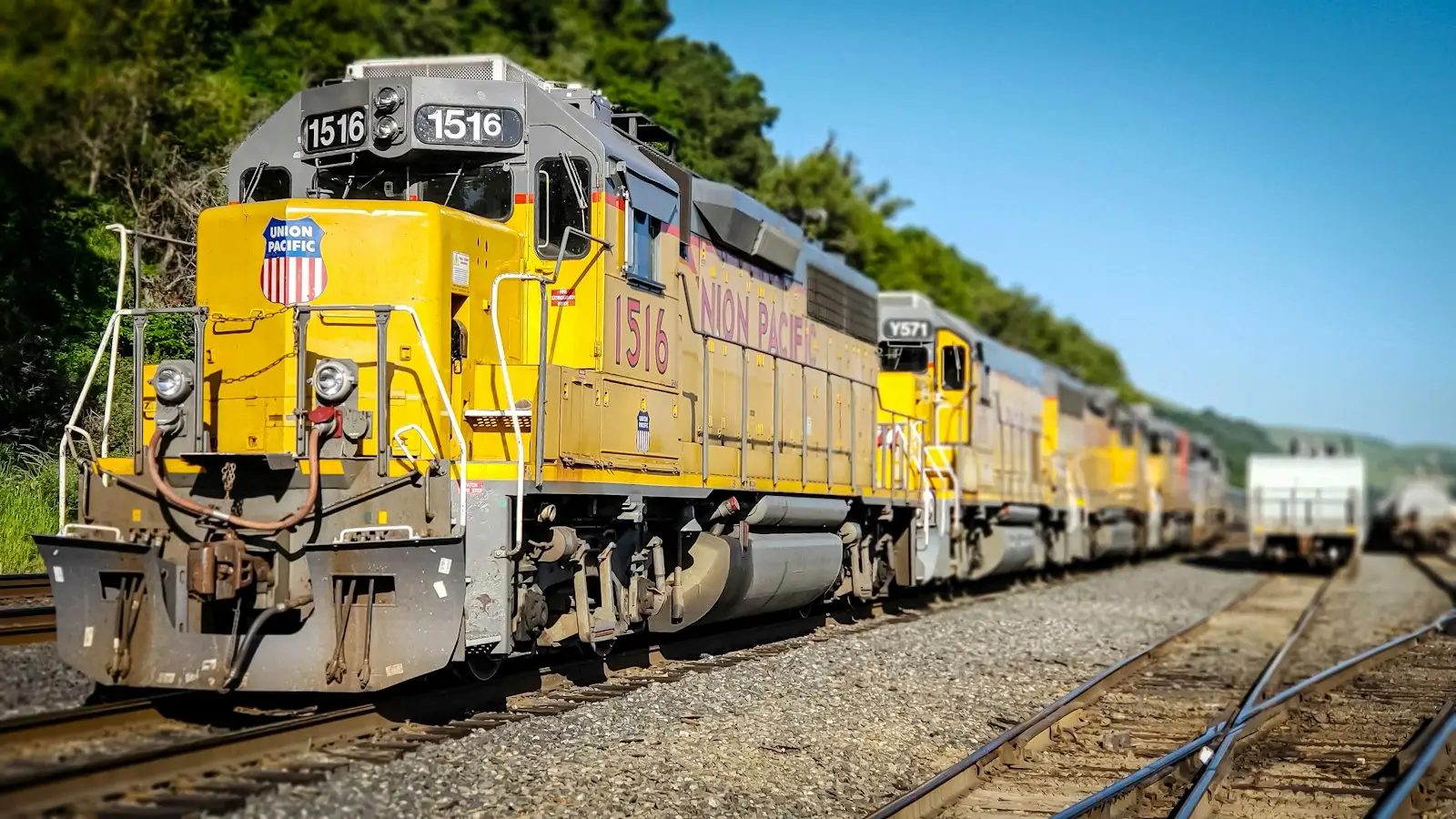
Portable Train Horns: How Drill-Battery Models Really Work
How portable train horns work: the tankless on-board air pump, diaphragm and trumpet tuning, runtime per amp-hour, and the 185F and 15% auto-cutoffs.
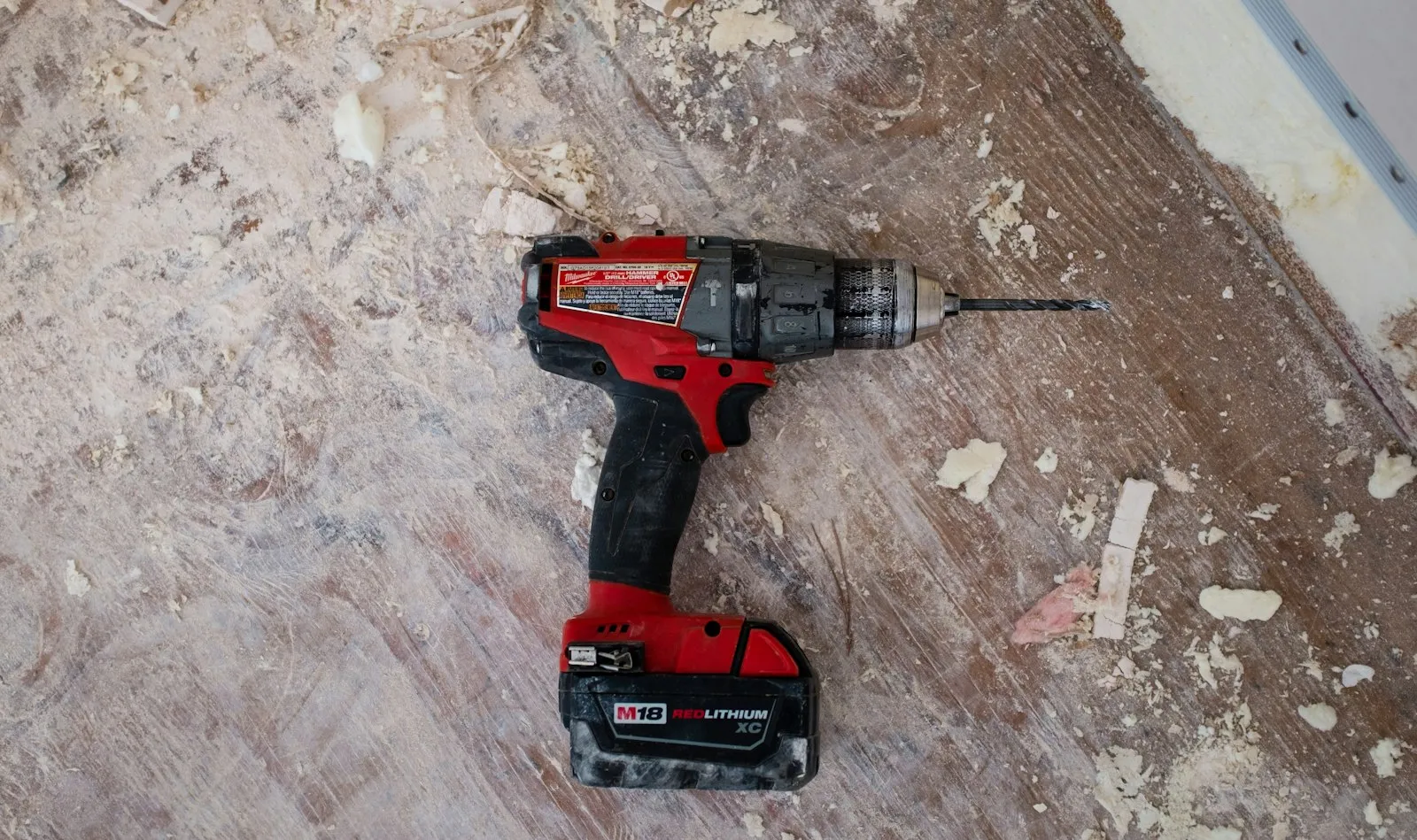
Portable train horns look like a power tool and sound like a freight locomotive, and the whole trick is a small air pump running off the same cordless drill battery sitting in your garage. Here is what actually happens inside the housing between pulling the trigger and the neighbors ducking.
What’s inside a portable train horn
Strip away the marketing and a battery-powered portable is the same acoustic machine as a locomotive horn, just shrunk down and re-powered. The signal chain is short:
- The tool battery feeds a DC motor.
- The motor drives a small on-board air pump.
- Pressurized air is forced through a narrow gap past a diaphragm, which vibrates rapidly.
- That vibration excites the air column inside a flaring metal trumpet.
- The trumpet radiates it as a very loud, very low note.
Steps 3 through 5 are not portable-specific — they are how every air horn on earth works. Per Wikipedia’s air horn entry, compressed air flows through a narrow opening past a reed or diaphragm, causing it to vibrate and create sound waves, and the flaring horn then acts as an acoustic impedance transformer that improves the transfer of sound energy from the diaphragm to the open air. Real locomotive horns do the identical thing: air enters a power chamber and passes through a narrow opening between a nozzle and a circular diaphragm, which vibrates against the nozzle.
The trumpet is not decoration. Its length sets the wavelength of the standing wave inside it, and therefore the fundamental pitch — the longer the bell, the lower the note. That is why the trumpet stack on a portable is a set of different lengths rather than four copies of the same tube. BossHorn’s quad model, for example, lists four powder-coated aluminum-alloy trumpets at 14 inches, 12 inches, 8 inches, and 5 inches. Sounded together, different lengths produce different notes, and the notes stack into a chord — the same reason a real multi-chime locomotive horn sounds like a chord instead of a single tone.
- Dual
- 2 trumpets, 14” + 12”, up to 130 dB claimed
- Quad
- 4 trumpets, 14” + 12” + 8” + 5”, up to 140 dB claimed
- Extreme
- 4 trumpets, 2x14” + 2x12”, up to 150 dB claimed
Tankless is the whole design trade-off
The line that explains everything about this category is BossHorn’s own description of the 2026 dual: an air compressor with no air tank needs. There is no air reservoir in the housing. The pump feeds the diaphragm directly, in real time, for as long as you hold the trigger.
That is a genuine engineering compromise, and it is worth understanding why. HornBlasters’ air compressor pages spell out the logic behind traditional truck kits: a train horn needs 50-plus PSI to honk correctly, no compressor produces that on demand, and so the compressor’s real job is refilling a tank between honks. Store the air first, dump it through the horn second. Electric horns sit at the opposite extreme — HornBlasters describes those as using a small direct-drive compressor built into the horn body, with no stored air at all.
A cordless-battery portable lands in between those two. It keeps the real metal trumpets and the diaphragm of a proper air horn, but it drives them from an on-board pump instead of a pressurized reservoir. What you gain and lose is predictable:
- Zero spin-up wait — BossHorn lists activation delay as instant
- No tank to drain, so blast count is limited by the battery, not by gallons
- No refill cycle between blasts, and no pressure switch to fail
- 3.4 to 4 lb total without a battery, versus a whole tank-and-compressor install
- No long sustained pull like a tank-fed kit with gallons of stored air can deliver
- Output is capped by what a small pump can push, not by what the trumpets could do on 150 PSI
- Manufacturer dB claims are published without a stated measurement distance
If you want the full side-by-side on that split, our air-tank vs battery-powered train horn comparison runs the cost, weight and output numbers end to end.
The battery dock is a power connector, not a performance spec
Here is the part that surprises most buyers: the battery platform on the bottom of the horn changes almost nothing about how it performs. Milwaukee® M18™, DeWalt® 20V MAX™, and Ryobi® 18V ONE+™ packs all deliver the same nominal 18 volts. DeWalt’s own published disclaimer says it outright — maximum initial battery voltage measured without a workload is 20 volts, and nominal voltage is 18.
Same nominal voltage means the same motor speed, the same pump output, and the same advertised decibel figure across every platform version of a given model. The dock molded into the base is a mechanical and electrical connector. It is not a power upgrade. Our Milwaukee vs DeWalt vs Ryobi battery train horn comparison walks through that platform-by-platform.
What the pack actually controls is how long you get. BossHorn rates its horns for anything from a 2.0Ah pack to a 12.0Ah pack on each platform, including aftermarket-compatible cells, and the dB claim never moves across that range. Amp-hours buy runtime; they do not buy volume.
Runtime: what “500 blasts on a 6Ah pack” really means
Every BossHorn tier we checked — dual, quad, and Extreme — quotes the same runtime: 500-plus short blasts, or roughly 200 sustained two-second blasts, on a 6Ah battery. That second figure is the useful one, because it converts to real pump time. Two hundred blasts at two seconds each is about 400 seconds, or somewhere near seven minutes of cumulative pump running on a single 6Ah charge.
Seven minutes sounds thin until you compare it to what you actually do with a horn. Nobody leans on a train horn for seven straight minutes. Spread across short blasts at a tailgate, on a boat, or at a job site, a single mid-size pack covers an entire day with room left over.
Scaling is linear with capacity. A 3.0Ah pack gets you roughly half of that; a 12.0Ah pack roughly double. If you are budgeting a session, count seconds of horn time, not blasts.
Two things shrink that number in the real world. Cold is the big one: Battery University notes that a pack delivering 100 percent capacity at 80°F typically delivers only about 50 percent at 0°F. Pulling heavy current from a cold cordless pack is also the exact condition that causes weak cells to reverse, which Battery University flags as a large contributor to cordless power tool battery failure. Winter tailgates want a bigger pack and a warm truck cab between blasts. Our buyer’s guide for 2026 has the rest of the shopping checklist.
The two cutoffs that keep the horn alive
Because there is no tank buffering the pump, the pump itself takes the whole duty cycle. A 2026-generation portable handles that with two automatic shutoffs, both listed on BossHorn’s spec sheets:
- Thermal: auto shut-off at 185°F, so a long blast session stops the motor before it cooks
- Low voltage: auto-cutoff at 15 percent state of charge, which ends the session instead of running the cells flat
- Warning: an LED low-battery indicator on the body, so the cutoff is not a surprise
BossHorn’s own duty-cycle guidance is blunt and worth following: give short breaks during extended continuous use. Treat a portable like a compressor, not like a siren.
The wireless remote: 433 MHz and line of sight
The second thing that makes these horns feel like tools is the remote. BossHorn ships a 433 MHz encrypted remote rated at 160 feet, with a 2,000-foot long-range version offered as an upgrade and extra remotes sold at $35 each; the remote itself runs on a 23A 12V cell that comes in the box. A trigger on the horn body is the hardwired fallback.
Those remotes are unlicensed Part 15 devices, and the relevant FCC section — 47 CFR 15.231, covering the 40.66-40.70 MHz band and frequencies above 70 MHz — requires that a manually operated transmitter use a switch that automatically deactivates the transmitter within not more than 5 seconds of being released. In practice, treat published range as line-of-sight best case. A truck body, a building wall, or a crowded parking lot will all cut it.
What you give up versus an installed air kit
Three honest limits before you buy. First, the housings are impact-resistant polymer rated splash-resistant, not waterproof — fine in rain, not fine submerged or pressure-washed. Second, the decibel numbers are manufacturer claims published with no stated measurement distance; a real locomotive horn is regulated by the FRA to a 92 dB minimum and 110 dB maximum measured 100 feet forward of the locomotive, which is a completely different measurement geometry from an unqualified spec-sheet number. Our ranking of the loudest train horns in the world explains where portable claims sit against third-party-measured kits.
Third, legality has not changed just because the horn is handheld. At an advertised 130 to 150 dB these are hearing-damage loud at close range, and using a train horn as a vehicle horn on public roads is restricted in most states. Event, marine-backup, property and job-site use is where this category belongs.
Current pricing as of 09/19/2026, per BossHorn’s product pages: $210 for the 2026 dual, $215 for the quad, and $300 for the Extreme, with the battery and charger never included.
Keep reading
- The complete train horn buyer’s guide 2026
- Air-tank vs battery-powered train horns compared
- The loudest train horns in the world (2026 ranking)
- Milwaukee M18 vs DeWalt 20V vs Ryobi 18V battery train horns
- Tankless train horns explained: no-tank vs onboard-air kits
Sources
- Wikipedia — Air horn — diaphragm/reed vibration mechanism, the flaring horn as an acoustic impedance transformer, and horn length setting the fundamental pitch
- Wikipedia — Train horn — power chamber and nozzle-against-diaphragm operation, multiple chimes producing a chord, and the FRA 92-110 dB range measured 100 ft forward of the locomotive
- HornBlasters — 12V Air Compressors for Air Systems & Horns — train horns needing 50+ PSI to honk correctly, no compressor producing that on demand, the compressor’s role as tank refiller, and electric horns using a small direct-drive compressor built into the horn
- HornBlasters — Understanding PSI: What Air Pressure Really Means — train horns testing loudest at 150 PSI
- BossHorn — Dual Train Horn for DeWalt 20v Battery (2026 model) — air compressor with no air tank needs, 130 dB claim, 14” + 12” trumpets, 3.4 lb, 2.0-12.0Ah compatibility, 500+ short / 200 sustained blasts on 6Ah, 433 MHz encrypted remote at 160 ft (2,000 ft option, extra remotes $35, 23A 12V cell), 185°F thermal cutoff, 15% low-voltage cutoff, LED low-battery indicator, splash-resistant polymer housing, short-breaks duty-cycle guidance, $210 price
- BossHorn — Quad Train Horn for Milwaukee 18v Battery — 140 dB claim, four powder-coated aluminum-alloy trumpets at 14”/12”/8”/5”, three volume levels, instant activation, 4 lb without battery, aftermarket pack compatibility, $215 price
- BossHorn — Extreme Series Train Horn for DeWalt 20v Battery — 150 dB claim, 2x14” + 2x12” trumpet configuration, same 6Ah runtime and cutoff figures, $300 price
- Horngun — portable drill train horn — public product-page description of the on-board air pump design, real metal trumpets, and snap-in cordless battery operation across platforms
- DEWALT — 20V MAX System — official disclaimer that maximum initial battery voltage measured without a workload is 20 volts and nominal voltage is 18
- Battery University — BU-502: Discharging at High and Low Temperatures — a pack at 100% capacity at 80°F delivering about 50% at 0°F, and cell reversal as a large contributor to cordless power tool battery failure
- Cornell LII — 47 CFR 15.231, Periodic operation in the band 40.66-40.70 MHz and above 70 MHz — the rule that a manually operated transmitter must automatically deactivate within not more than 5 seconds of the switch being released
Frequently asked questions
Quick answers to the questions people ask most about this topic.
- How does a portable train horn work without an air tank?
- A DC motor powered by the cordless tool battery drives a small on-board air pump, which forces air past a vibrating diaphragm and into the metal trumpets. BossHorn describes its 2026 portables as running an air compressor with no air tank, so the pump feeds the horn in real time instead of dumping a stored reservoir.
- Does a higher-voltage battery make a portable train horn louder?
- No. Milwaukee M18, DeWalt 20V MAX, and Ryobi 18V ONE+ packs are all 18 volts nominal, and DeWalt's own disclaimer states that 20 volts is only the no-load peak. Amp-hours change runtime, not decibels.
- How long does a battery-powered train horn run on one charge?
- BossHorn rates its portables at 500-plus short blasts or about 200 sustained two-second blasts on a 6Ah pack, which works out to roughly seven minutes of cumulative pump time. A 12.0Ah pack roughly doubles that, and cold weather cuts it significantly.
- Can you hold a portable train horn down continuously?
- Not for long. There is no tank to buffer the pump, so the motor takes the full duty cycle, and BossHorn's 2026 units auto shut off at 185 degrees Fahrenheit. The manufacturer's guidance is to give short breaks during extended continuous use.
- Are portable train horns waterproof?
- No. BossHorn lists the impact-resistant polymer housings as splash-resistant only, which covers rain and spray but not submersion or pressure washing.
Related reviews & guides

Best Train Horn for Tailgating & Game Day: Portable Picks (2026)
Best Train Horn for a Bicycle or E-Bike: AirZound vs Air Builds
Best Train Horn for Toyota 4Runner: Kits, Mounting & Fitment (2026)
Best Train Horn for Jeep Gladiator JT: Bolt-On & Spare-Tire Kits

Best Train Horn for Chevy Colorado & GMC Canyon: Fitment Guide