Train Horn Decibel Limits by City: Noise Ordinances Explained
How city noise ordinances set decibel limits for train horns, why they're stricter than state law, how LA, Philadelphia and Chicago write theirs, and the fines.
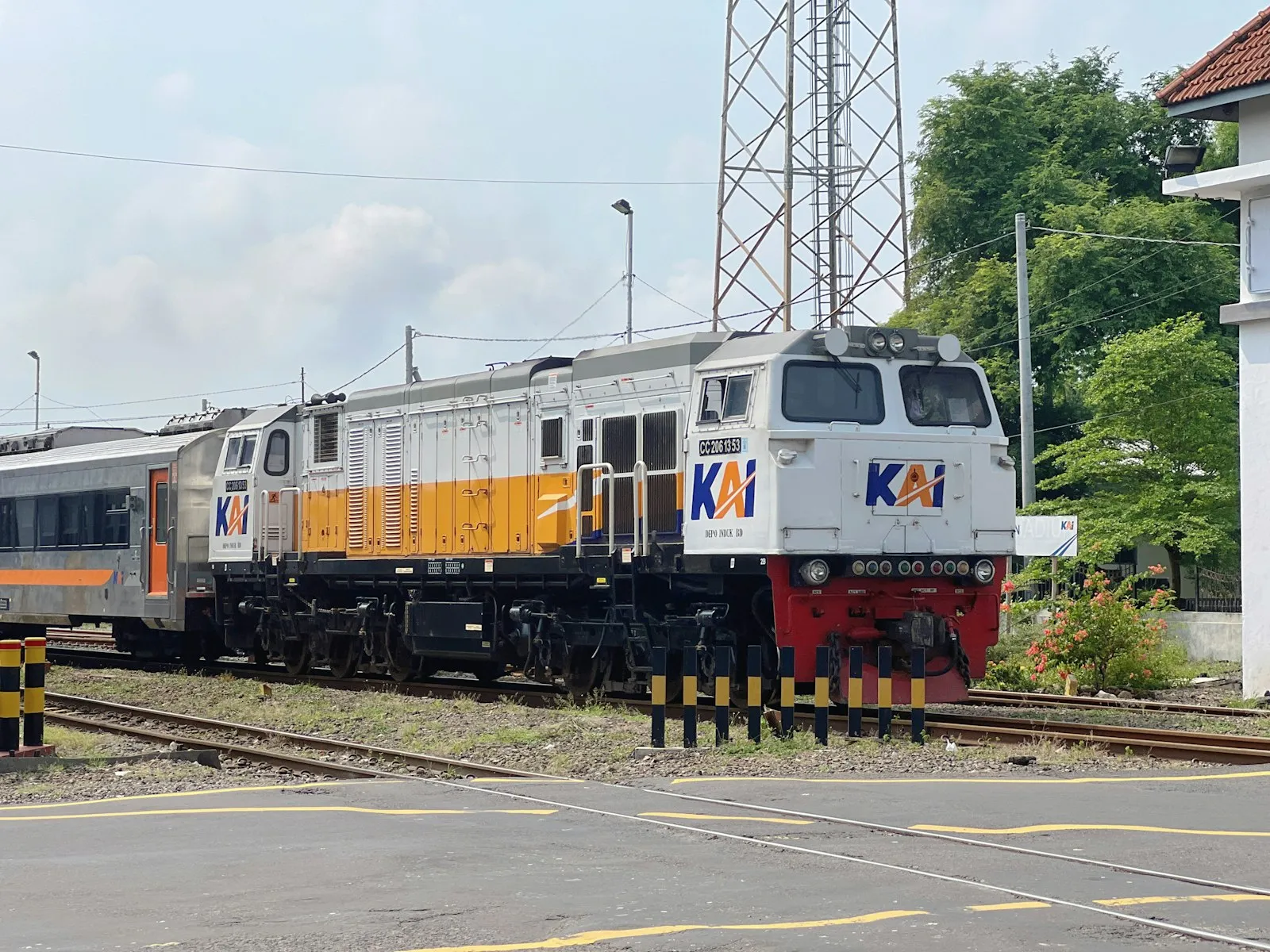
If you’re putting a train horn on a street-driven truck, the number that gets you ticketed almost never comes from your state — it comes from your city. Local noise ordinances set the real ceiling, and a stock 150 dB kit blows past every one of them.
Two layers of law: state code vs. city ordinance
There are two separate rulebooks stacked on top of each other, and people constantly confuse them.
The first layer is your state vehicle code. Most states follow the old Uniform Vehicle Code pattern: every car must have a working horn audible from at least 200 feet, and that horn may not emit an “unreasonably loud or harsh sound.” That language is doing a lot of work — it’s the clause that technically makes routine train-horn use citable in all 50 states, even though installing one is legal everywhere. For the state-by-state breakdown, see our train horn laws by state guide.
The second layer is your city or county noise ordinance. This is where the actual decibel numbers live. State codes rarely give you a hard dB figure for a passenger vehicle; cities do. And because a municipality can always be stricter than the state floor, the local ordinance is usually the binding limit in any built-up area. In practice, most urban horn citations come from the municipal code, not the state statute.
What the federal rules actually cover
A lot of “it’s federally legal” arguments fall apart here, so it’s worth being precise.
The Federal Railroad Administration rule (49 CFR Part 222) regulates locomotive horns only. It requires a train horn to sound between 96 dB minimum and 110 dB maximum, measured 100 feet in front of the locomotive. That’s it — that rule has nothing to do with the horn bolted to your truck. It’s also the source of railroad quiet zones, where communities petition to silence routine crossing horns.
On the highway side, the NHTSA’s Federal Motor Vehicle Safety Standards require that if a vehicle has a horn it must work and be driver-operable, but they set no maximum loudness, tone, or type for an aftermarket horn on a private passenger vehicle. So a 150 dB kit isn’t “illegal under federal law.” That sounds like a green light until you remember the federal government left loudness entirely to the states and cities — which is exactly where the limits you’ll actually run into are written.
For a refresher on what these numbers mean to your ears, our decibels explained guide breaks down why every 10 dB roughly doubles perceived loudness.
How city noise ordinances measure “too loud”
Municipal noise codes use one of two approaches, and many cities use both:
- Fixed decibel caps — a measured limit at a set distance, usually 50 feet from the source, broken out by zone (residential, commercial, manufacturing) and by time of day.
- ”Plainly audible” standards — no meter required; if an officer can clearly hear the sound at a stated distance (commonly 25 to 50 feet), that’s the violation.
The EPA has long identified roughly 55 dB outdoors as a reasonable residential daytime level. Real ordinances track close to that: daytime residential caps typically land in the 55–65 dB range, with nighttime caps dropping to 50–55 dB. Most cities also define quiet hours — often 10:00 PM to 7:00 AM — when allowable levels fall another 5 to 10 dB. Those are ambient-noise limits measured at the property line, not muzzle-blast numbers, which is the whole problem for a train horn.
Decibel caps in real cities
Here’s how a few major US cities write their rules. They don’t all use the same yardstick: some set absolute levels by zone and time of day, others measure against background noise at the property line.
| City | Residential rule | Other zone |
|---|---|---|
| Los Angeles | 50 dBA day / 40 dBA night (presumed ambient, LAMC 111.03) | 60 dBA day / 55 dBA night (commercial) |
| Philadelphia | 3 dB above background at the property line, and not audible beyond 100 ft (§ 10-403) | 5 dB above background at the nearest residence (non-residential sources) |
| Chicago | Use-based horn rule (see below) | — |
Two details worth knowing. The 75 dB(A)-at-50-feet figure often quoted for Los Angeles (LAMC 112.05) applies to powered equipment and tools, not vehicles; the city’s separate rule on audible signaling devices (LAMC 114.04) bans any such device heard beyond 200 feet in residential zones, though it defers to the state Vehicle Code for vehicle horns. Philadelphia has no fixed daytime/nighttime decibel table at all: since its 2006 rewrite, § 10-403 uses a relative test, so a horn only has to exceed background by 3 dB at the property line to be a violation.
Some states also publish a hard vehicle-horn ceiling. California, for example, caps aftermarket vehicle horns at 110 dB. Even that ceiling sits far below what an aftermarket train horn puts out.
Chicago is a useful example of the use-based style. Its code (section 9-40-240) prohibits sounding any horn while the vehicle is stationary except as a danger signal, and bans creating any “unreasonably loud or harsh sound” or sounding a device for an unnecessary period. There’s no friendly dB number to hide behind — almost any recreational train-horn blast in the city violates it on its face.
The bigger trap: “plainly audible” and unnecessary-use rules
Here’s the part that catches people who think they’re safe because their horn “only” reads a certain level: most ordinances don’t make you measurable to be illegal.
The “plainly audible” standard means an officer doesn’t need a sound meter at all. If your horn is clearly audible from 50 feet — and a train horn is audible from a quarter mile — the element is met. Layer on the universal use restriction: every state and most cities allow horn use only when reasonably necessary for safe operation. Honking at a friend, clearing a parking lot, or blasting it for fun isn’t a safety warning, so it’s citable regardless of decibels.
A handful of states write the use rule especially tight. California, Hawaii, Connecticut, and Maryland use language that effectively confines horns to genuine safety warnings only. The takeaway: in town, the decibel cap and the use rule are two independent ways to get cited, and the train horn trips both.
Where a 150 dB train horn lands
Let’s put the numbers next to each other.
- Factory car horn
- ~88–95 dB
- Aftermarket train horn kit
- ~130–150 dB
- Typical city residential cap
- ~50–65 dB at the property line / 50 ft
- California aftermarket horn cap
- 110 dB
Even granting that a city cap is measured at 50 feet and a train horn’s headline rating is measured at a few feet, the gap is enormous. A 150 dB horn measured close-up is still well over 110 dB out at 50 feet. There is no urban noise ordinance in the country that a routinely-used train horn doesn’t exceed. That doesn’t make owning or installing one illegal — it means using it as a daily horn in city limits is a citation waiting to happen. (And the volume isn’t just a legal issue; see what those levels do to hearing.)
Penalties and how to stay legal in town
Most noise ordinances escalate. A first offense is often a warning or a “fix-it” ticket; second offenses commonly run $50 to $250, and persistent violations can climb to $1,000 or more. In strict states a fix-it ticket can require you to remove or disable the horn to clear the violation. Beyond the noise code, the state’s “unreasonable sound” clause can stack a separate moving-violation-style citation on top.
None of this means a train horn is a bad buy — it means you treat it like what it is. Here’s how owners stay out of trouble:
- Look up your specific city/county noise ordinance before you install — the dB cap and quiet hours are what bind you, not the state floor.
- Use it only as a genuine safety warning, never for fun or while parked.
- Assume rural and highway use is far lower-risk than dense residential streets.
- Know that many buyers run train horns mainly at shows, off-road, and on rural roads where ordinances are looser or absent.
If you’re still deciding what to buy and where you’ll realistically use it, our complete train horn buyer’s guide walks through matching a kit to how — and where — you actually drive.
Sources
- FRA Train Horn Rule & Quiet Zones — federal 96–110 dB locomotive horn standard at 100 ft and quiet-zone framework (49 CFR Part 222).
- Train Horn Laws by State 2026 (train-horn.com) — FMVSS functional-horn standard, Uniform Vehicle Code 200-ft / “unreasonably loud” pattern, strict-state list.
- Los Angeles Municipal Code § 111.03 — Minimum Ambient Noise Level — presumed ambient levels: 50 dBA day / 40 dBA night residential, 60 / 55 dBA commercial.
- Los Angeles Municipal Code § 112.05 — Powered Equipment — the 75 dB(A) at 50 ft limit, which applies to powered equipment and tools in residential zones, 7 AM–10 PM.
- Los Angeles Municipal Code § 114.04 — Audible Signaling Devices — 200-ft audibility ban in residential zones; defers to the state Vehicle Code for vehicle horns.
- Philadelphia Code Chapter 10-400 — Noise and Excessive Vibration (PDF) — § 10-403 relative limits: 3 dB above background / 100-ft audibility for residential sources, 5 dB and 10 dB above background for non-residential sources.
- California AB-2245 — Aftermarket Horn Decibel Limit — California’s 110 dB(A) cap on aftermarket vehicle horns.
- Are Train Horns Illegal to Have on Your Car? (LegalClarity) — FMVSS 101 detail, 200-ft state requirement, factory vs. train-horn dB ranges, fix-it ticket penalties.
- What Is a Noise Ordinance? Violations and Penalties (LegalClarity) — EPA 55/45 dB levels, 55–65 dB daytime / 50–55 dB night caps, plainly-audible 25–50 ft standard, 10 PM–7 AM quiet hours, $50–$1,000+ penalty range.
- Chicago Municipal Code 9-40-240 — Use of Horns and Signal Devices — stationary-horn and unreasonable-sound prohibitions, danger-signal exception.
- Chicago Municipal Code Chapter 8-32 — Noise and Vibration Control — citywide noise-control framework and exceptions.
Keep reading
- The Complete Train Horn Buyer’s Guide 2026 — pick a kit that fits how and where you drive.
- Decibels Explained: How Loud Is 150 dB Really? — what those numbers mean for perceived loudness.
- Can a Train Horn Damage Your Hearing? — the safety side of high-output horns.
- Train Horn Laws by State — the state-level layer that sits under every city ordinance.
Frequently asked questions
Quick answers to the questions people ask most about this topic.
- Are train horns illegal in the city?
- Installing one is legal everywhere, but using a train horn routinely in a city almost always violates the local noise ordinance. Aftermarket kits put out roughly 130–150 dB, far above the 50–65 dB residential caps most cities set, plus use-based rules that limit horns to genuine safety warnings.
- What decibel limit do city noise ordinances set for vehicle horns?
- Most cities cap residential noise around 50–65 dB measured at the property line or about 50 feet, dropping 5–10 dB during quiet hours (often 10 PM to 7 AM). Los Angeles presumes a residential ambient level of just 50 dBA by day and 40 dBA at night, while California sets a 110 dB ceiling for aftermarket vehicle horns.
- Does state law or city law control train horn loudness?
- Both, but the city ordinance is usually the binding limit. State vehicle codes require a horn audible at 200 feet and ban 'unreasonably loud' sounds, while cities layer on specific decibel caps and quiet hours. A municipality can always be stricter than the state floor.
- What's the fine for an illegal train horn?
- A first offense is often a warning or fix-it ticket. Repeat noise-ordinance violations commonly run $50 to $250, and persistent ones can reach $1,000 or more. A state 'unreasonable sound' citation can be stacked on top of the local noise fine.
Related reviews & guides
Best Train Horn for a Bicycle or E-Bike: AirZound vs Air Builds

Best Train Horn for Toyota 4Runner: Kits, Mounting & Fitment (2026)
Best Train Horn for Jeep Gladiator JT: Bolt-On & Spare-Tire Kits

Best Train Horn for Chevy Colorado & GMC Canyon: Fitment Guide
Train Horn Warranties Compared: HornBlasters vs Kleinn vs Vixen