Are Train Horns Legal on Cars? State-by-State Quick Reference
Are train horns legal on cars? Installing one is legal in all 50 states - use is the catch. Quick-reference status for every state, plus CA, NY, NJ and DC rules.

Are train horns legal on cars? Yes — you can buy and install one in every US state, and in most states a properly wired kit is road-legal hardware. The catch is never ownership: it’s how loud the horn is and when you sound it. Here’s the 50-state quick reference, built on the primary statutes behind our full state-by-state legal guide.
The short answer before the table
Three facts frame everything below:
- No state bans installing a train horn on a private car or truck. Across all 50 states plus D.C., we found zero statutes that prohibit owning or mounting one.
- Every state regulates the sound. Nearly all of them inherited the same mid-century Uniform Vehicle Code language: your vehicle needs a horn audible from at least 200 feet, but no horn may emit “an unreasonably loud or harsh sound or a whistle.”
- Every state limits use. The standard phrasing lets a driver sound the horn only “when reasonably necessary to insure safe operation.” Blasting a train horn at your buddy’s mailbox is a violation in all 50 states.
Cities then layer their own noise ordinances on top of state law, so a horn that passes the state test can still draw a municipal ticket — we cover that separately in our city noise ordinance guide.
The 200-foot rule and the “unreasonably loud or harsh” trap
Texas is a clean example of the template most states use. Per the Texas Transportation Code:
A horn in good working condition that emits a sound audible under normal conditions at a distance of at least 200 feet… A warning device, including a horn, may not emit an unreasonably loud or harsh sound or a whistle.
Notice what’s missing: a number. None of the 51 horn statutes we track sets a numeric decibel cap for vehicle horns. The standard is qualitative — an officer decides whether your horn sounded “unreasonably loud or harsh.” A 150 dB-class train horn kit obviously can, which is why enforcement varies so much by state and even by county. California actually tried to put a number on it: a 2010 bill (AB-2245) would have capped aftermarket horns at 110 dB(A), and the Governor vetoed it, noting existing law already barred unreasonably loud horns.
The 200-foot clause cuts the other way, too. It’s an equipment minimum — your vehicle must always carry a working horn audible at 200 feet. Rip out the factory horn and wire a train-horn-only setup, and you can fail that requirement on paper no matter how loud the new horn is.
State-by-state quick reference
We maintain a statute-cited legal page for every state, re-verified against official legislative sources on a rolling schedule. Here’s where all 51 jurisdictions land in our classification. This is an editorial summary, not legal advice — click through to your state for the statute text, penalties, and enforcement notes.
Legal (42 states). Install it, keep the factory horn connected, use it only as a genuine warning, and you’re inside the law in: Alabama, Alaska, Arizona, Arkansas, Colorado, Delaware, Florida, Georgia, Idaho, Indiana, Iowa, Kansas, Kentucky, Louisiana, Maine, Michigan, Minnesota, Mississippi, Missouri, Montana, Nebraska, Nevada, New Hampshire, New Mexico, North Carolina, North Dakota, Ohio, Oklahoma, Oregon, Pennsylvania, Rhode Island, South Carolina, South Dakota, Tennessee, Texas, Utah, Vermont, Virginia, Washington, West Virginia, Wisconsin, and Wyoming.
Mounted-only (5 states). The statute doesn’t ban the install, but the enforcement climate makes public-road use a citation magnet. Treat the horn as show-and-off-road equipment here:
- Connecticut — Conn. Gen. Stat. §14-80 horn rules, active suburban enforcement
- Hawaii — state administrative rules plus Honolulu’s own horn code
- Illinois — 625 ILCS 5/12-601, with aggressive Chicago and collar-county enforcement
- Maryland — Transp. §22-401, tight enforcement in the DC-Baltimore corridor
- Massachusetts — M.G.L. Ch. 90 §16, complaint-driven citations statewide
Restricted (3 states + D.C.). These jurisdictions treat a loud aftermarket horn itself — not just its use — as a likely violation:
- California — CVC §27000’s “unreasonably loud or harsh” clause is cited against the installed horn, even without a sounding event
- New York — VTL §375(1) horn rules, plus the horn is checked at the state’s annual safety inspection
- New Jersey — N.J.S.A. 39:3-69, strict equipment language backed by some of the most active roadside enforcement on the East Coast
- Washington, D.C. — municipal horn and noise regulations in one of the densest enforcement environments in the country
The restricted four, up close
California is the state everyone asks about. There’s still no numeric decibel cap — the vetoed AB-2245 was the only serious attempt — so officers cite under CVC §27000’s qualitative standard and §27001’s use limitation. California is a fix-it-ticket state: a first equipment citation typically gives you about 30 days to remove the horn, with the fine waived on proof of compliance. Repeat or uncorrected violations escalate into real money.
New York and New Jersey share a theme: New York’s annual safety inspection puts eyes on your equipment, New Jersey officers run equipment spot checks during traffic stops, and both states’ statutes give inspectors and officers broad language to work with. A train horn wired alongside a functioning factory horn usually survives scrutiny; a train-horn-only install often doesn’t.
Washington, D.C. combines municipal horn regulations with a compact urban footprint where any 150 dB blast lands on witnesses. Federal rules add a twist for the region’s quiet-zone rail crossings, but that governs actual trains, not your truck.
Why your kit isn’t a “real” train horn under federal law
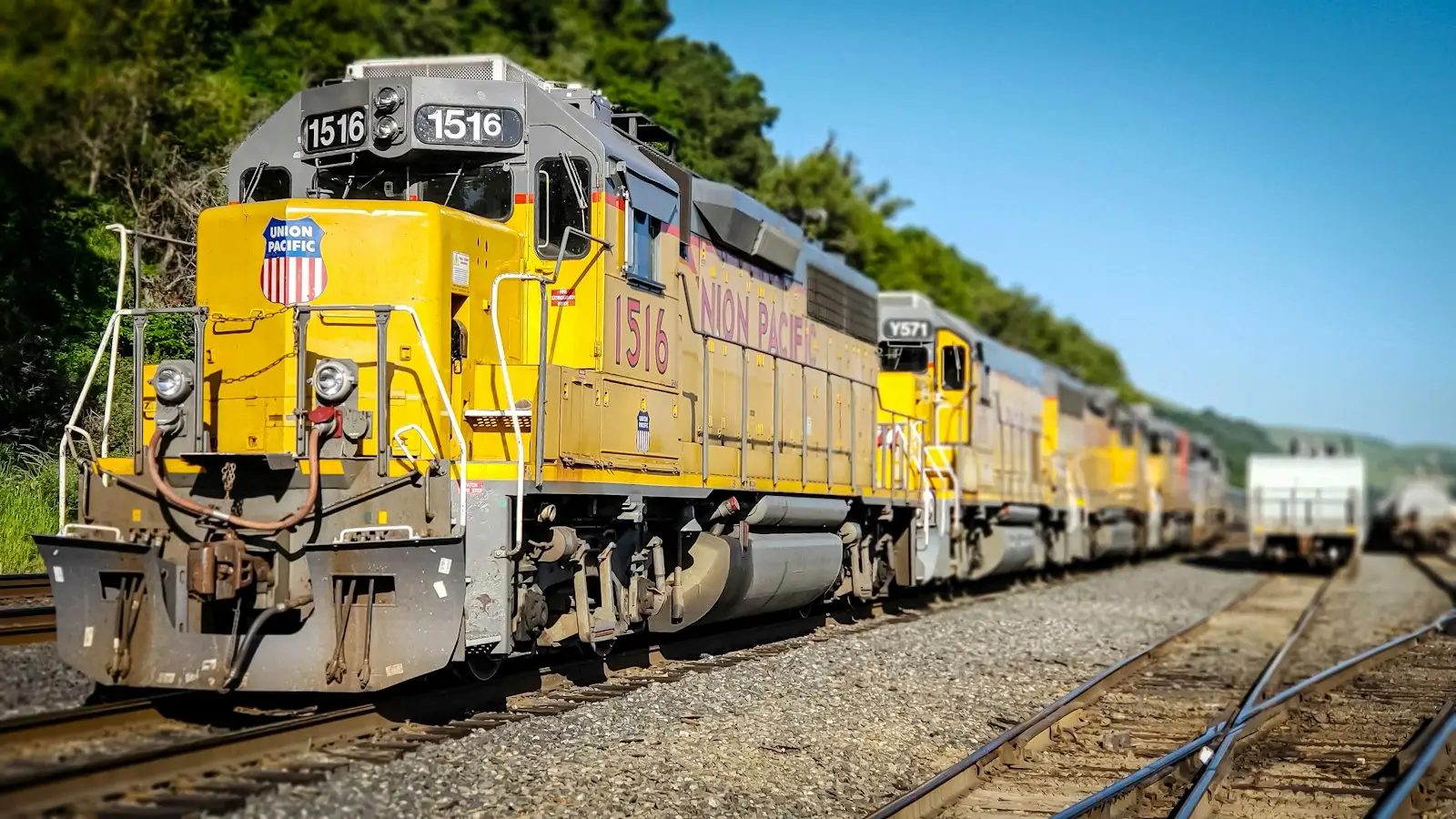
Real locomotive horns answer to a different rulebook entirely. Under the federal locomotive safety standards, a train’s horn must produce 96 to 110 dB(A) measured 100 feet forward of the locomotive — and the FRA’s train horn rule dictates when engineers must sound it at grade crossings. None of that applies to a car or truck. There is no federal statute banning an aftermarket train horn on a private vehicle, and no federal decibel ceiling for one either; federal vehicle-equipment rules set minimums (your car must have a working horn), while the states police the maximums through the “unreasonably loud or harsh” standard.
That gap explains the marketing you’ll see. Kits advertise “150 dB” against no federal yardstick at all — and as we found when comparing advertised versus real-world decibels, most kits measure well below the sticker anyway.
How to stay legal in all 50 states
The compliance pattern is the same everywhere, and it’s cheap insurance:
- Keep the factory horn wired to the stock button. The 200-foot audibility rule applies to the vehicle, and the OEM horn is what satisfies it.
- Put the train horn on its own covered or keyed switch, so nobody can claim it replaced the primary horn.
- On public roads, sound it only as a genuine hazard warning — the “reasonably necessary to insure safe operation” test is the law in essentially every state.
- Check your city and county noise ordinances, which stack on top of state law.
- Read your state’s page in our legal hub before you order parts, and re-check it before a cross-country trip.
If you’re still picking hardware, size the kit to your legal reality: our complete train horn buyer’s guide breaks down dual, triple, and quad-trumpet kits — and a moderate setup draws far less attention in a restricted state than a full locomotive clone.
Keep reading
- The Complete Train Horn Buyer’s Guide 2026
- Train Horn Decibel Limits by City: Noise Ordinances Explained
- Advertised vs Real-World Decibels: Why ‘150 dB’ Horns Aren’t
- Decibels Explained: How Loud Is 150 dB Really?
- How to Install a Train Horn: Step-by-Step DIY Guide
Sources
- Texas Transportation Code §547.501 — Horns and Warning Devices (FindLaw) — 200-foot audibility requirement and the “unreasonably loud or harsh sound or a whistle” prohibition quoted above
- California Vehicle Code §27000 (official leginfo portal) — California’s horn equipment rule and “unreasonably loud or harsh” clause
- California Vehicle Code §27001 (official leginfo portal) — California’s horn-use limitation (“reasonably necessary to insure safe operation”)
- California AB-2245 (2009-2010) bill status (official leginfo portal) — the proposed 110 dB(A) aftermarket-horn cap, vetoed September 2010
- 625 ILCS 5/12-601 — Horns and warning devices (Illinois General Assembly) — the Uniform Vehicle Code-style wording shared by most states
- New York VTL §375 (New York State Senate) — New York’s vehicle equipment law covering horns
- N.J.S.A. 39:3-69 — Horns and audible warning devices (Justia) — New Jersey’s horn statute
- 49 CFR 229.129 — Locomotive horn (Cornell Law LII) — federal 96-110 dB(A) at 100 feet requirement for real locomotive horns
- FRA Train Horn Rule and Quiet Zones (railroads.dot.gov) — the federal rule governing when locomotives sound horns at grade crossings
Frequently asked questions
Quick answers to the questions people ask most about this topic.
- Are train horns illegal to put on a car?
- No state bans installing a train horn on a private vehicle. What every state regulates is the sound and the use: horns may not emit an 'unreasonably loud or harsh sound,' and you may only sound a horn when reasonably necessary for safe operation.
- What states are train horns illegal in?
- None outright. California, New York, New Jersey, and Washington, D.C. are the most restrictive, where a loud installed horn itself can draw a citation. Connecticut, Hawaii, Illinois, Maryland, and Massachusetts tolerate the install but aggressively cite road use. The remaining 42 states are road-legal with a working factory horn.
- Is there a decibel limit for train horns on cars?
- No state horn statute we track sets a numeric decibel cap - the legal standard is qualitative ('unreasonably loud or harsh'). California's 2010 attempt to cap aftermarket horns at 110 dB(A) (AB-2245) was vetoed and never became law.
- Do I have to keep my factory horn if I add a train horn?
- Yes. Nearly every state requires your vehicle to carry a horn audible from at least 200 feet, and the factory horn is what satisfies that equipment rule. Wire the train horn to its own separate switch and leave the stock horn on the steering-wheel button.
- Can I legally honk a train horn in traffic?
- Only as a genuine hazard warning. The standard state rule allows horn use just 'when reasonably necessary to insure safe operation' - prank blasts or honking at pedestrians is a violation in every state, regardless of how legal the install is.
Related reviews & guides

Train Horns on Motorcycles: What Fits, What's Legal & What Helps
Best Train Horn for a Bicycle or E-Bike: AirZound vs Air Builds

Best Train Horn for Toyota 4Runner: Kits, Mounting & Fitment (2026)
Best Train Horn for Jeep Gladiator JT: Bolt-On & Spare-Tire Kits

Best Train Horn for Chevy Colorado & GMC Canyon: Fitment Guide