Train Horn Pressure Switches: Cut-In, Cut-Out & 110/145 vs 165/200
What the cut-in and cut-out numbers on a train horn pressure switch mean, how the relay wiring works, and when to run a 110/145 vs a 165/200 switch.
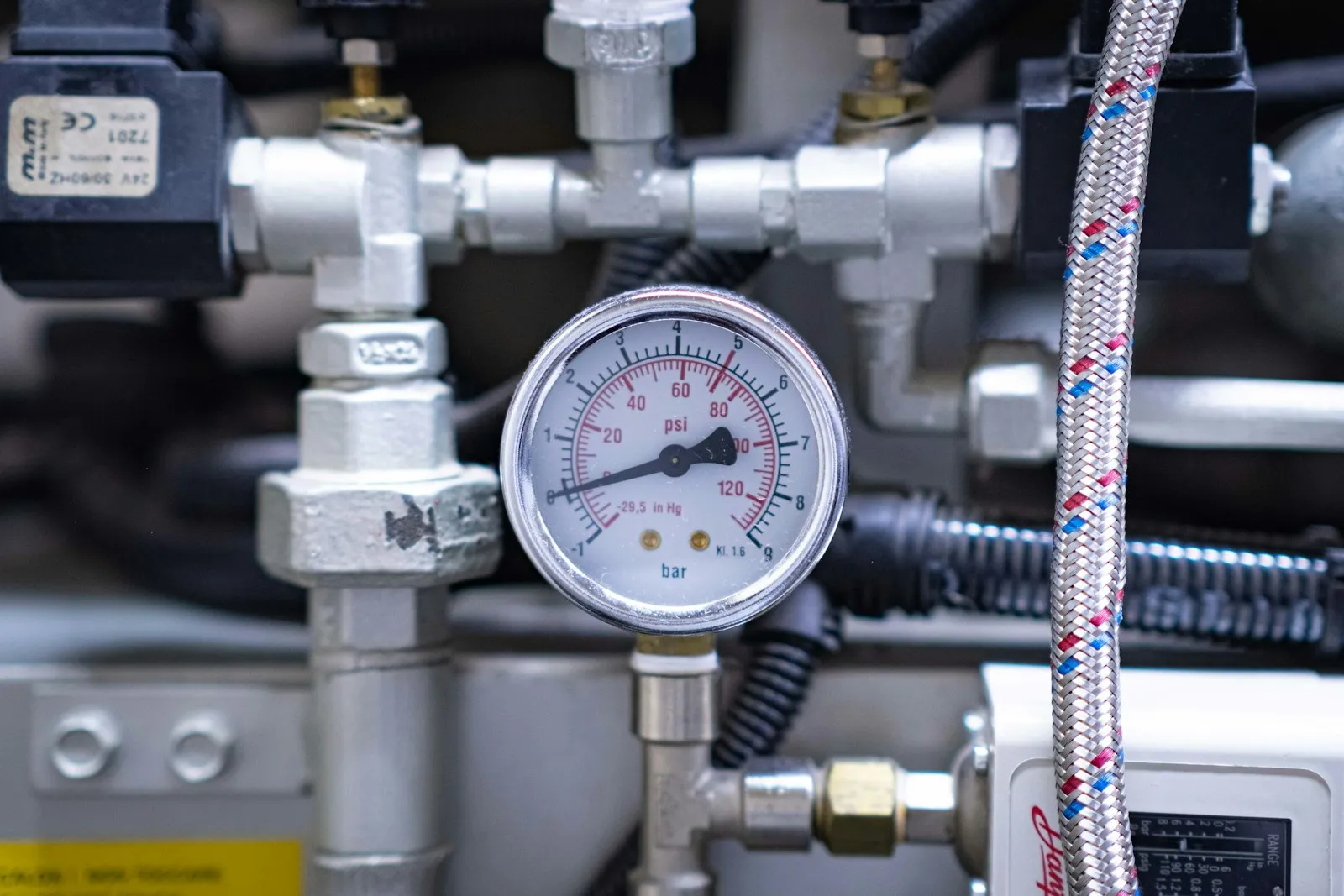
If your kit has an air tank, one small part decides when your compressor runs and when it rests: the train horn pressure switch. The two numbers stamped on it — cut-in and cut-out, like 110/145 or 165/200 — shape how your whole air system behaves, and picking the wrong pair can overwork a compressor or over-pressurize a tank.
What a Train Horn Pressure Switch Actually Does
A pressure switch is an automatic on/off switch that reads tank pressure through a threaded port, usually 1/8” NPT, on your tank or air manifold. When pressure falls to the cut-in number, the switch closes an electrical circuit and the compressor starts pumping. When the tank climbs back to the cut-out number, the switch opens the circuit and the compressor stops. That is the entire job — but it is the difference between an air system you never think about and one you have to babysit with a toggle switch and a gauge.
Two things first-timers mix up:
- The pressure switch does not fire the horn. Your horn button controls a solenoid valve that dumps tank air to the trumpets. The pressure switch only manages the compressor that refills the tank afterward.
- It is not a safety valve either. A pressure-relief (pop-off) valve is a separate mechanical failsafe. The switch is the everyday control; the relief valve is the backup if the switch ever sticks closed.
Per HornBlasters’ wiring guides, the sequence is simple: the switch senses low tank pressure, closes the circuit, that energizes a relay, and the relay connects battery power to the compressor. More on the relay in a minute.
Cut-In and Cut-Out: Reading the Two Numbers
Cut-in (the first, lower number) is the restart pressure — the tank level at which the switch turns the compressor on. Cut-out (the second, higher number) is the shut-off pressure. The gap between them — 35 PSI on both a 110/145 and a 165/200 switch — is the working band, and it exists so the compressor is not constantly flicking on and off every time you tap the horn.
Viair, the compressor brand inside name-brand kits like HornBlasters’ Conductor’s Special 540, publishes this sealed pressure switch lineup:
| Switch rating (cut-in / cut-out) | Working band | Contact rating |
|---|---|---|
| 85 / 105 PSI | 20 PSI | 30 amp |
| 90 / 120 PSI | 30 PSI | 30 amp |
| 110 / 145 PSI | 35 PSI | 30 amp |
| 140 / 175 PSI | 35 PSI | 20 or 30 amp |
| 165 / 200 PSI | 35 PSI | 20 or 30 amp |
All of them carry a published tolerance of ±5% of the specified pressures, come in 12-volt and 24-volt versions, and use a 1/8” NPT male thread on most variants.
One labeling note before it confuses you: Viair’s own catalog lists a 110 on / 145 off switch, while HornBlasters describes the switch in its 150 PSI Conductor’s Special 540 kit as 110 on / 150 off. With a ±5% tolerance — about ±7 PSI at the top end — the difference is paper-thin. They are the same class of switch; don’t sweat which label your kit uses.
110/145 vs 165/200: Which One to Run
Three hard rules first, then the payoff.
- The cut-out can never exceed your compressor’s max working pressure. The Viair 400C found in 150 PSI kits like the Conductor’s Special 540 is rated for 150 PSI max, so 110/145 is its ceiling. Bolt a 165/200 switch onto it and the compressor will grind away past its rating and may never reach the 200 PSI shut-off at all. The Viair 480C, rated for 200 PSI, is the kind of compressor a 165/200 switch belongs on.
- The cut-out can never exceed your tank’s rated pressure. Kits built as 150 PSI systems ship tanks rated accordingly. Check the tank’s stamped rating before you ever upgrade the switch alone.
- Higher pressure costs duty cycle. Viair rates the 480C at 100% duty at 100 PSI but only 50% at 200 PSI — squeezing in that last 50 PSI is hard work, and the compressor needs twice the rest. Our guide to compressor duty cycle covers what those percentages mean in practice.
So what does a 165/200 switch buy you when the whole system is rated for it? Stored air. Compressing to 200 PSI instead of 145 packs meaningfully more usable air into the same tank, which means longer blasts before the horn starts to sag in pitch and volume. For the full picture of how pressure translates into horn loudness, see our PSI guide — and if you’re deciding between more pressure and more volume, the air tank size guide walks through the same tradeoff from the tank side.
A concrete example: HornBlasters’ Conductor’s Special 540 pairs a Viair 400C with a 5-gallon tank and a 110-on/150-off pressure switch with a 40-amp relay — a 150 PSI system the company rates for 10-12 seconds of continuous honking. That is the configuration most buyers should copy: every component rated to the same number, switch included.
Why the Switch Needs a Relay
A Viair 400C can pull up to 30 amps at 12 volts. You do not want that current arcing across small switch contacts mounted way back at the tank, so the standard setup routes it through an automotive relay instead:
- Tank pressure drops to cut-in — the pressure switch closes and energizes the relay’s low-current coil side (pins 85 and 86).
- The relay’s heavy contacts (pins 30 and 87) connect the fused, 10-gauge battery feed to the compressor, and it starts pumping.
- Tank reaches cut-out — the switch opens, the relay drops out, and the compressor stops.
The pressure switch only ever handles the relay coil’s trickle of current, so its contacts last. Many kits simplify this further with a pressure switch that has a 40-amp relay built in. Either way, the logic is identical, and our relay wiring guide has the full pin-by-pin walkthrough and the mistakes to avoid.
Matching the Switch to the Rest of Your System
Before buying a switch — or upgrading one — run this checklist:
- Cut-out at or below the compressor’s max working pressure
- Cut-out at or below the tank’s rated pressure
- Voltage matches your vehicle — Viair sells 12V and 24V versions
- Thread matches the open port on your tank or manifold (1/8” NPT is the common size)
- Sealed body if it lives under the truck — the widely used Viair 90217, for example, is a sealed 12/24-volt 110/145 unit
- A relay in the circuit, whether built into the switch or wired separately
When a Pressure Switch Goes Bad
Pressure switches are simple, but they do wear out. The usual symptoms:
- Compressor never kicks on, even with the tank drained below cut-in — the switch is stuck open or its contacts are dead
- Compressor never shuts off and the relief valve pops — contacts stuck closed
- Shut-off pressure drifting well outside the ±5% tolerance from one fill to the next — the internal spring or diaphragm is tired
- Compressor short-cycling every minute or two while parked — usually an air leak bleeding the tank down to cut-in, not the switch itself
A quick multimeter continuity test across the switch terminals with the tank drained (should read closed) and at full pressure (should read open) settles most diagnoses in five minutes. If the switch checks out and the system still misbehaves, work through our train horn troubleshooting guide — the fault is usually a relay, ground, or leak.
Keep reading
- Train Horn PSI Explained: What Pressure Do You Need? — how tank pressure translates into loudness and honk time
- Train Horn Compressor Duty Cycle: Intermittent vs Continuous — why running to 200 PSI halves your compressor’s work-rest ratio
- Train Horn Air Tank Size Guide: 1, 2, 3 & 5 Gallon — the other half of the stored-air equation
- Wiring a Train Horn Relay: Diagrams & Common Mistakes — pin-by-pin wiring for the circuit described above
- Train Horn Not Working? Troubleshooting Why It Won’t Blow — diagnosing the rest of the system
Sources
- Viair Sealed Pressure Switch — full cut-in/cut-out lineup (85/105 through 165/200), ±5% tolerance, contact ratings, thread sizes, and 12V/24V options
- Viair 400C Compressor — 150 PSI max working pressure, 33% duty cycle at 100 PSI, up to 30-amp draw at 12 volts
- Viair 480C Compressor — 200 PSI max working pressure, 100% duty cycle at 100 PSI and 50% at 200 PSI, 23-amp max draw
- HornBlasters: Wire Pressure Switch with Separate 40A Relay — relay pin functions and the fused 10-gauge battery feed
- HornBlasters: Wiring Your Pressure Switch w/ 40 Amp Relay Built-In — how the built-in-relay switch controls the compressor
- HornBlasters Conductor’s Special 540 Train Horn Kit — Viair 400C, 5-gallon 150 PSI system, 110-on/150-off pressure switch with 40-amp relay, 10-12 seconds of honking
- TruckSpring: Viair 90217 Sealed Pressure Switch — part number, 110-on/145-off rating, 1/8” NPT male port, and sealed 12/24-volt spec for the 90217
Frequently asked questions
Quick answers to the questions people ask most about this topic.
- What do the two numbers on a train horn pressure switch mean?
- The first number is the cut-in pressure: when tank pressure drops to it, the switch turns the compressor on. The second is the cut-out: when the tank reaches it, the switch shuts the compressor off. A 110/145 switch keeps the tank cycling between 110 and 145 PSI.
- Can I use a 165/200 pressure switch with a 150 PSI compressor?
- No. A compressor like the Viair 400C has a 150 PSI max working pressure, so a 165/200 switch would force it to pump past its rating and it may never reach the 200 PSI shut-off. The cut-out must match the lowest-rated component in your system — compressor and tank included.
- Do I need a relay with a train horn pressure switch?
- In practice, yes. Train horn compressors can draw up to 30 amps, and a relay lets the pressure switch handle only the low-current coil side while the relay's heavy contacts carry compressor power. Many kits ship a pressure switch with a 40-amp relay built in.
- Will a higher cut-out pressure make my train horn louder?
- It stores more air in the same tank, so blasts hold full strength longer before the horn sags in pitch and volume. Only raise the cut-out if your compressor, tank, and horn are all rated for the higher pressure, and expect a duty-cycle penalty on the compressor.
- Why does my compressor shut off at 150 PSI when the switch says 145?
- Viair publishes a ±5% tolerance on its pressure switch settings, so a 145 PSI cut-out can legitimately open anywhere from roughly 138 to 152 PSI. Drift well beyond that range from one fill to the next is a sign the switch is wearing out.
Related reviews & guides

Locomotive Horn Rules: What 49 CFR 229.129 Requires (96-110 dB)
Train Horn PSI Explained: What Pressure Do You Need?
Wayside Horns Explained: Pole-Mounted Crossing Horns and FRA Rules

Train Horn Safety Relief Valve: PSI Rating, Placement and Testing

Train Horn Kit Weight: Tank, Compressor & Payload Math Explained