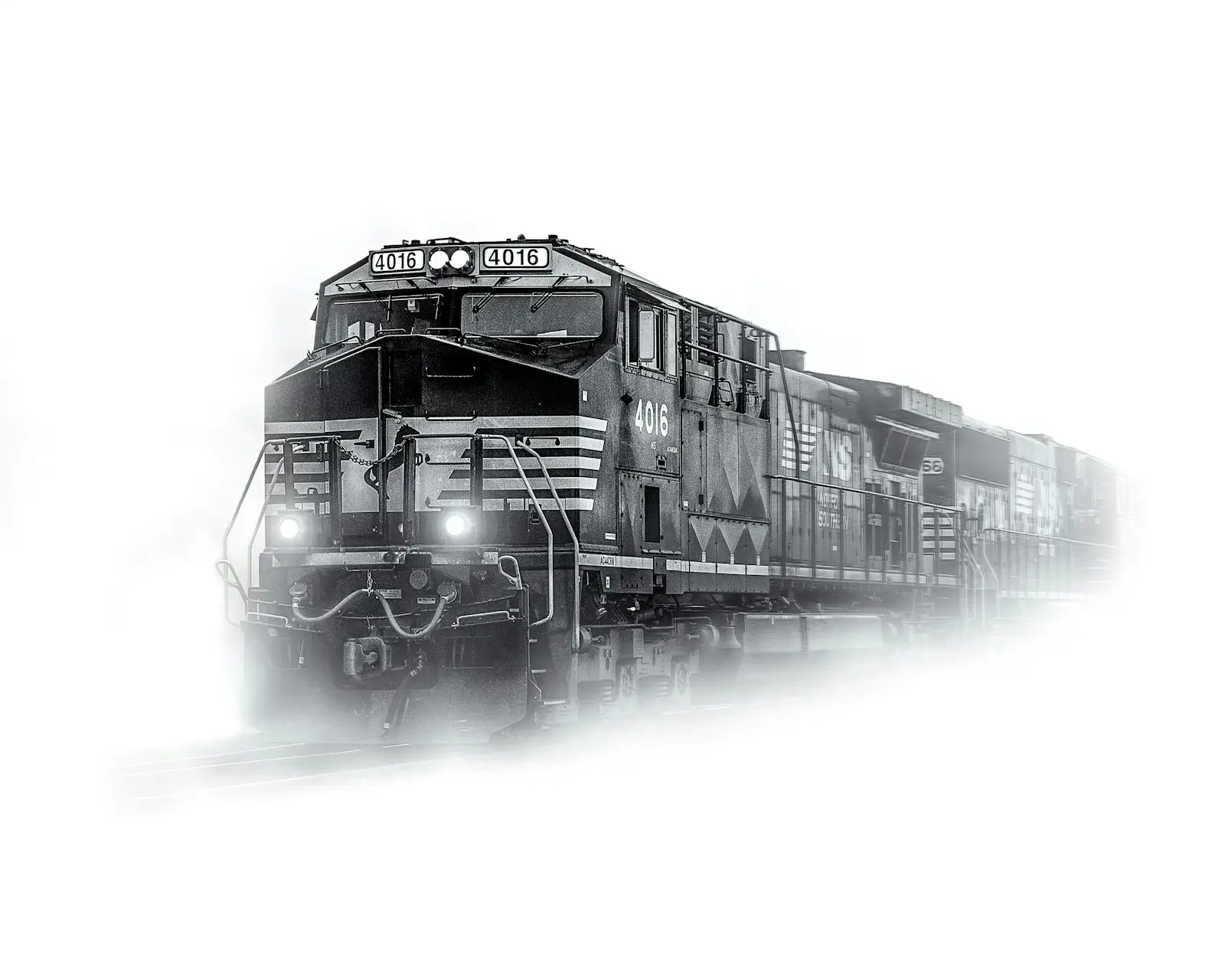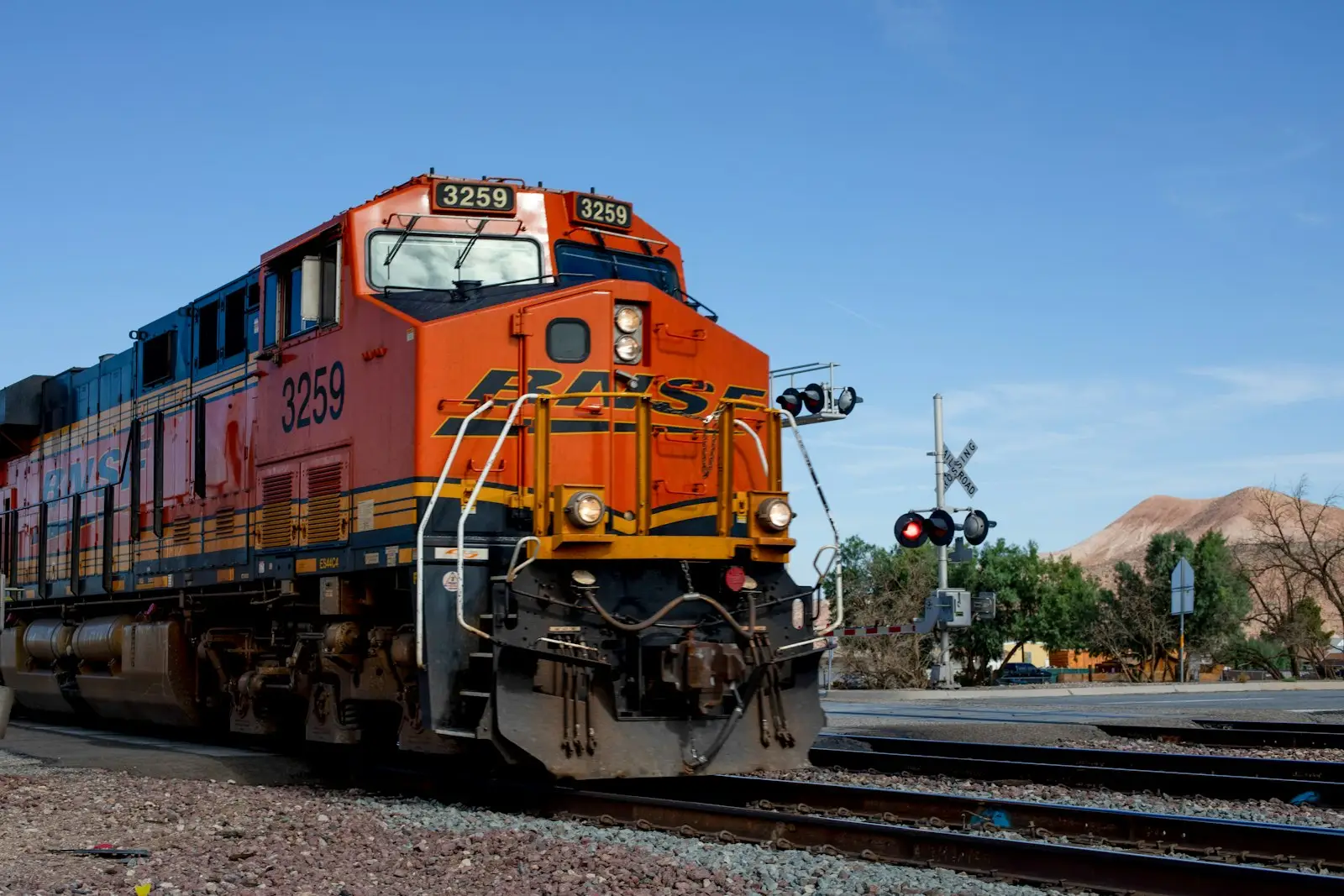
- +Real Nathan AirChime locomotive horn — same kettle-drum platform as K5LA
- +144 dB at 10 ft (per Air Horns of Texas) — comparable output to the K5LA
- +Lighter than K5LA: 32 lb vs 38 lb — easier to mount on smaller chassis
- +Lower-profile manifold (9.75″ H) fits installs where the K5LA won't
- +Used on Metra cab cars and EMUs across U.S. commuter rail
- −Standalone horn only — no air system, valve, or wiring included
- −Requires aftermarket 5+ gallon tank, 1NM-class compressor, solenoid valve, complete wiring
- −$1,949.99 standalone + ~$1,500 air system = ~$3,500 fully installed
- −3-chime voicing is simpler than K5LA's 5-chime — less complex 'freight train' chord
- −Same legal restrictions as K5LA — exceeds state vehicle code caps in most jurisdictions
Methodology
This review aggregates publicly available information from Nathan AirChime’s manufacturer site, specialty aftermarket retailers (HornBlasters, Pure Diesel Power, and — before its site went offline — Air Horns of Texas), and Wikipedia’s catalog of Nathan Manufacturing horn models. We do not perform hands-on testing. All numeric claims cite their source. Last reviewed: August 30, 2026.
Quick verdict
The Nathan AirChime K3LA is, in editorial opinion, the better choice for buyers who want a real locomotive horn but don’t have the install envelope or budget for a K5LA. It plays a 3-chime chord using the same kettle-drum diaphragm platform as the K5LA, weighs 32 lb (vs K5LA’s 38 lb), and has a 9.75″-tall manifold that fits more installs than the K5LA’s 10″ profile. It is also the most-installed Nathan horn on Metra commuter rail cab cars and EMUs across the U.S. We rate it 4.5/5 for buyers who specifically want a Nathan AirChime real horn at the smaller-chassis tier.
For the larger K5LA see our Nathan AirChime K5LA review.
What it is
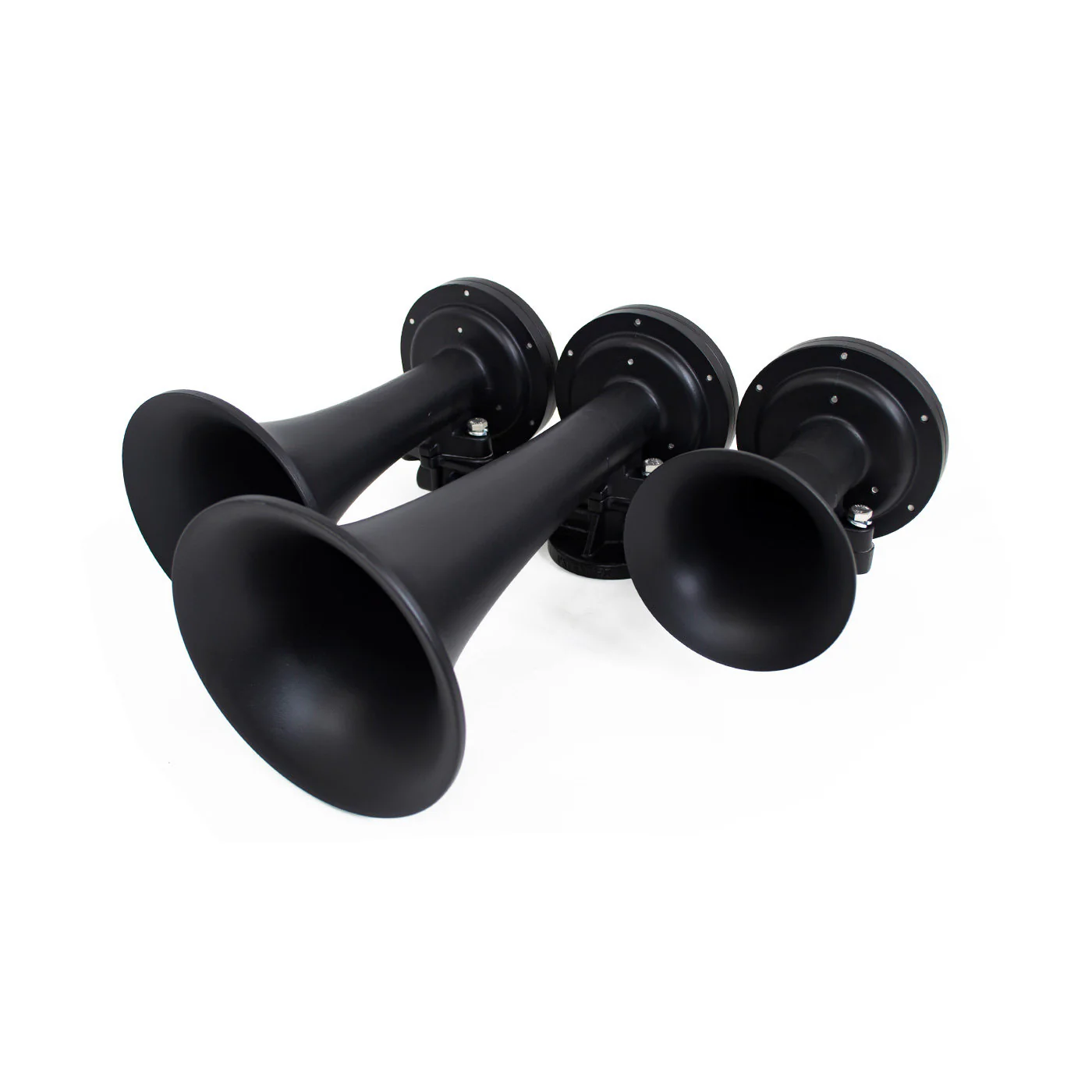
The K3LA is a 3-chime cast-aluminum locomotive air horn manufactured by Nathan AirChime. The model designation breaks down as:
- K — kettle-drum double-diaphragm bell design (same as K5LA)
- 3 — three chimes (three tuned bells)
- L — low-profile manifold
- A — American tuning (vs Canadian)
It is the 3-chime sibling of the K5LA — same physical diaphragm platform, same operating PSI range, but with three bells instead of five.
History and adoption
Per Wikipedia: Nathan Manufacturing, the K3LA is “most commonly found on Metra’s gallery cab cars, as well as the Highliner II and Silverliner V EMUs” — Chicago and Philadelphia commuter rail. It also appears on:
- Some short-line freight locomotives where the larger K5LA isn’t justified
- Heritage and museum equipment
- Heavy industrial / mining equipment requiring a smaller-profile horn
The K3LA is functionally a “Metra Standard” in much the same way the K5LA is the “freight standard” — both are real Nathan AirChime products, with the K3LA tuned for smaller-platform applications.
Specifications
All figures from the HornBlasters K3 product page, the Pure Diesel Power K3LA listing, and the Air Horns of Texas K3LA listing (that retailer’s site went offline in 2026; its published figures are retained with attribution):
| Spec | Value |
|---|---|
| Configuration | 3-chime, low-profile manifold |
| Bell material | Die-cast aluminum bells, sand-cast aluminum manifold |
| Diaphragm | Stainless steel |
| Fasteners | Stainless steel |
| Weight | 32 lb (14.5 kg) |
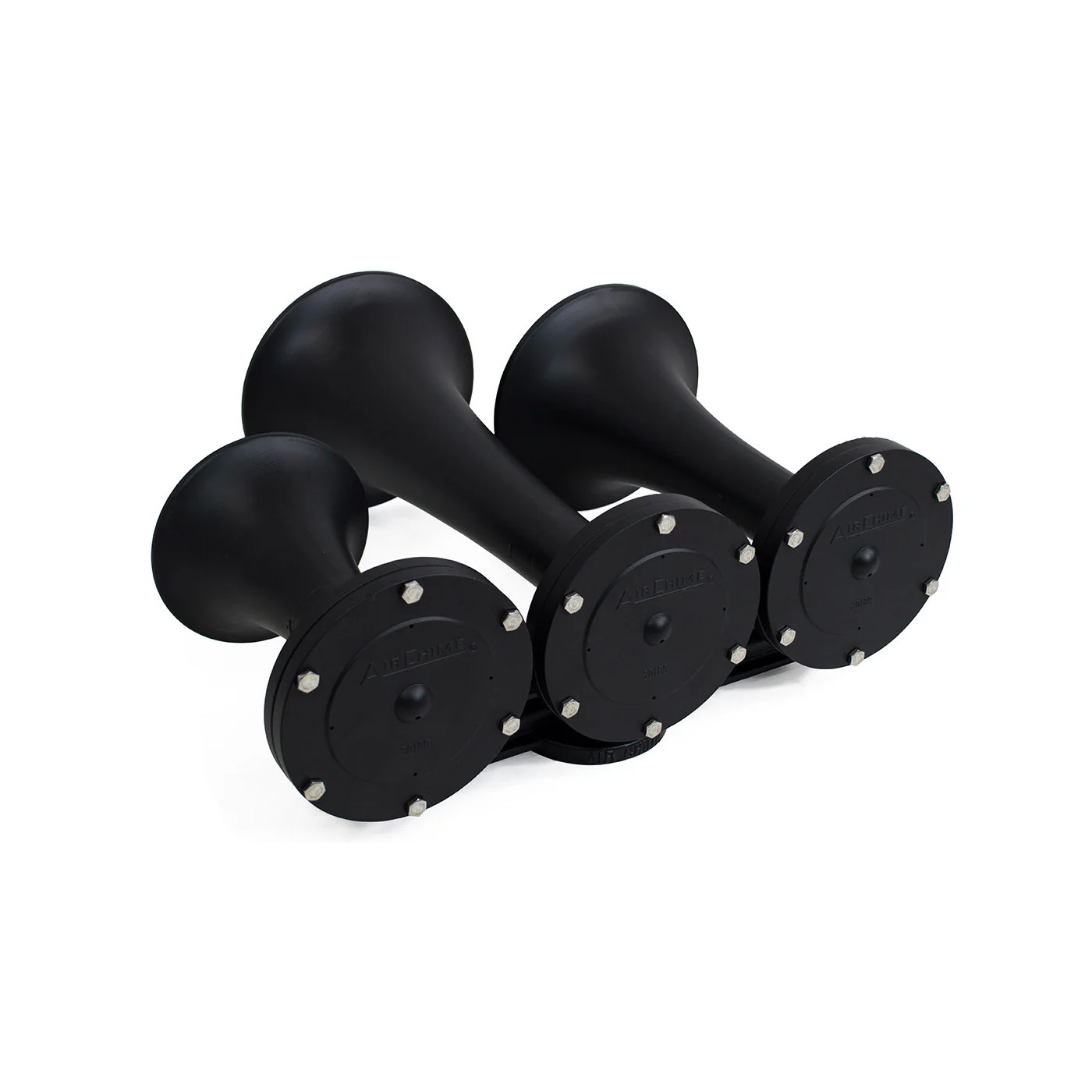
| Dimensions | 18.25″ L × 16.25″ W × 9.75″ H |
| Air inlet | 1/2″ NPT |
| Air supply requirement | At least 1 gal at 120 PSI minimum (per Pure Diesel Power listing) |
| Operating pressure | 90–140 PSI (typical for K-series) |
| Sound output | 144 dB at 10 ft (Air Horns of Texas published claim) |
| Standalone horn price | $1,949.99 USD (HornBlasters) |
| Standard finish | Unpolished die-cast aluminum |
| Mounting | Low-profile bracket included |
| Warranty | Standard Nathan AirChime warranty (verify with reseller) |
What’s in the box
Per the HornBlasters K3 product page:
- 1× Nathan AirChime K3 train horn (standalone)
- Mounting hardware
- Does NOT include: valve, air system, wiring, tank, compressor
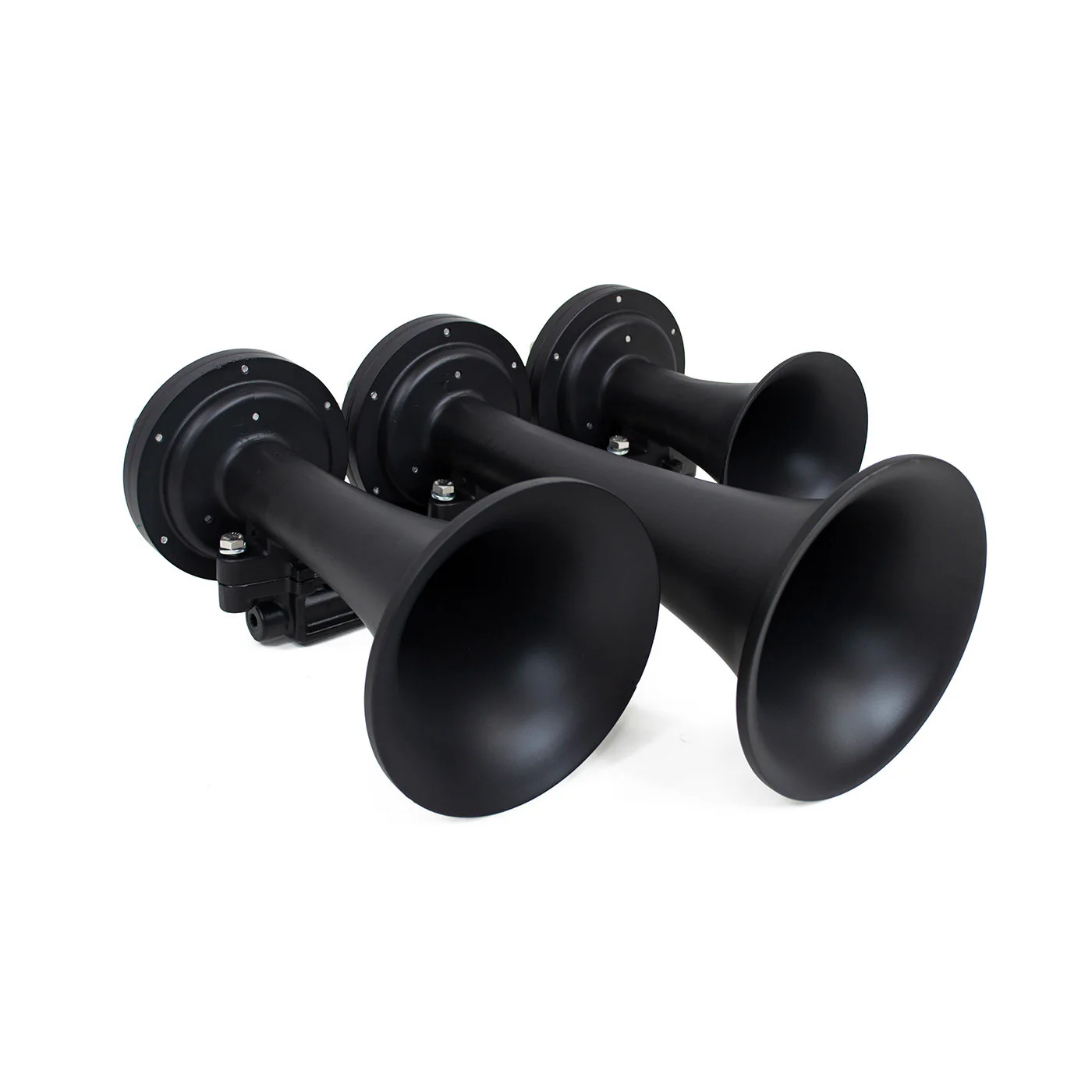
The K3LA standalone needs to be paired with an air system to be functional. Per HornBlasters’ product page, “this is a stand-alone horn only that requires an air system for completion.”
Compared to the K5LA
| Spec | K3LA | K5LA |
|---|---|---|
| Chimes | 3 | 5 |
| Chord | Simpler 3-note voicing | B major 6th (D♯/F♯/G♯/B/D♯) |
| Weight | 32 lb | 38 lb |
| Dimensions (W) | 16.25″ | 29.75″ |
| Dimensions (H) | 9.75″ | 10″ |
| Sound output | 144 dB @ 10 ft | 144 dB @ 10 ft / 149.4 dB @ 3 ft |
| Standalone price | $1,949.99 | $4,499.99 |
| Common application | Metra cab cars, EMUs | Class I freight, Amtrak F40PH |
The K3LA is lighter, narrower, very slightly taller in profile, and now considerably cheaper standalone than the K5LA. As of August 2026 the K5LA standalone sits at $4,499.99 at HornBlasters while the K3LA holds at $1,949.99, so the smaller 3-chime horn is the budget path to a genuine Nathan AirChime locomotive horn.
Pros and cons
Pros:
- Real Nathan AirChime locomotive horn from the same kettle-drum platform as the K5LA.
- 32 lb is significantly lighter than 38 lb K5LA — easier to mount on smaller chassis (Class 8 sleeper trucks, smaller motorcycles, Jeep Wrangler-class platforms).
- 9.75″ height profile is the lowest in the K-series — fits installs where the K5LA’s 10″ won’t.
- Aluminum bells with stainless steel diaphragms — corrosion-resistant for outdoor mount.
- Used on real commuter rail (Metra) — verified Nathan engineering, not aftermarket reproduction.
Cons:
- Standalone purchase only. Needs aftermarket air system, valve, wiring sourced separately. Not a turnkey kit.
- Steep premium over aftermarket kits of comparable loudness — at $1,949.99 standalone (≈$3,500 installed) you pay mostly for the genuine-Nathan badge, not extra dB; a 4-trumpet kit like the 228H hits 147.7 dB for a fraction of the price.
- 3-chime voicing is simpler than K5LA’s 5-chime — less of the iconic “freight train chord” character.
- No included tank or compressor — full functional install runs $3,500+ once you add a 5-gal tank, 1NM compressor, valve, and wiring.
- Same legal restrictions as any 144 dB horn — exceeds state vehicle code caps in most jurisdictions.
What you need beyond the horn
To make the K3LA functional, you’ll need:
- 5-gallon (or larger) air tank — 1.5 gal would work for one blast but the K3LA’s 90–140 PSI operating range is most efficient with a larger reservoir
- 1NM-class 12V compressor — same compressor as in the HornBlasters K5LA kit or Shocker XL kit
- 1/2” Black Widow electric solenoid valve ($30–$80)
- Complete wiring harness (8 AWG positive + ground for compressor; 14 AWG for solenoid; 18 AWG for trigger)
- Mounting bracket — vehicle-specific or fabricated
Total cost for a fully-installed K3LA system (horn + air system + brackets): ~$3,000–$3,500.
For the universal wiring topology see /install/by-task/wiring-diagram/ and the F-150 install guide for vehicle-specific procedure (the K3LA fits the same install envelopes as the K5LA in most pickup spare-tire-delete brackets).
Alternatives
Three credible alternatives:
- Nathan AirChime K5LA — full 5-chime at $4,499.99 standalone, more in HornBlasters’ complete kit. The right pick if you want the iconic 5-chime chord and have the install space and budget.
- HornBlasters Conductor’s Special 228H — same 4 Shocker XL trumpets, 147.7 dB on a 2-gallon tank for $650+. The right pick if you want comparable output without the locomotive-horn premium.
- Leslie RS-3L Supertyfon — 3-chime alternative from the historic Leslie Controls family. See our forthcoming Leslie RS-3L review for direct comparison.
For portable / no-install alternatives see Milwaukee M18 and DeWalt 20V MAX hubs.
Frequently asked questions
Is the K3LA loud enough?
144 dB at 10 ft is significantly louder than any aftermarket truck horn. By the inverse-square law, that drops to ~138 dB at 20 ft and ~118 dB at 200 ft. Comparable to the K5LA within a few dB; well above the HornBlasters Outlaw 127H at 142 dB.
Is the K3LA cheaper than the K5LA?
Yes. As of August 2026 the K3LA standalone is $1,949.99 at HornBlasters versus $4,499.99 for the K5LA standalone, so the smaller 3-chime horn is now the more affordable genuine-Nathan option by a wide margin. Both are standalone horns that still need a separate air system (tank, compressor, valve, wiring) to function.
Can I run a K3LA on the same air system as a K5LA?
Yes — same air requirements (90–140 PSI, 1/2” NPT inlet). A 5-gallon tank with 1NM compressor that works for the K5LA works for the K3LA. The K3LA actually consumes slightly less air per blast because of fewer bells.
Does it sound like the K5LA?
Similar timbre (kettle-drum platform, same diaphragm material) but simpler chord — 3 notes instead of 5. The K5LA’s iconic doubled D♯ (high and low octave) isn’t present in the K3LA’s 3-note voicing. Most listeners can tell them apart side-by-side.
How does it compare to a Leslie RS-3L?
Both are 3-chime aftermarket-available locomotive horns. The Leslie RS-3L is a historic alternative used heavily before the Nathan K-series rose to dominance. Different timbre — Leslie horns trend slightly brighter; Nathan horns trend slightly warmer. Pricing similar.
Is the K3LA legal on a road vehicle?
Same as the K5LA — installation broadly legal, routine use at full output on public roads typically violates state vehicle codes. Off-road, agricultural, marine use is broadly unrestricted. See /legal/ and /tools/state-legality/.
Where do I buy a K3LA?
Aftermarket only — Nathan does not sell direct to consumers. Available from:
- HornBlasters — $1,949.99 standalone (no kit packaging)
- Pure Diesel Power — $2,267.99 standalone
- KT Performance, Alternative Offroad, Amazon, eBay — secondary channels
Air Horns of Texas, previously listed here, has gone offline as of August 2026.
Sources
- HornBlasters — Nathan AirChime K3 Train Horn (standalone $1,949.99, weight, dimensions, 1/2” NPT inlet)
- Air Horns of Texas — Nathan K3LA listing (144 dB at 10 ft; the retailer’s site went offline in 2026, so this claim is retained from its archived listing)
- Pure Diesel Power — Die Cast Nathan Airchime K3LA Train Horn AH-K3 ($2,267.99, 1 gal at 120 PSI minimum air supply)
- Wikipedia — Nathan Manufacturing (K3LA on Metra cab cars + EMUs, K-series chord configurations)
- Locomotive Wiki — Nathan AirChime K-series Air Horns (K-series catalog including K3LA)
- HornBlasters — Nathan Airchime Train Horns landing page (Nathan brand context)
- Nathan AirChime — manufacturer site (90%+ U.S. locomotive horn share)
Train Horn aggregates publicly available data. We do not test products in-house. All trademarks belong to their respective owners. Pricing and availability verified August 30, 2026.
The K3LA is the right pick for buyers who specifically want a Nathan AirChime real locomotive horn but can't fit or afford the K5LA. Smaller, lighter, and now substantially less expensive standalone — same kettle-drum platform, same Class I freight pedigree.
Frequently asked questions
Quick answers to the questions people ask most about this topic.
- How loud is the Nathan K3LA?
- It is rated at 144 dB at 10 ft per Air Horns of Texas, which is significantly louder than any aftermarket truck horn. By the inverse-square law that drops to roughly 138 dB at 20 ft and about 118 dB at 200 ft.
- Does the K3LA come with an air system?
- No. It is a standalone horn with mounting hardware only and does not include a valve, air system, wiring, tank, or compressor. A fully installed system with a 5-gallon tank, 1NM compressor, valve, and wiring runs about $3,000 to $3,500.
- Is the K3LA cheaper than the K5LA?
- Yes. As of August 2026 the K3LA standalone runs $1,949.99 at HornBlasters versus $4,499.99 for the K5LA standalone, so the smaller 3-chime horn is now the more affordable real-Nathan option by a wide margin. Both still need a separate air system to function.
- Can I run a K3LA on the same air system as a K5LA?
- Yes. They share the same air requirements of 90 to 140 PSI and a 1/2 inch NPT inlet, so a 5-gallon tank with a 1NM compressor that works for the K5LA works for the K3LA. The K3LA actually consumes slightly less air per blast because it has fewer bells.
- Does the K3LA sound like the K5LA?
- It has a similar timbre from the same kettle-drum platform and diaphragm material, but plays a simpler 3-note chord instead of 5 notes. The K5LA's iconic doubled D-sharp is not present in the K3LA's voicing, and most listeners can tell them apart side-by-side.