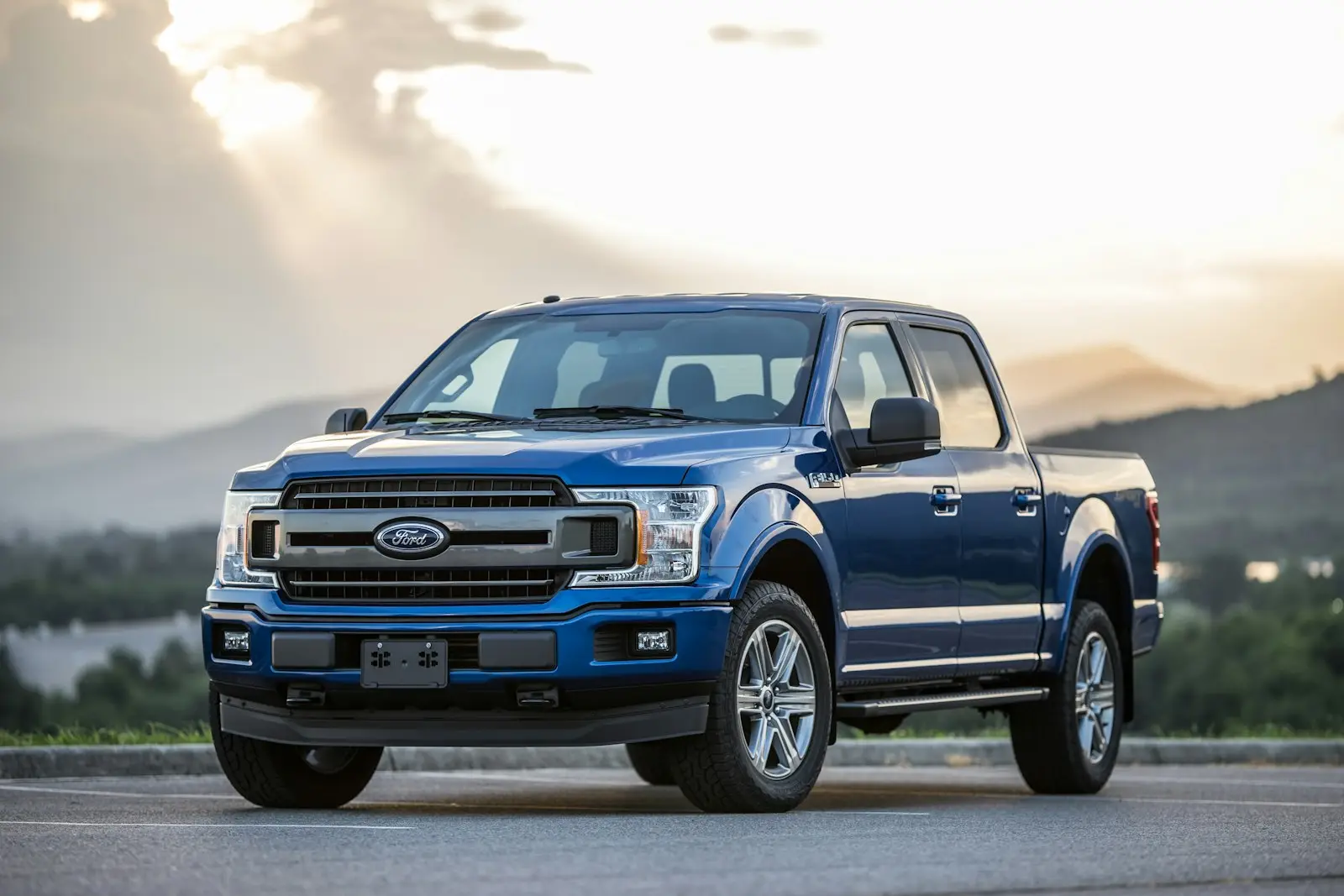
Best Train Horn for Ford F-150: 2026 Buyer's Guide
Picking the best train horn for your Ford F-150? Compare direct-fit kits, decibel ratings, tank sizes, install effort, and price in this 2026 buyer's guide.

If you drive a Ford F-150 and want the loudest, most reliable horn upgrade money can buy, a real air-powered train horn is the move — and the F-150’s roomy frame rails and factory spare-tire well make it one of the easiest trucks to fit one to. Here’s how to pick the best train horn for your F-150 in 2026 without overpaying or buying a kit that won’t fit.
Why the F-150 is an easy train horn platform
The F-150 has three things a train horn install loves: open frame rails along the cab and bed, a 12-volt electrical system that can feed a compressor, and — on 2015-and-newer trucks — a deep spare-tire well under the bed that’s almost the perfect size for a tank and compressor. That’s why several brands sell direct-fit kits engineered specifically for the F-150 instead of generic universal kits.
A train horn is not a single part. It’s a system: the trumpets (the horn itself), an air tank, an electric compressor to refill that tank, a solenoid valve, and the wiring and air line that tie it together. The trumpets make the sound; everything else exists to feed them pressurized air. For the difference between this setup and the smaller all-in-one units, see our air-tank vs battery-powered horn comparison.
How loud is loud enough on a truck?
Most serious F-150 kits land between roughly 147 and 153 dB measured close to the trumpets. For reference, Kleinn rates its direct-fit Model 230 Beast triple horn at 153.3 decibels, while HornBlasters’ four-trumpet Conductor’s Special 228H is listed at 147.7 actual dB on its Amazon retail page.
Those numbers are close enough that, to your ears at a distance, the practical difference is small — a few decibels is far less dramatic than the marketing suggests. What separates the kits more is tank capacity, refill speed, and how cleanly they bolt into your specific F-150. If you want the full breakdown of what a decibel rating actually means, read our loudest train horns ranking.
Best direct-fit: Kleinn Model 230 Beast (2015-2020 F-150)
If you have a 2015-2020 F-150 and want the cleanest factory-style install, Kleinn’s direct-fit VELO15-230 kit is the standout. It pairs the Model 230 Beast triple train horn — trumpets measuring 17.5, 14.5, and 11.5 inches — with a fully submersible 6350RC compressor rated at 150 PSI and a 100% duty cycle. The 100% duty cycle matters: it means the compressor can run continuously without overheating, so the tank refills fast after a long honk.
The trade-off is price. Kleinn lists this complete direct-fit system at $1,029.95. Note the fitment exclusions: it’s not designed for the Raptor, single cab, power-step, or 36-gallon gas tank configurations, so confirm your trim before ordering.
Best all-rounder: HornBlasters Conductor’s Special 228H
The 228H is the kit you’ll see on more F-150s than any other, and for good reason — it’s a balanced, complete package at a more accessible price. It runs four trumpets off a 2.0-gallon air tank at 150 PSI. HornBlasters publishes the real-world performance numbers most brands hide:
- Fill time, 0 to 145 PSI: 3 minutes 5 seconds
- Recovery time, 110 to 145 PSI: 55 seconds
- Honk duration on a full tank: 3-5 seconds
- Compressor duty cycle: 30% at 100 PSI, 25 amps max, 12-volt
That 30% duty cycle is the honest catch versus the Kleinn unit — you’ll wait a bit longer between full-pressure blasts. For most drivers that’s a non-issue. HornBlasters lists the 228H at $649.99 in black. If you want a closer look, we have a full HornBlasters Conductor’s Special 228H review.
Best budget self-contained: Wolo Siberian Express PRO
Not everyone wants to spend four figures or fab brackets. Wolo’s Siberian Express PRO (model 847-858) is a self-contained kit — horn, compressor, tank, hoses, and hardware in one box — rated at 152 decibels with low-range frequencies of 307/347/440 Hz. It uses a 2.5-gallon tank and a compressor that flows 2.55 CFM at 100 PSI, and Wolo lists it at $379.99. As of October 2026 it shows in stock on Wolo’s own online store after being out of stock earlier in the year.
It’s not F-150-specific, so you’ll choose your own mounting spot under the bed or along the frame, but the larger tank and simple wiring make it a strong value pick.
F-150 kit comparison at a glance
| Kit | Trumpets | Rated dB | Tank | Compressor PSI / duty | Price |
|---|---|---|---|---|---|
| Kleinn 230 Beast (direct-fit) | 3 | 153.3 dB | (direct-fit) | 150 / 100% | $1,029.95 |
| HornBlasters Conductor’s Special 228H | 4 | 147.7 dB | 2.0 gal | 150 / 30% @ 100 PSI | $649.99 |
| Wolo Siberian Express PRO 847-858 | 3 | 152 dB | 2.5 gal | ~110 max | $379.99 |
All specs from the manufacturer or retail pages cited above. Decibel figures are measured close to the trumpets, not at the cab.
Installing it on your F-150
A universal kit on an F-150 is typically a 6-8 hour job because you fabricate brackets and hunt for mounting points. Direct-fit and spare-tire-delete kits cut that roughly in half. HornBlasters’ Conductor’s Special 244K Spare Tire Delete kit, for example, mounts everything in place of the factory spare tire on most full-size pickups, including the F-150, dropping install time to about 3-4 hours versus 6-8 for a custom job — at the cost of your spare-tire storage.
General F-150 install pointers from manufacturer instructions:
- Mount the compressor and tank to the outside of the frame rail under the passenger side, compressor toward the front.
- Route air line and wiring over the top of the frame rail, clear of the exhaust and any moving parts.
- Expect roughly 3-5 seconds of continuous honking per full tank at 150 PSI before the compressor needs to catch up.
Wire the horn through a relay (most kits include one) so the load doesn’t run through your factory horn button, and use the supplied DOT-approved air line — not hardware-store tubing.
A word on legality
Train horns mounted on street vehicles are restricted or outright illegal in many states, often under maximum-decibel or “only-as-loud-as-necessary” horn statutes. That doesn’t make the kit illegal to buy or install, but using it on public roads can carry a ticket. Check your state’s rules before you lean on the button — and read our complete train horn buyer’s guide for the full legal and shopping rundown.
FAQ
Do I need an onboard air system for an F-150 train horn?
For a true train horn, yes. Real trumpets need pressurized air, which means a compressor and tank. Self-contained kits like the Wolo Siberian Express PRO bundle all of that into one unit, but there’s still a compressor and tank under the truck.
Will a train horn kit fit under my F-150 without losing the spare tire?
It depends on the kit. Frame-rail kits mount the tank and compressor alongside the frame and keep your spare. Spare-tire-delete kits trade the spare for a cleaner, faster install that fits entirely in the factory well on 2015-and-newer trucks.
How loud is a Ford F-150 train horn?
The popular kits are rated roughly 147 to 153 dB close to the trumpets — for example 153.3 dB for the Kleinn 230 Beast and 147.7 dB for the HornBlasters 228H.
How long can I honk before the tank runs out?
Plan on about 3-5 seconds of continuous sound per full tank at 150 PSI. The compressor then refills the tank; a 100%-duty compressor like Kleinn’s 6350RC recovers faster than a 30%-duty unit.
Is it hard to install a train horn on an F-150?
A universal kit runs 6-8 hours; a direct-fit or spare-tire-delete kit designed for the F-150 cuts that to roughly 3-4 hours because the brackets and routing are pre-engineered. It’s a doable DIY job with basic tools, a jack, and patience.
Sources
- Kleinn — Direct Fit Train Horn & Onboard Air for 2015-2020 Ford F-150 (Model 230)
- HornBlasters — Conductor’s Special 228H Train Horn Kit
- HornBlasters — Spare Tire Delete Kit (Conductor’s Special 244K)
- Amazon — HornBlasters Conductor’s Special 228H (147.7 dB listing)
- Wolo — Model 847-858 Siberian Express PRO
- AmericanTrucks — Kleinn Veloci-Raptor 730 F-150 install guide
Keep reading
Frequently asked questions
Quick answers to the questions people ask most about this topic.
- How loud is a Ford F-150 train horn?
- The popular F-150 kits are rated roughly 147 to 153 dB measured close to the trumpets, for example 153.3 dB for the Kleinn 230 Beast and 147.7 dB for the HornBlasters Conductor's Special 228H. Those figures are measured near the trumpets, not at the cab.
- Do I need an onboard air system for an F-150 train horn?
- For a true train horn, yes. Real trumpets need pressurized air, which means a compressor and tank. Self-contained kits like the Wolo Siberian Express PRO bundle all of that into one unit, but there is still a compressor and tank under the truck.
- Will a train horn kit fit under my F-150 without losing the spare tire?
- It depends on the kit. Frame-rail kits mount the tank and compressor alongside the frame and keep your spare, while spare-tire-delete kits trade the spare for a cleaner, faster install that fits entirely in the factory spare-tire well on 2015-and-newer trucks.
- How long can I honk an F-150 train horn before the tank runs out?
- Plan on about 3 to 5 seconds of continuous sound per full tank at 150 PSI. The compressor then refills the tank, and a 100%-duty compressor like Kleinn's 6350RC recovers faster than a 30%-duty unit.
- Is it hard to install a train horn on an F-150?
- A universal kit runs about 6 to 8 hours because you fabricate brackets and hunt for mounting points, while a direct-fit or spare-tire-delete kit designed for the F-150 cuts that to roughly 3 to 4 hours. It is a doable DIY job with basic tools, a jack, and patience.
Related reviews & guides
Best Train Horn for Ford F-250 & F-350 Super Duty (2026)

The Complete Train Horn Buyer's Guide 2026
Best Train Horn for Toyota 4Runner: Kits, Mounting & Fitment (2026)

Best Train Horn for SUV: Tahoe, Suburban, Yukon & Expedition (2026)

Best Train Horn for Tailgating & Game Day: Portable Picks (2026)