Train Horn Kit Weight: Tank, Compressor & Payload Math Explained
How much a train horn kit weighs: real tank, compressor and kit weights from 21 to 50 lb, why the air weighs almost nothing, and how to do the payload math.
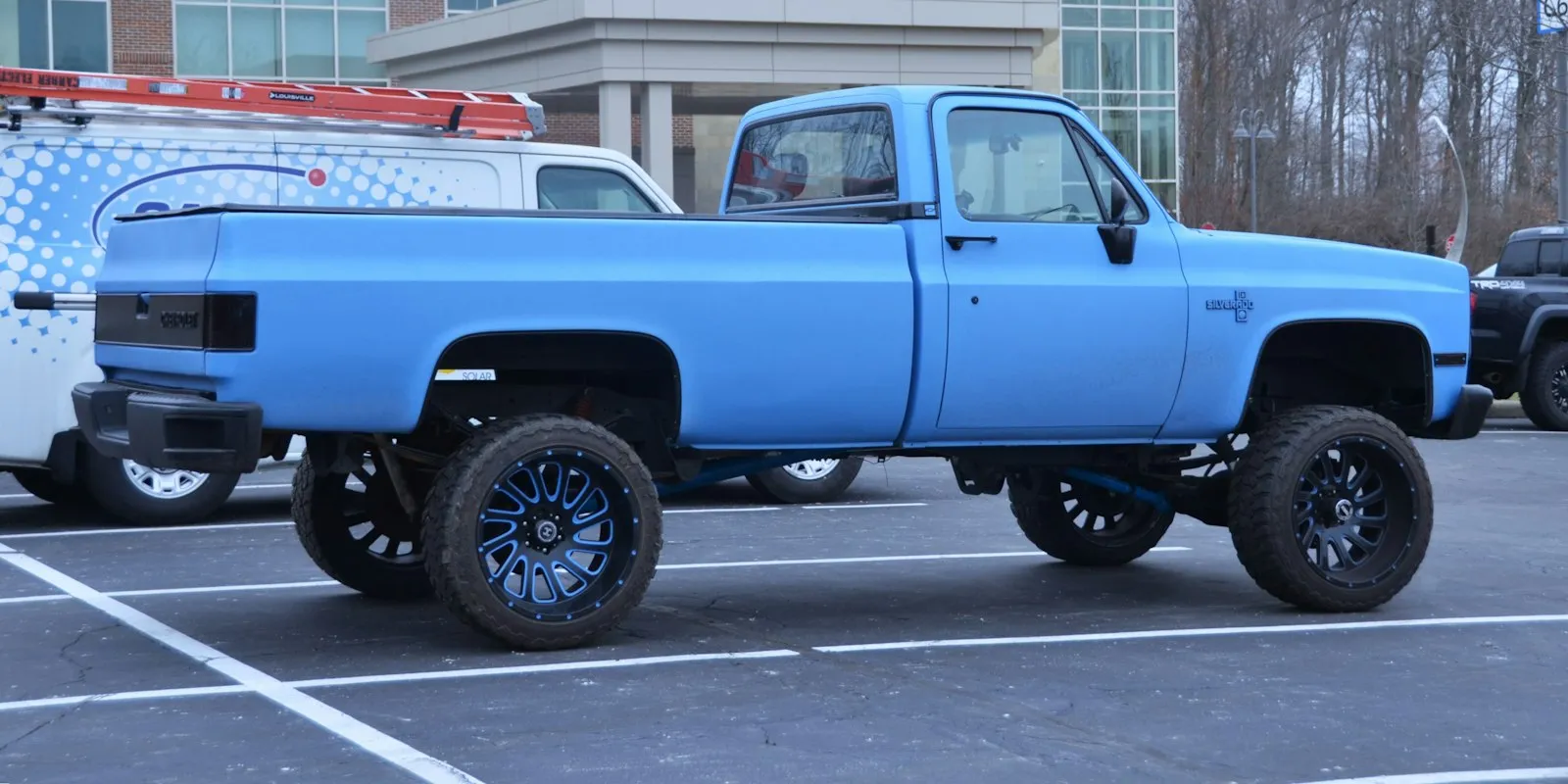
A complete train horn kit adds somewhere between about 20 and 50 pounds to a truck, depending mostly on tank size and how many compressors you run. That is real weight, but it is rarely the thing that breaks a payload budget. Below is the actual math, component by component, using published manufacturer and retailer weights, plus a quick way to check your own truck’s number.
The short answer: 20 to 50 pounds for most kits
Retailer shipping weights give the best apples-to-apples view of complete kits, because they include every part in the box. A few common examples:
| Kit | Tank | Listed shipping weight |
|---|---|---|
| Kleinn HK6 triple-trumpet kit | 1.5 gal steel | 21.0 lb |
| HornBlasters Shocker Classic 228VX | 2 gal | 25 lb |
| HornBlasters Conductor’s Special 540 | 5 gal | 30.0 lb |
| HornBlasters King 3 544K | onboard air system | 50.0 lb |
Two caveats. First, shipping weight includes the box and packing material, so the installed weight is usually a little lower. Second, you will add a few things that are not in the box: extra bolts, a mounting bracket or skid plate if you fabricate one, and possibly a longer air line. Those extras are measured in ounces to a couple of pounds, not tens of pounds.
So for planning, round a small 1.5 to 2-gallon kit up to about 25 lb, a 5-gallon single-compressor kit to about 30-35 lb, and a big onboard-air system with a larger compressor to about 50 lb.
Where the weight actually lives: tank vs. compressor vs. horns
Break a kit down and the pattern is obvious: the air tank is the heaviest single part, and the compressor is second. Trumpets, fittings and wiring make up the rest.
Here is what Viair publishes for the parts that show up in a lot of horn kits and DIY builds:
- Viair 400C compressor
- 8.65 lb (150 PSI max, 33% duty at 100 PSI)
- Viair 444C compressor (single, EF)
- 10.85 lb
- Viair 2.5 gal tank (91025)
- 14.05 lb
- Viair 5.0 gal tank (91050)
- 19.80 lb
Put a 400C together with a 5-gallon tank and you are at 28.45 lb before a single trumpet, fitting or foot of air line. That lines up with HornBlasters’ Conductor’s Special 540, which pairs a 5-gallon tank with a Viair 400C and ships at 30 lb. Treat retailer shipping weights as rounded, approximate numbers, and if you are building your own system, add up the individual component weights instead.
Going from a 2.5-gallon to a 5-gallon Viair tank adds 5.75 lb. Swapping a 400C for a 444C adds 2.2 lb. Neither move changes the payload math much on a full-size pickup. If you are torn on capacity, our train horn air tank size guide walks through blast time per gallon, which matters far more day to day than a few extra pounds.
Does the compressed air weigh anything?
Yes, but barely. Air at room temperature weighs roughly 0.075 lb per cubic foot at sea-level pressure, according to Engineering ToolBox, and its density rises in step with absolute pressure.
Run the numbers on a full 5-gallon tank:
- 5 gallons is about 0.67 cubic feet.
- 150 PSI gauge is roughly 165 PSI absolute, or about 11.2 times atmospheric pressure.
- 0.075 lb/ft³ × 11.2 × 0.67 ft³ is about 0.56 lb.
So a full 5-gallon tank holds a little over half a pound of air. It’s not worth worrying about. What does matter is water: compressors pull humid air, and condensation pools in the bottom of the tank. A neglected tank can carry more water weight than air weight, and that water also rusts steel tanks from the inside. Draining it regularly keeps both the weight and the corrosion in check.
How to read your truck’s real payload number
Every passenger car, pickup, SUV and van with a gross vehicle weight rating of 10,000 lb or less has to carry a Tire and Loading Information placard under federal motor vehicle safety standard FMVSS No. 110 (49 CFR 571.110). It is usually on the driver’s door jamb or B-pillar, and it contains one sentence you care about:
“The combined weight of occupants and cargo should never exceed XXX kilograms or XXX pounds.”
That number is your payload for the truck as it left the factory. A few things to know about it:
- It already reflects the options your specific truck was built with, which is why two trims of the same model can show different numbers.
- If a dealer bolted on heavy accessories before sale (bumpers, winches, racks), there is supposed to be a separate addendum label near the original placard showing the reduced load capacity. Look for it.
- Anything you add afterward, including a horn kit, is not on any label. You subtract it yourself.
- Passengers count against the same number. The standard’s own loading math assumes 68 kg, or about 150 lb, per designated seating position.
Payload math: a worked example
Say your placard reads 1,500 lb (use your own number; this is only an illustration). Here is how a horn kit fits into a typical load:
| Item | Weight |
|---|---|
| Placard payload (example) | 1,500 lb |
| Two adults at the standard’s 150 lb each | -300 lb |
| 5-gallon single-compressor horn kit (about 30 lb shipping) | -30 lb |
| Remaining for cargo, tools, tongue weight | 1,170 lb |
The horn kit used 2% of the example payload. Even the heaviest 50 lb kit would be about 3.3%. Compare that to a steel aftermarket bumper, a loaded toolbox or a trailer’s tongue weight, and the horn is almost never the item that pushes you over.
Where it can matter:
- Trucks already at the limit — truck campers, service bodies and heavy tongue loads can leave single-digit pounds of margin.
- Stacking upgrades — a second tank, a second compressor, a bed-mounted box to hide it all, and a bumper swap add up fast.
- Small vehicles — a compact car or UTV has far less payload to start with, so the same 30 lb is a bigger slice.
If your numbers are tight, drive the loaded truck to a certified public scale and weigh the front and rear axles separately. Alaskan Campers recommends checking that neither axle exceeds its GAWR (gross axle weight rating, also on the door placard) and keeping a 10-15% cushion below the payload limit.
Placement matters more than total weight
Thirty pounds is thirty pounds for payload, but where you put it affects which axle carries it and how the truck handles.
- Tank under the bed or on the frame rail, between the axles — spreads weight across both axles and keeps it low.
- Tank in the bed or behind the rear axle — nearly all of the weight lands on the rear axle, which is also where your cargo and hitch loads sit. It will not hurt handling at 20 lb, but it eats rear-axle margin first.
- Horns behind the grille or under the front bumper — the trumpets add a few pounds to the front axle, which rarely matters since that axle usually has spare capacity.
Mount weight low and solid. Our guide to where to mount a train horn on a truck covers the common locations and angles, and the tank-specific mounting advice applies to the heaviest part of the kit.
Ways to cut kit weight if every pound counts
If you are chasing payload, the tank is the part worth shopping:
- Go smaller on the tank — dropping from Viair’s 5-gallon to its 2.5-gallon tank saves 5.75 lb. You trade blast time for weight.
- Consider tank material — aluminum tanks are lighter than steel of the same size; our steel vs aluminum air tank comparison covers the trade-offs in cost and durability.
- Stick with one compressor — a second 444C adds another 10.85 lb plus wiring. Only worth it if fill speed really matters to you.
- Drain the tank — water in the tank is dead weight and a rust risk.
The bottom line: budget 25 lb for a compact kit, 30-35 lb for a 5-gallon setup and about 50 lb for a big onboard-air system. Subtract that from your door-placard number, and if you are within a few percent of the limit, put the truck on a scale before you add anything else.
Keep reading
- Train Horn Air Tank Size Guide: 1, 2, 3 & 5 Gallon
- Steel vs Aluminum vs Stainless Air Tanks for Train Horns
- Where to Mount a Train Horn on a Truck
- Adding a Second Air Tank to a Train Horn: Worth It?
- How to Drain a Train Horn Air Tank (and How Often)
Sources
- Kleinn HK6 Pro Blaster kit at Dales Super Store — 21.0 lb shipping weight, 1.5-gallon tank, ABS trumpets
- Kleinn Model HK6 Triple Train Horn Kit (Kleinn) — steel 1.5-gallon tank and chrome ABS trumpets in the HK6 kit
- HornBlasters Shocker Classic 228VX kit at Dales Super Store — 25 lb weight, 2-gallon tank
- HornBlasters Conductor’s Special 540 kit at Dales Super Store — 30.0 lb shipping weight, 5-gallon tank, Viair 400C compressor
- HornBlasters King 3 544K kit at KT Performance — 50.0 lb shipping weight, onboard air system
- Viair 400C compressor (Viair) — 8.65 lb net weight, 150 PSI max, 33% duty cycle at 100 PSI
- Viair 400C & 444C EF compressors (Viair) — 444C single net weight of 10.85 lb
- Viair 91050 5.0 gallon air tank at Universal Air — 19.80 lb net weight, 150 PSI rating
- Viair 91025 2.5 gallon air tank at Universal Air — 14.05 lb net weight
- Air density and specific weight (Engineering ToolBox) — air density of about 0.075 lb/ft³ at room temperature, rising with pressure
- 49 CFR 571.110, FMVSS No. 110 (Cornell LII) — placard requirement for vehicles of 10,000 lb GVWR or less, placard wording, 68 kg per seating position
- How to Read a Payload Sticker (Alaskan Campers) — placard location, dealer “reduced capacity” addendum label, axle weighing and 10-15% safety margin
Frequently asked questions
Quick answers to the questions people ask most about this topic.
- How much does a train horn kit weigh?
- Most complete kits ship at roughly 20 to 50 pounds. Examples: the Kleinn HK6 with a 1.5-gallon tank lists 21 lb, the HornBlasters Conductor's Special 540 with a 5-gallon tank lists 30 lb, and the HornBlasters King 3 544K onboard-air kit lists 50 lb shipping weight.
- What is the heaviest part of a train horn kit?
- The air tank. Viair's 5-gallon tank weighs 19.80 lb and its 2.5-gallon tank 14.05 lb, while a Viair 400C compressor is 8.65 lb and a 444C is 10.85 lb.
- Does compressed air in the tank add weight?
- Very little. With air at about 0.075 lb per cubic foot at room temperature and sea-level pressure, a 5-gallon tank at 150 PSI holds only about half a pound of air. Water that collects in an undrained tank can easily outweigh the air.
- Will a train horn kit affect my truck's payload?
- It counts against the payload on your door-jamb Tire and Loading Information placard, but a 30 lb kit is only 2% of a 1,500 lb payload. It matters mainly if your truck is already near its limit with a camper, service body or heavy tongue load.
- Where do I find my truck's payload capacity?
- On the Tire and Loading Information placard on the driver's door jamb, required by FMVSS No. 110 for vehicles of 10,000 lb GVWR or less. It reads 'The combined weight of occupants and cargo should never exceed' followed by the number, and aftermarket parts you add must be subtracted from it.
Related reviews & guides
Wayside Horns Explained: Pole-Mounted Crossing Horns and FRA Rules

Why a Train Horn Changes Pitch as It Passes: Doppler Effect Explained

Do Train Horns Pass DOT Inspection? FMCSA 49 CFR 393.81 Explained

FRA Quiet Zones Explained: Why Trains Don't Honk in Some Towns

Does a Train Horn Void Your Vehicle Warranty? Magnuson-Moss Explained