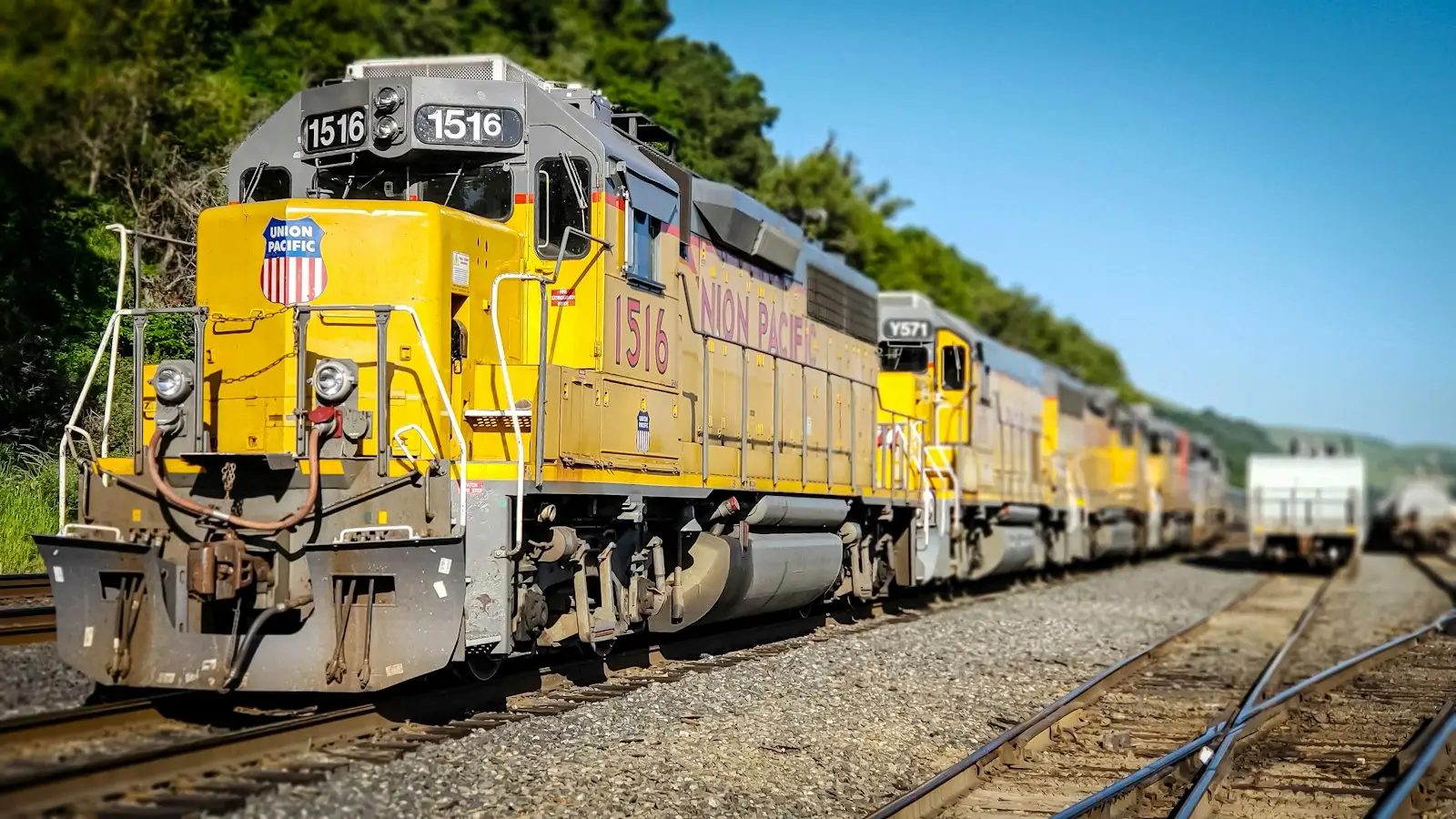
Train Horns on Motorcycles: What Fits, What's Legal & What Helps
Can you put a train horn on a motorcycle? What actually fits (compact air horns, tankless kits, half-gallon systems), state horn laws, wiring limits and real picks.
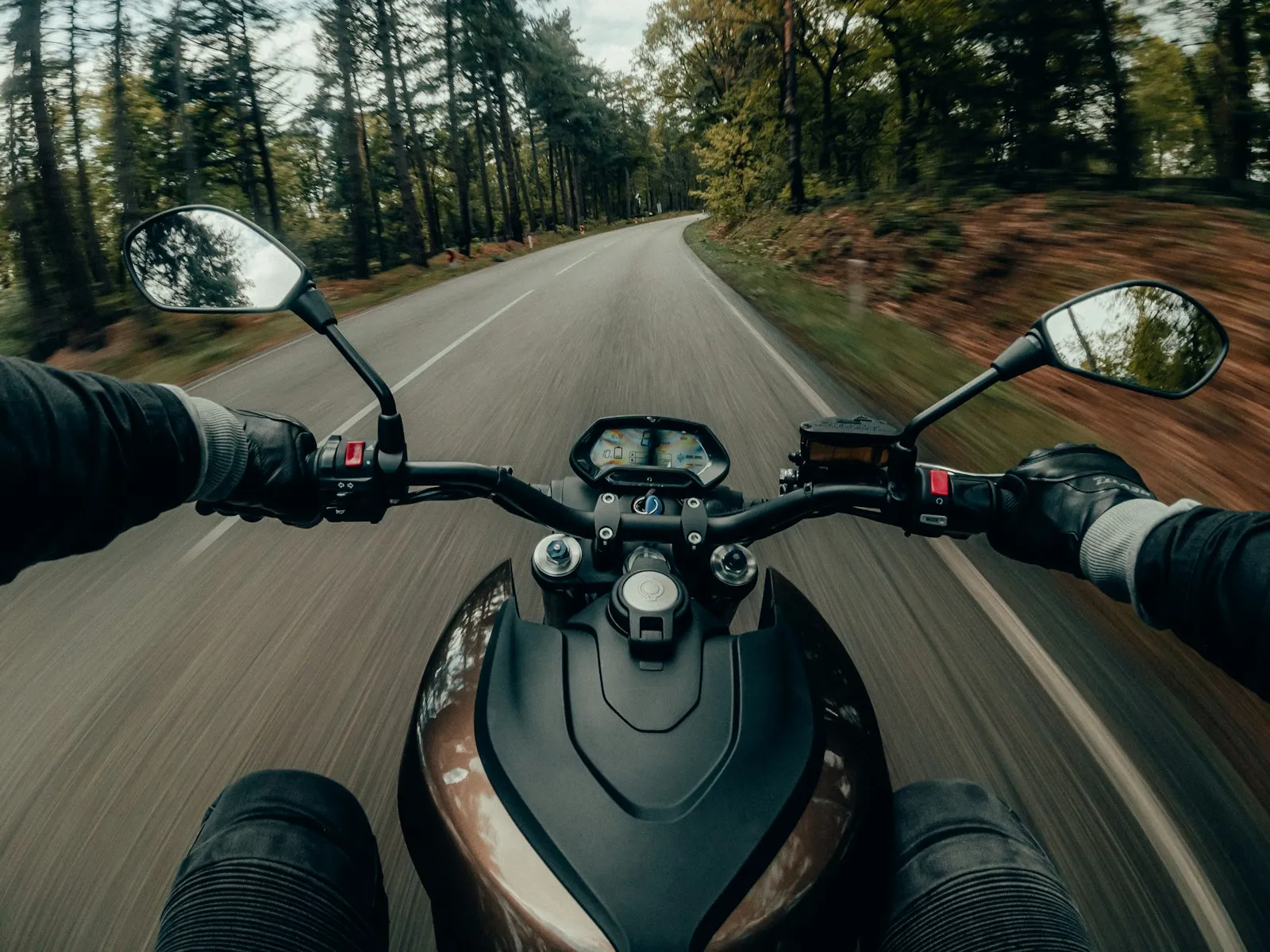
A train horn for a motorcycle sounds like the ultimate “see me now” upgrade, but a real train horn needs a tank, a compressor and more room than most bikes have. Here is what actually fits, what state law allows, and which upgrade genuinely helps you get noticed in traffic.
Why riders want a louder horn in the first place
The safety case is real. NHTSA counted 5,932 motorcyclists killed in 2021, and per vehicle mile traveled the motorcyclist fatality rate was almost 24 times that of passenger car occupants. In two-vehicle fatal crashes, 43 percent involved the other vehicle turning left while the motorcycle was going straight, passing or overtaking.
The Hurt Report, the landmark US motorcycle crash study, concluded that “the failure of motorists to detect and recognize motorcycles in traffic is the predominating cause of motorcycle accidents,” with the other driver violating the bike’s right-of-way in two-thirds of multi-vehicle crashes.
A stock motorcycle horn is a small electric disc never designed to punch through a closed window and a running stereo. A louder, lower, dual-tone blast gives that driver a chance to register you before they turn.
The space and wiring problem: what a real train horn needs
The big-truck kits on this site do not translate to a bike. As HornBlasters puts it on its motorcycle collection page, “a genuine train horn is driven by an air tank, a compressor, a pressure switch, and line,” and that takes “more room than most bikes have.”
Kleinn’s Model 101, one of the smallest true trumpet horns sold, still measures 11.5 by 6 by 3.75 in. and requires 120 to 150 PSI from a minimum 0.5-gallon tank. Add a compressor and you need saddlebag or under-seat space that most cruisers, sportbikes and adventure bikes do not have.
Electrical capacity is the second constraint. Rider Magazine’s breakdown of Harley-Davidson charging systems lists peak output from 19 amps on 1970 to 1980 Big Twins up to 50 amps on 2007-and-newer Softail and Dyna models, with 32 amps on 2008-and-newer Sportsters. Output drops sharply at idle, and after the headlight, fuel pump, EFI computer and ignition, the magazine estimates a 32-amp bike has “nothing at idle, 75 to 80 watts in motion” left for accessories. A horn is a momentary load, but a compressor refilling a tank is not. Our tankless train horns guide covers that tradeoff for trucks; on a motorcycle it tips almost entirely toward tankless.
Whichever mounted option you choose, do not splice it into the stock horn wire. HornBlasters notes the Nautilus “requires 18A, more than most factory horns,” and recommends a separate wiring kit “to avoid electrical system trouble.” The right setup is a relay triggered by the stock button with a fused feed from the battery, exactly as in our relay wiring guide and amp draw, fuse and wire gauge guide, just with shorter runs. On CANbus bikes a relay also keeps the body controller from flagging a fault.
Option 1: Self-contained compact air horns (fits almost any bike)
This is the category that works for most riders. A self-contained air horn packs a small 12V compressor and two molded trumpets into one softball-sized unit. No tank, no air line, no pressure switch. Two wires and one bolt.
| Model | Rated output | Current draw | Size (L x W x H) | Weight | Price seen |
|---|---|---|---|---|---|
| HornBlasters Compact Electric Horn | 123.7 dB peak (distance not stated) | 18 A max | 3 x 4.5 x 4.5 in. | 2.25 lb | $19.81 sale, $44.99 regular |
| Stebel Nautilus Compact (chrome) | 123.7 dB peak per HornBlasters; 139 dB claimed by Stebel | 18 A max | 3 x 4.5 x 4.5 in. | 2.25 lb | $49.99 |
| Denali SoundBomb | 120 dB at 3 ft | 20 A | 5.4 x 4.5 x 3.6 in. | 1.8 lb | $69.99 plus $39.99 harness |
| Wolo Bad Boy 419 | 123.5 dB | 16 A | 5-1/8 x 3 x 4-1/2 in. | see review | $52.99 list |
webBikeWorld’s review of the Stebel Nautilus carries Stebel’s 139 dB claim. HornBlasters sells the same unit at 123.7 dB peak, with the caveat that its figures are “approximate peak sound-pressure levels for comparison.” Neither is a 3 ft rating you can compare to a truck train horn; see our advertised vs real-world decibels guide. Denali is the only one that publishes a distance, 120 dB at 3 ft, and it is CANbus compatible, which matters on newer bikes that monitor the horn circuit. It requires Denali’s harness or CANsmart controller. For the Wolo unit, see our Wolo Bad Boy 419 review.
- Fits behind a fairing, under a tank or in the stock horn location on most bikes
- Draws 18 to 20 amps for a second or two, then nothing
- Cheapest way to go from a stock beep to a dual-tone blast
- Sounds like a loud car air horn, not a locomotive chord
- Stebel’s instructions say to point it downward to keep water out, which limits mounting spots
- Custom brackets are often needed on slim bikes, per webBikeWorld readers
Option 2: Tankless direct-drive trumpet kits (the Harley route)
If you want real metal trumpets without a tank, a direct-drive kit feeds a small compressor straight into the horns. No reservoir, so air moves the instant you hit the button.
Kleinn’s HOGKIT-1 is the cleanest example: a bolt-on chrome dual air horn kit for 1979 to 2020 Harley-Davidson models with the factory “cowbell” horn cover. Kleinn rates it at 132 dB, it uses a direct-drive compressor with no air tank, and it mounts on a single-bolt OEM replacement bracket that reuses the cowbell cover. It lists for $249.95 with a one-year limited warranty. Pricey next to a Nautilus, but it looks factory and fits without fabrication.
MotoHorn is another tankless entry. Its published specs list a 17.5 in. trumpet, a 4.3 by 2.9 in. compressor and 2.9 lb total weight, with suggested mounts including the Harley cowbell bolt, under saddlebags, the front frame bar and crash bars. It is listed at $129 on sale from $199. MotoHorn advertises “130 to 150 decibels” with no measurement distance, so treat that as a marketing range, not a verified 3 ft reading.
- Direct-drive kits are the sweet spot for cruisers: trumpet look, no tank, bolt-on brackets
- Confirm your model year and horn cover style before ordering a Harley-specific bracket
Option 3: A real onboard-air kit on a bagger or trike
Touring bikes and trikes with hard saddlebags are the only motorcycles where a tank-fed system is realistic. HornBlasters keeps a customer gallery of motorcycle installs, from a Yamaha TMAX scooter to a Suzuki Hayabusa and a Harley-Davidson Road King, so it has been done. Every one was a custom job.
The smallest sensible recipe is a half-gallon system. Vixen Horns sells a 0.5-gallon tank with a 150 PSI compressor as a standalone kit with gauge, pressure switch, drain valve, fuse and hose. Pair it with a compact trumpet set like the Kleinn Model 101, rated 146.2 dB at 150 PSI with that same 0.5-gallon minimum, and you have the closest thing to a locomotive sound that fits in a saddlebag. Kleinn’s HK2 bundles a similar half-gallon tank with dual trumpets; our Kleinn HK2 review covers it.
Two warnings. A half-gallon tank gives a short blast before pressure sags, and the refill cycle is a real drain on a bike with 75 to 80 watts of spare charging capacity. You also give up a saddlebag.
Option 4: A portable battery train horn in the saddlebag
A fourth approach sidesteps fitment and wiring completely: a cordless-tool-battery train horn that rides in your saddlebag and comes out at rallies, group rides and campsites.
BossHorn markets a line of these for motorcycle rallies, describing it as “a 150 dB train horn that rides in your saddlebag and powers off your cordless-drill battery,” with “nothing wired into the motorcycle.” The lineup runs from a two-trumpet Dual at $160 and 130 dB, through a four-trumpet Quad at $215 and 140 dB, to the Boss Series with four XL trumpets at $365 to $385 and 150 dB. Each is built for a specific battery platform, so you pick the version for the Milwaukee® 18V, DeWalt® 20V, Ryobi® 18V or other pack you already own. Those dB figures are the manufacturer’s and are not stated at 3 ft.
Be clear about what this is: a handheld horn cannot be triggered from the bars at 60 mph and does nothing for the left-turn scenario. It gives you a genuine multi-trumpet train horn sound with zero installation. Our air-tank vs battery-powered comparison goes deeper.
What’s legal on a motorcycle
Motorcycle horn law is mostly the same equipment law that applies to cars, and it cuts both ways. California Vehicle Code 27000 requires every motor vehicle on a highway to have a horn “capable of emitting sound audible under normal conditions from a distance of not less than 200 feet,” and in the same breath says “no horn shall emit an unreasonably loud or harsh sound.” Washington’s RCW 46.37.380 carries the identical 200 ft floor and “unreasonably loud or harsh” ceiling, and adds that no vehicle may be equipped with “any siren, whistle, or bell.”
Virginia’s inspection rule, 19VAC30-70-380, is a reminder that the horn is also a pass-fail item: a motorcycle fails if the horn is absent or not working, and also if the mounting is insecure, the wiring is defective or the button is out of the rider’s easy reach. A sloppy install can fail you the same day it makes you louder.
Practical reading: a compact air horn or direct-drive trumpet kit wired to the stock button is defensible in nearly every state, because it is a horn used as a warning device. Leaning on it for fun in traffic or near homes is what draws the “unreasonably loud” citation plus a local noise ordinance. Check our state-by-state legality reference and city noise ordinance guide before you ride.
Bottom line: what to actually buy
The complete train horn buyer’s guide covers the whole market. For a motorcycle, the shortlist is short.
- Most riders, most bikes: a self-contained compact air horn. HornBlasters Compact Electric or Stebel Nautilus at $20 to $50, or the Denali SoundBomb if you need CANbus compatibility and a published 3 ft rating.
- Harley cruisers that want trumpets: the Kleinn HOGKIT-1 at $249.95 on the factory cowbell bracket, or a MotoHorn tankless kit if a marketing-grade dB claim does not bother you.
- Baggers and trikes with a saddlebag to spare: a 0.5-gallon tank and 150 PSI compressor feeding a compact trumpet set like the Kleinn Model 101.
- Locomotive sound without touching the bike: a portable battery horn in the bag. Not a safety device, but the only multi-trumpet option with zero fitment.
Whatever you pick, wire it through a relay and aim the horn where water drains out.
Sources
- HornBlasters motorcycle horns collection — quote on tank, compressor and space requirements; motorcycle recommendation; Nautilus and Compact Electric listings and prices
- HornBlasters Compact Electric Horn — 123.7 dB peak, 12V, 18 A max, 3 x 4.5 x 4.5 in., 2.25 lb, $19.81 sale / $44.99 regular, one-year warranty, “approximate peak” caveat
- HornBlasters Stebel Nautilus Chrome — 123.7 dB, 18 A, dimensions, weight, $49.99, wiring-kit recommendation
- webBikeWorld Stebel Nautilus Compact review — 139 dB claim, included relay, downward mounting note, bracket fabrication comments
- Denali SoundBomb Dual-Tone Air Horn — 120 dB at 3 ft, 20 A, 5.4 x 4.5 x 3.6 in., 1.8 lb, $69.99, harness $39.99, CANbus compatibility
- Wolo Model 419 Bad Boy — 123.5 dB (no distance stated), 16 A, 5-1/8 x 3 x 4-1/2 in., $52.99 list
- Kleinn HOGKIT-1 for Harley-Davidson — $249.95, 132 dB, direct-drive no-tank compressor, 1979-2020 cowbell fitment, single-bolt bracket, one-year limited warranty
- Kleinn Model 101 Mini Compact Dual Air Horn — $72.95, 146.2 dB at 150 PSI, 7.5 and 10 in. trumpets, 11.5 x 6 x 3.75 in., 120 to 150 PSI, minimum 0.5-gallon tank
- MotoHorn USA — $129 sale / $199 list, 130 to 150 dB claim, 17.5 in. trumpet, compressor and plate dimensions, 2.9 lb, mounting locations
- Vixen Horns VXO8805 0.5-gallon tank and 150 PSI compressor kit (Amazon) — tank size, compressor PSI, included gauge, pressure switch, drain valve, fuse and hose
- HornBlasters motorcycle install gallery — customer installs on a Yamaha V-Star, Suzuki Hayabusa, Honda Valkyrie, Yamaha TMAX and Harley-Davidson Road King
- BossHorn train horns for motorcycle rallies — saddlebag and cordless-battery quotes, Dual $160 / 130 dB, Quad $215 / 140 dB, Boss Series $365 to $385 / 150 dB, battery platforms
- Rider Magazine, “Motorhead Memo: Charge It” — Harley-Davidson charging output by era (19 A, 32 A, 50 A), idle output caveat, accessory headroom estimate
- NHTSA Traffic Safety Facts 2021 Data: Motorcycles — 5,932 motorcyclists killed in 2021, per-mile fatality rate almost 24 times passenger car occupants, 43 percent left-turn two-vehicle crashes
- Wikipedia: List of findings in the Hurt Report — motorist failure to detect motorcycles as predominating cause, right-of-way violation in two-thirds of multi-vehicle crashes
- California Vehicle Code 27000 (FindLaw) — 200 ft audibility requirement and “unreasonably loud or harsh” prohibition
- Washington RCW 46.37.380 — 200 ft requirement, unreasonably loud or harsh, siren/whistle/bell prohibition
- Virginia 19VAC30-70-380 Motorcycle horn — 200 ft audibility and inspection rejection criteria
Keep reading
Frequently asked questions
Quick answers to the questions people ask most about this topic.
- Can you put a train horn on a motorcycle?
- Only on big touring bikes or trikes with a saddlebag to spare, because a true train horn needs a tank, compressor, pressure switch and air line. Kleinn's smallest trumpet set, the Model 101, still needs a 0.5-gallon tank at 120 to 150 PSI. Most riders instead use a self-contained compact air horn or a tankless direct-drive kit.
- What is the loudest horn that fits a motorcycle?
- Among horns with published specs, the Kleinn HOGKIT-1 direct-drive kit for Harley-Davidson is rated 132 dB with no tank, and the Denali SoundBomb is rated 120 dB at 3 ft. The Stebel Nautilus carries a 139 dB manufacturer claim, but HornBlasters lists the same unit at 123.7 dB peak, so the numbers are not measured the same way.
- Are loud air horns legal on motorcycles?
- State equipment laws such as California Vehicle Code 27000 and Washington RCW 46.37.380 require a horn audible from 200 feet and prohibit any horn that emits an unreasonably loud or harsh sound. A compact air horn wired to the stock button and used as a warning device is generally defensible; sirens, whistles and bells are prohibited, and misuse draws noise-ordinance citations.
- Will an air horn overload my motorcycle's electrical system?
- A compact air horn draws about 18 to 20 amps but only for a second or two, so it is fine on a bike if you wire it through a relay with a fused feed from the battery. Splicing it into the stock horn wire is what causes trouble. A tank-fed compressor that runs for a refill cycle is a much larger drain on a bike's limited charging headroom.
- Does a train horn make a motorcycle safer?
- NHTSA data shows 43 percent of two-vehicle fatal motorcycle crashes involve a car turning left in front of the bike, and the Hurt Report found motorists failing to notice motorcycles is the predominating cause of crashes. A louder dual-tone horn can help a driver register you sooner, but it does not replace lane position, lighting and defensive riding.
Related reviews & guides

Are Train Horns Legal on Cars? State-by-State Quick Reference
Best Train Horn for a Bicycle or E-Bike: AirZound vs Air Builds
Best Train Horn for Toyota 4Runner: Kits, Mounting & Fitment (2026)
Best Train Horn for Jeep Gladiator JT: Bolt-On & Spare-Tire Kits
Best Train Horn for Chevy Colorado & GMC Canyon: Fitment Guide