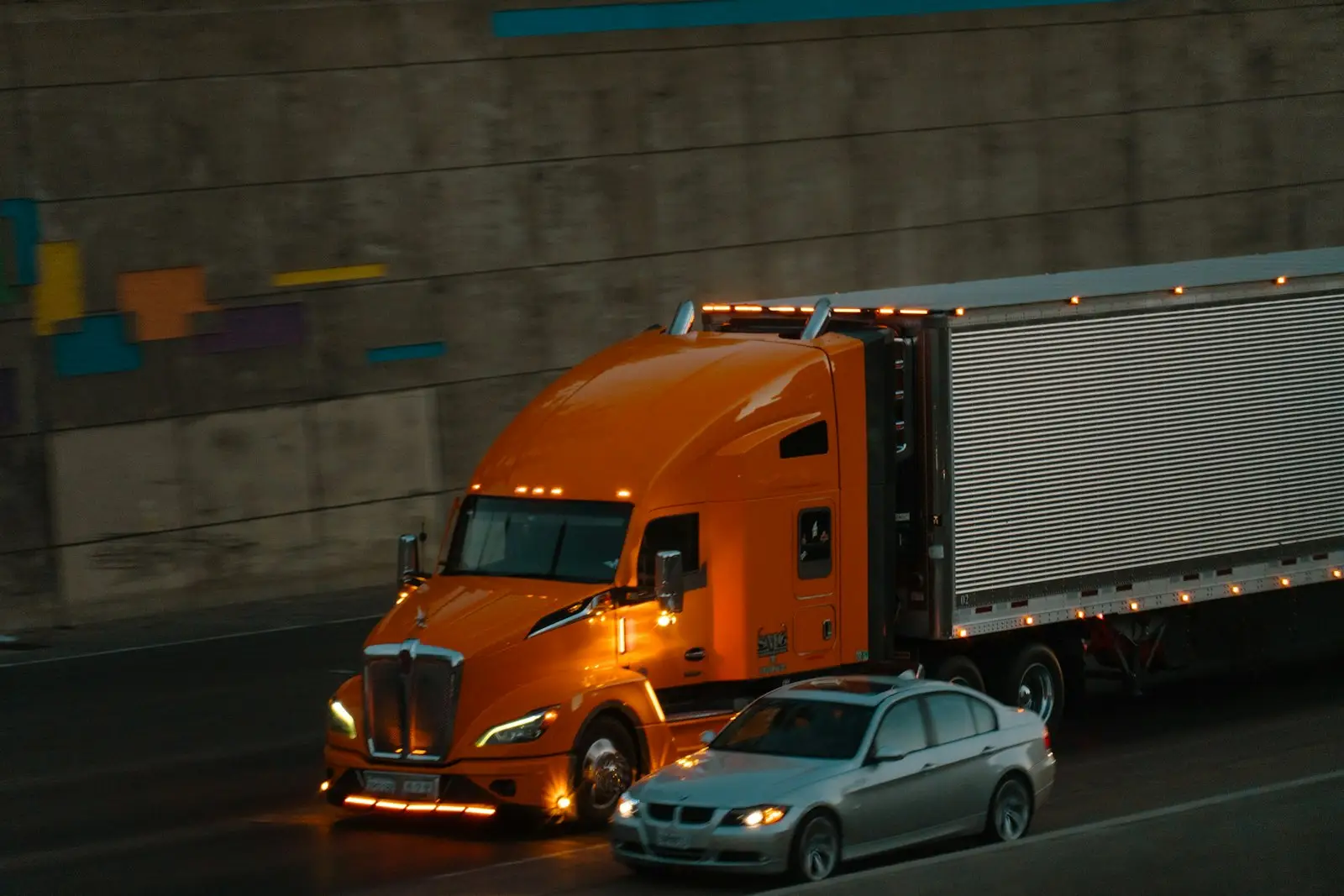
Train Horn Pranks & the Law: Disturbing the Peace, Assault & Fines
Is the viral train horn prank illegal? The real risks: disturbing-the-peace charges, assault claims, hearing-damage lawsuits, and what fines actually cost.

The train horn prank — rolling up on an unsuspecting pedestrian or drive-thru worker and unleashing a 150 dB blast — has become a viral staple on TikTok and YouTube. Before you wire up a horn button for laughs, here’s what that blast can actually cost you: criminal charges, civil lawsuits, and fines that land differently in every state.
The Prank Is the Crime, Not the Horn
There are two completely separate legal questions here, and pranksters mix them up constantly. The first is equipment law: is a train horn legal to have on your vehicle at all? That varies by state, and we cover it in detail in our state-by-state train horn legality guide. The second is use law: when are you allowed to sound any horn? That one is far less forgiving, and it’s the one the prank violates.
Nearly every state vehicle code ties horn use to safety, not entertainment. California is blunt about it — Vehicle Code section 27001 says the driver of a motor vehicle “when reasonably necessary to insure safe operation shall give audible warning with his horn,” and that the horn “shall not otherwise be used,” with a narrow exception for theft alarm systems. Texas Transportation Code 547.501 uses nearly identical language: an operator “shall use a horn to provide audible warning only when necessary to insure safe operation,” and adds that a warning device “may not emit an unreasonably loud or harsh sound.”
Read those again. Blasting a horn at a pedestrian who is not in your path isn’t a gray area — it’s the textbook definition of a use the statute prohibits. And that’s before anyone asks whether the horn itself was legal to install.
Disturbing the Peace: The Charge That Actually Sticks
A horn-use ticket is a traffic citation. The charge that turns a prank into a criminal record is disturbing the peace (called disorderly conduct in many states). California Penal Code section 415 is the classic example: it criminalizes anyone who “maliciously and willfully disturbs another person by loud and unreasonable noise,” punishable by up to 90 days in county jail, a fine of up to $400, or both.
Notice the elements. Loud — a train horn is arguably the loudest thing you can bolt to a consumer vehicle. Unreasonable — there is no safety justification for blasting a person standing at a crosswalk. Willful and malicious — you planned it, aimed it, and filmed it. A prank video doesn’t just risk meeting every element of the offense; it documents them in HD.
Prosecutors have discretion in how these are charged, and many first offenses resolve as infractions or small fines. But the statute’s ceiling — jail time — exists, and it’s the same charge that covers blasting subwoofers at 3:00 AM. Judges do not treat “it was a prank” as a defense; they treat it as a confession of intent.
When a Loud Joke Becomes Assault
Here’s the part most pranksters genuinely don’t know: assault does not require touching anyone. Cornell Law School’s Legal Information Institute defines assault as “an intentional act that puts another person in reasonable apprehension of imminent harmful or offensive contact.” The victim doesn’t have to be hit — they just have to reasonably perceive that harm is coming. And per the same source, an act can still qualify as assault “even if the act was meant as a joke.”
A 150 dB horn fired from a truck a few feet away can absolutely put a reasonable person in fear of imminent harm — that’s the entire premise of the prank. The startle reaction is also where real injuries happen: a cyclist swerves into a curb, a jogger bolts into traffic, an older pedestrian falls. Once someone is hurt, you’re looking at potential battery or negligence claims on top of the criminal exposure, and civil lawsuits for the injury and emotional distress. The prank format — deliberately targeting a specific person for a filmed reaction — is exactly the fact pattern a plaintiff’s attorney wants.
The Hearing-Damage Problem (and the Lawsuit That Follows)
Aftermarket train horn kits commonly advertise output in the 130–150 dB range — far beyond the roughly 100–110 dB summaries of traffic law commonly cite as the practical ceiling for regular car horns. For scale, the National Institute on Deafness and Other Communication Disorders puts fireworks shows at 140–160 dBA, the very top of its noise chart, and warns that long or repeated exposure to sounds at or above just 85 dBA can cause hearing loss — and the louder the sound, the shorter the time it takes.
A drive-thru worker leaning out a window is often within a few feet of the trumpets. At that distance a full-pressure blast delivers an impulse in the same neighborhood as those top-of-chart events, directly into an unprotected ear. We break down the physiology in our guide to whether a train horn can damage your hearing, but the legal takeaway is simple: hearing injury is a permanent, provable harm. A prank victim with a documented threshold shift and your own video showing the blast is about as clean as a personal-injury case gets.
What Fines Actually Look Like
Enforcement reality is lopsided. For ordinary drivers, illegal-horn-use tickets are vanishingly rare — CBS News reported that Texas police issued just 8 citations for illegal horn use in all of 2022, out of roughly 3.9 million total traffic violations. The one Collin County driver who did get cited (for honking at a deputy) faced a $189 fine.
So why worry? Because a prank flips every factor that normally keeps enforcement rare. There’s a complaining victim. There’s video evidence, often with your plate in frame. And the conduct stacks charges:
- Improper horn use — traffic citation (the Texas example ran $189)
- Disturbing the peace / disorderly conduct — up to $400 and 90 days in jail under California’s version
- City noise-ordinance violations — separate municipal fines that stack on top of state charges
- Civil claims — assault, emotional distress, hearing injury, with no statutory cap
City codes deserve special mention: many municipalities set their own decibel caps and “plainly audible” standards with per-violation fines. Our guide to train horn city noise ordinances covers how those local rules work and why they often bite before state law does.
Your Own Video Is the Prosecution’s Best Evidence
Charges like California’s Penal Code 415 require proving you acted “maliciously and willfully.” In a normal noise dispute, that’s the hard part. In a posted prank video, you’ve done the prosecutor’s job: the upload shows planning, the caption announces intent, the metadata timestamps it, and the framing usually catches your plate, your face, or your channel name — which links to every other prank you’ve posted. Deleting the video after the fact doesn’t help much either; screenshots and re-uploads circulate long after the original is gone. If a case is worth filing, the evidence has almost certainly already been preserved by someone.
How to Enjoy a Train Horn Without the Charges
None of this means train horns themselves are radioactive. Thousands of trucks run them legally as genuine emergency equipment. The line is entirely about how you use them:
- Sound it on the road only as a genuine safety warning — the one use every state statute explicitly allows
- Demo it on private property, away from bystanders, with warning to anyone nearby
- Save the showing-off for truck meets and horn gatherings where everyone came to hear it
- Never aim it at a person at close range — that’s where assault and hearing-injury exposure lives
- Read your state’s equipment law and your city’s noise ordinance before you install, not after the citation
A train horn is a legitimate safety upgrade with a real wow factor. Point it down the road, not at somebody’s head, and the law mostly leaves you alone.
Keep reading
- Are train horns legal on cars? State-by-state quick reference
- Train horn decibel limits by city: noise ordinances explained
- Can a train horn damage your hearing?
- Decibels explained: how loud is 150 dB really?
- Train horn laws by state: 50-state legal guide
Sources
- California Vehicle Code § 27001 (leginfo.legislature.ca.gov) — horn may be used only when reasonably necessary for safe operation; “shall not otherwise be used”
- California Penal Code § 415 (leginfo.legislature.ca.gov) — disturbing the peace by “loud and unreasonable noise”; up to 90 days jail and/or $400 fine
- Texas Transportation Code § 547.501 (FindLaw) — horn use “only when necessary to insure safe operation”; no “unreasonably loud or harsh sound”
- Assault — Legal Information Institute, Cornell Law School — assault definition, no physical contact required, applies even to acts “meant as a joke”
- Collin County man ticketed for honking horn at deputy (CBS News Texas) — $189 illegal-horn-use fine; 8 horn citations statewide in 2022 vs ~3.9 million total violations
- Noise-Induced Hearing Loss (NIH / NIDCD) — hearing damage from repeated exposure at or above 85 dBA; fireworks at 140–160 dBA; louder sounds damage faster
- Is Using Train Horns Legal on a Regular Motor Vehicle? (Pacific Legal Firm) — train horns output 130–150 dB vs the 100–110 dB range cited for regular car horns
Frequently asked questions
Quick answers to the questions people ask most about this topic.
- Is the train horn prank illegal?
- In most cases, yes. State vehicle codes like California VC 27001 and Texas Transportation Code 547.501 allow horn use only when reasonably necessary for safe operation, so blasting a horn at a person for entertainment violates the use statute even where the horn itself is legal to install.
- Can you go to jail for a train horn prank?
- It's possible. Under California Penal Code 415, willfully disturbing another person with loud and unreasonable noise carries up to 90 days in county jail, a fine of up to $400, or both. Most first offenses resolve as fines, but the jail exposure is real.
- Is blasting a train horn at someone considered assault?
- It can be. Assault is an intentional act that puts another person in reasonable apprehension of imminent harmful contact — no touching is required, and intending it as a joke is not a defense. A close-range 150 dB blast aimed at a specific person fits that definition, especially if the startle causes injury.
- How much is the fine for illegally using a train horn?
- It varies by state and charge. A documented Texas illegal-horn-use citation ran $189, California's disturbing-the-peace statute allows fines up to $400 plus jail time, and city noise ordinances can add separate municipal fines on top. Civil lawsuits for injury or hearing damage have no preset cap.
- Are train horns themselves illegal to own or install?
- Owning a train horn is generally legal, and installing one is treated as an equipment question that varies by state — many states restrict horns that are unreasonably loud or harsh on public roads. The bigger legal risk is how you use it: only genuine safety warnings are protected.
Related reviews & guides

Wayside Horns Explained: Pole-Mounted Crossing Horns and FRA Rules

Train Horn Safety Relief Valve: PSI Rating, Placement and Testing

Locomotive Horn Rules: What 49 CFR 229.129 Requires (96-110 dB)

Train Horn Kit Weight: Tank, Compressor & Payload Math Explained

Train Horn Dual Battery Setup: Isolators, Relays & Voltage