Train Horn Compressor Buying Guide: PSI, Duty Cycle & Recovery
How to pick the right air compressor for a train horn. We break down max PSI, duty cycle, recovery time, amp draw, and sealed vs open-vent designs.
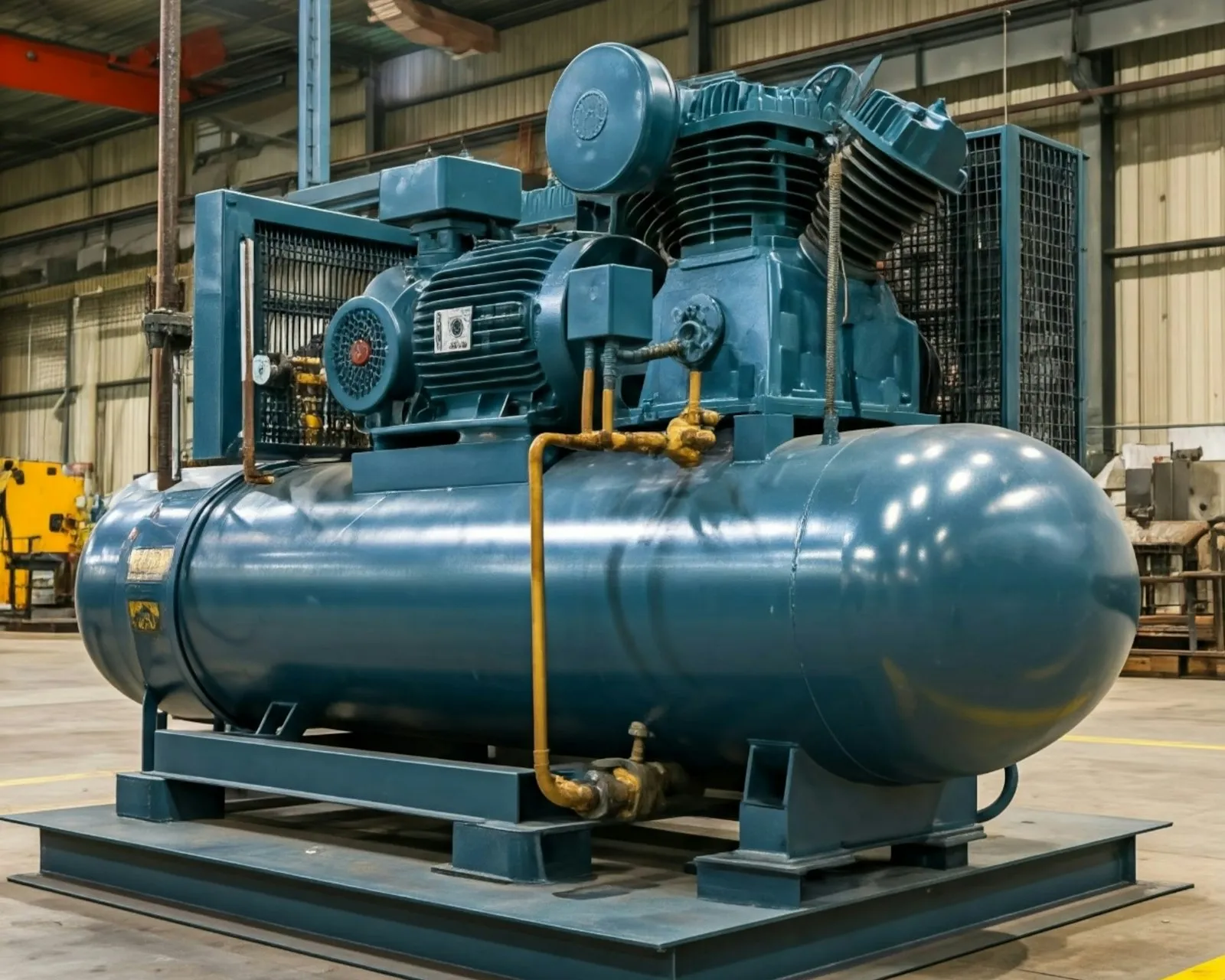
If you’re shopping for a train horn air compressor, the spec sheet can feel like alphabet soup: PSI ratings, duty cycle percentages, CFM, amp draw. Here’s how to read those numbers so you buy a compressor that actually keeps up with your horn instead of overheating after three blasts.
The compressor’s only job: refill the tank
On an air-tank train horn setup, the trumpets get their volume from a stored tank of compressed air, not directly from the compressor. The compressor’s job is simply to refill that tank between blasts and keep it topped off. That’s why a smarter way to read a compressor buying decision is: how fast does it refill, and how long can it run without quitting?
That reframing matters because shoppers often fixate on max PSI alone. Max PSI tells you the ceiling, but recovery time and duty cycle tell you whether the compressor can live with your driving and honking habits. If you want a deeper primer on how the whole air system fits together, start with our complete train horn buyer’s guide.
Max PSI: match it to your pressure switch
Max working pressure is the highest pressure a compressor can push air to. Most popular 12V onboard units, like the Viair 380C and 444C, top out at 200 PSI. That’s plenty of headroom, because most train horn systems run a pressure switch set somewhere between 120 and 150 PSI.
The key rule: your compressor’s max PSI must comfortably exceed your pressure switch’s cut-off. If your switch shuts the compressor off at 150 PSI, a 200 PSI compressor is loafing along well within its limits. We cover target pressures in detail in our guide to train horn PSI, but for buying purposes, a 200 PSI-rated compressor paired with a 120/150 switch is the standard, safe combo.
- Compressor max PSI should sit well above your switch’s cut-off pressure
- 200 PSI compressor + 120/150 PSI switch is the common, reliable pairing
- Don’t run a compressor at its absolute max PSI as a normal operating point
Duty cycle: the number most people ignore
Duty cycle is the percentage of a full cycle a compressor can run before it needs to rest. For mobile 12V compressors, one full cycle is one hour. So a 33% duty cycle compressor can run roughly 20 minutes, then needs about 40 minutes off, per HornBlasters’ own explanation.
Here’s the catch most buyers miss: duty cycle drops as pressure rises. The Viair 380C is rated 100% duty cycle at 100 PSI but 55% at 200 PSI, according to Viair’s spec sheet. The compressor works harder and heats up faster the closer it gets to its max pressure. Since your system spends most of its time refilling toward 150 PSI, you want a unit that’s still happy in that range.
Why does this matter in real life? If you honk a lot, sit in stop-and-go traffic, or run a big multi-gallon tank, a low-duty-cycle compressor can overheat and shut down on thermal protection. A higher duty cycle buys you margin.
Recovery time: how fast it refills
Recovery time (or fill time) is how long the compressor takes to bring the tank back up to pressure after a blast. This is the spec that decides whether your second and third honks are as loud as the first.
Manufacturer fill times give you a useful yardstick. Here’s how two common Viair units compare on a 5.0-gallon tank:
| Compressor | CFM (free flow) | 5.0-gal, 0→200 PSI | 5.0-gal, 165→200 PSI |
|---|---|---|---|
| Viair 380C | 1.58 CFM | — | ~2:25 (110→145 PSI) |
| Viair 444C | 1.76 CFM | ~10:30 | ~2:50 |
The higher a compressor’s CFM (cubic feet per minute of airflow), the faster it refills. The 444C moves slightly more air than the 380C, which is part of why it’s a popular pick for bigger systems. Note that quoted fill times always specify a pressure range and tank size — compare apples to apples, because a 0-to-200 fill is far slower than topping off the last 35 PSI.
If you’re deciding between a tank-based setup and a battery unit entirely, our air vs battery train horns comparison lays out the trade-offs.
Amp draw: can your truck feed it?
These compressors are hungry. The Viair 380C draws up to 23 amps and the 444C up to roughly 19-20 amps at 12V, per their spec sheets. That’s enough current that you must wire the compressor through a relay with the correct fuse and a heavy-gauge power wire run straight from the battery, never tapped off a small accessory circuit.
- Run a dedicated, correctly fused power wire from the battery
- Use a relay rated above the compressor’s max amp draw
- Confirm your alternator and battery can handle sustained 20A-plus loads
Undersized wiring is one of the most common install mistakes and a frequent cause of weak performance or blown fuses. If you’re planning the electrical side, our train horn relay wiring guide walks through it.
Sealed vs. open-vent designs
Mounting location drives this choice. HornBlasters distinguishes between sealed compressors, which ship with an air-filter relocation kit and resist moisture and dust, and non-sealed (open-vent) compressors that have exposed intake vents. Their guidance: choose a sealed unit when the compressor is likely to see the elements, such as mounting to a chassis rail under the truck.
- Mounting under the vehicle or in a wheel well: choose a sealed compressor
- Mounting inside a cab, toolbox, or trunk: an open-vent unit can be fine
- A relocated, filtered intake keeps water and grit out of the pump
Many popular train horn compressors, including the 380C, use an oil-less pump design, which means no oil changes and less maintenance fuss over the life of the unit.
What happens when you push it too hard
Even a good compressor has limits. If you run one for extended periods at high pressure and it stops restarting, that’s usually thermal protection doing its job. HornBlasters advises letting the compressor cool for 30 to 45 minutes before trying again. Repeatedly tripping thermal protection is a sign you’ve outgrown your compressor’s duty cycle and should size up, add a second compressor, or use a larger tank so the pump cycles less often.
Quick buying checklist
- Max PSI rated above your pressure switch cut-off (200 PSI is standard)
- Highest duty cycle you can afford, especially at your operating pressure
- Higher CFM for faster recovery between blasts
- Amp draw your truck’s electrical system and wiring can handle
- Sealed design if it’ll be exposed to road spray and dirt
- Oil-less pump for low maintenance
Get those six right and the compressor becomes the part of your system you never think about again — which is exactly what you want.
Sources
- Viair 380C Compressor — official specifications — max PSI, duty cycle (100% @ 100 PSI / 55% @ 200 PSI), 1.58 CFM, 23A draw, oil-less design, dimensions.
- HornBlasters Viair 380C product page — duty cycle, amp draw at various pressures, fill times, oil-less design.
- HornBlasters Viair 444C product page — max PSI, duty cycle, 1.76 CFM, ~19-20A draw, tank fill times.
- HornBlasters compressor FAQ — duty cycle definition, sealed vs non-sealed compressors, thermal cool-down recommendation.
- Train Horn Air System Sizing guide (SpeedwayMedia) — tank/compressor/pressure-switch pairing recommendations.
Keep reading
Frequently asked questions
Quick answers to the questions people ask most about this topic.
- What PSI compressor do I need for a train horn?
- A compressor rated to 200 PSI is the standard choice. Your pressure switch typically cuts off around 120 to 150 PSI, so a 200 PSI compressor has comfortable headroom and never runs at its absolute limit.
- What does duty cycle mean on an air compressor?
- Duty cycle is the share of a one-hour cycle a compressor can run before it must rest. A 33% duty cycle means about 20 minutes of running followed by 40 minutes off. Duty cycle drops as pressure rises, so check the rating at your operating pressure, not just at 100 PSI.
- Is the Viair 380C or 444C better for a train horn?
- Both top out at 200 PSI. The 444C moves slightly more air at 1.76 CFM versus the 380C's 1.58 CFM, so it refills a large tank a bit faster, while the 380C draws up to 23 amps. For bigger multi-gallon tanks the 444C is the common pick.
- Why does my train horn compressor overheat and shut off?
- That's thermal protection from exceeding the duty cycle, usually from heavy honking, a too-small tank, or running near max PSI. Let it cool 30 to 45 minutes, then consider a higher-duty-cycle compressor, a second compressor, or a larger tank.
- Do I need a sealed compressor for my truck?
- If the compressor mounts under the vehicle or anywhere exposed to road spray and dirt, choose a sealed unit with a relocated, filtered air intake. If it lives inside a cab, toolbox, or trunk, an open-vent compressor is usually fine.
Related reviews & guides
Buying a Used Train Horn Kit on Facebook Marketplace: Checklist
Best Train Horn for Ford F-250 & F-350 Super Duty (2026)
Buying a Used Locomotive Horn on eBay: K5LA & RS-3L Checklist
Train Horn Compressor Duty Cycle: Intermittent vs Continuous
Best Train Horn for a Bicycle or E-Bike: AirZound vs Air Builds