- +Genuine reconditioned locomotive horn, not a replica
- +Authentic vintage 1950s P-series tone (Illinois Central / Southern Pacific heritage)
- +Sand-cast aluminum and stainless steel construction built for railroad service
- +5-year defect warranty plus 30-day satisfaction guarantee
- +Reversible bells for custom orientation
- −$1,699.99 for the horn only — valve and air system cost extra
- −No published dB rating or per-bell frequency chart
- −Huge and heavy: 19.5" long, 20.25 lb — needs serious mounting space
- −Requires a large air system: 1+ gallon tank at 120 PSI minimum with 1/2" plumbing
- −Returns may carry a 15% restocking fee
Methodology
This review aggregates publicly available information from manufacturer specifications, retailer listings, and verified user reviews. We do not perform hands-on testing. Last reviewed: September 30, 2026. Primary sources for this article are the HornBlasters product listing for the AirChime P3 (HornBlasters sources these horns from retired locomotives and reconditions them for sale), HornBlasters’ Nathan AirChime reference page, a cross-check retailer listing at Pure Diesel Power, SoundTraxx’s locomotive airhorn history, and YouTube sound demonstrations. All external links are collected in the Sources section at the end.
Quick verdict
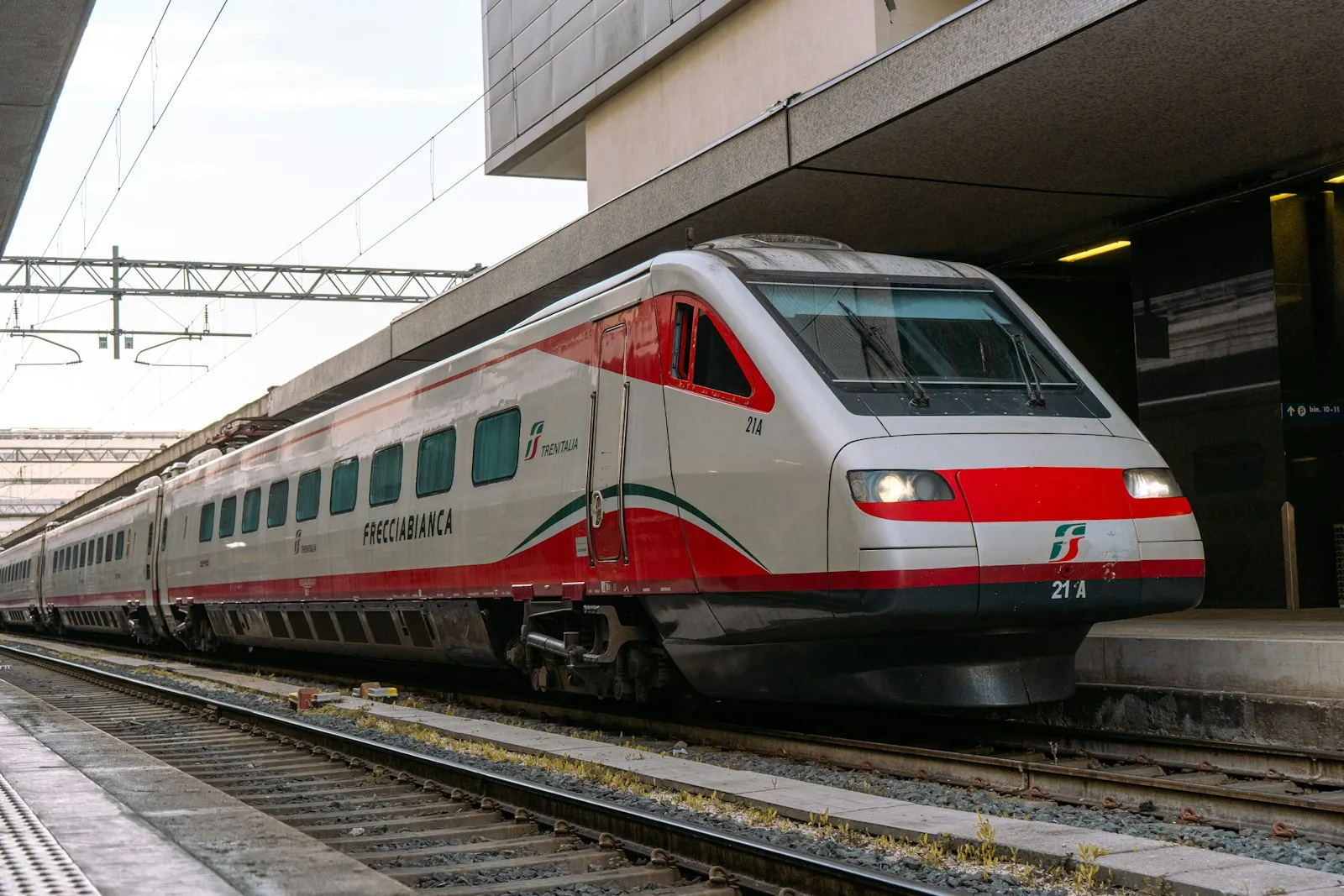
The Nathan AirChime P3 is not a truck accessory that imitates a train — it is the train. Each unit is a genuine three-chime P-series locomotive horn pulled from a retired locomotive and reconditioned with new internals, carrying the mellow, vintage chord that announced Illinois Central and Southern Pacific diesels in the 1950s. At $1,699.99 for the horn alone — no valve, no compressor, no tank — it is strictly a purchase for enthusiasts who want authentic railroad hardware and already understand what a 1/2” NPT, 120-PSI air appetite means. We rate it 4.3/5: superb authenticity and build, priced and sized accordingly.
What it is
The P3 is the three-chime member of Nathan AirChime’s P-series, a horn family introduced in the early 1950s as an easier-to-service alternative to the earlier hand-tuned M horn, per SoundTraxx’s locomotive airhorn history. Early P3s — the ones fitted to first-generation Illinois Central and Southern Pacific diesels — carried the #1, #2, and #4 bells, and it is that unmistakable, slightly haunting vintage chord that people mean when they talk about “the P3 sound.” HornBlasters’ AirChime reference page puts the P-series’ voicing in the 220–554 Hz range across the family and notes the sand-cast bells the series is known for.
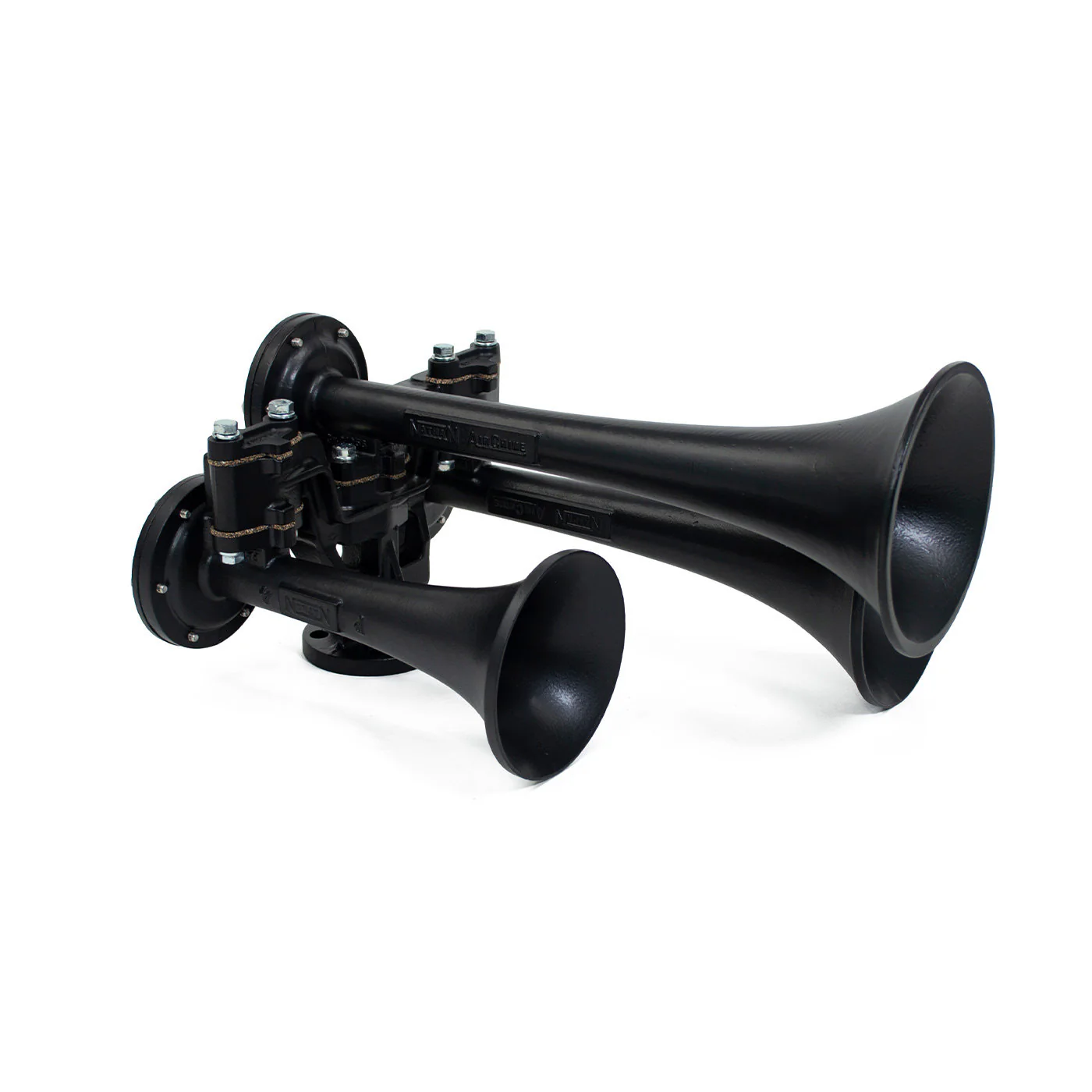
What you buy today from HornBlasters is a reconditioned original: horns are sourced from retired locomotives, sandblasted, refinished in black powder coat, and rebuilt with new diffuser rings, diaphragms, and cushion rings, per the product page. The bells are reversible, so you can point one rearward for multi-directional signaling or simply for the look. The buyer this suits is the collector, the show-truck builder, or the rail fan with a 3/4-ton pickup and an onboard air system — not someone shopping for a first bolt-on horn kit. For that, browse our Nathan AirChime reviews hub or the more approachable kits we cover elsewhere.
How it sounds
Sound demonstrations on YouTube of both original “old cast” and current “new cast” P3s show why this horn commands a premium. Where modern K-series horns bark with a bright, urgent edge, the P3’s chord is rounder and almost melancholy — the sound many Americans associate with the word “train.” Viewer comments on those demos consistently describe it as the most nostalgic of Nathan’s horns, and several truck owners in the comments report running theirs on 150–200 PSI systems for full voice. We relay these as user impressions, not measurements: sound character is subjective, and microphone recordings compress what a 20-pound locomotive horn does to the air in person. If tonal theory interests you, our chord and tuning guide explains why multi-bell horns are voiced as chords in the first place.
Specifications
| Spec | Value |
|---|---|
| Type | Genuine 3-chime P-series locomotive horn (reconditioned) |
| Part number | AH-P3 |
| Sound output | Not published (no dB rating disclosed by manufacturer or retailer) |
| Voicing | Vintage P-series chord; P-series family range 220–554 Hz |
| Recommended air supply | At least 1 gallon tank at 120 PSI minimum |
| Air inlet | 1/2” NPT |
| Dimensions | 19.5” L × 15.5” W × 12.75” H |
| Weight | 20.25 lb |
| Construction | Sand-cast aluminum manifold and bells, stainless steel diaphragms |
| Finish | Black powder coat (applied during reconditioning) |
| Bells | Reversible for multi-directional signaling |
| Includes | Horn only — no valve or air system |
| Warranty | 5-year manufacturer’s defect warranty; 30-day satisfaction guarantee |
| Price | $1,699.99 at HornBlasters |
Two numbers deserve comment. First, there is no decibel rating anywhere in the official listing — refreshingly honest for an industry that loves inflated dB claims, though it leaves buyers to judge loudness from sound demos. Second, the 120 PSI / 1-gallon-minimum air recommendation is a real requirement, not a suggestion; see our PSI guide and air tank sizing guide for what that means in practice.
A note on price. HornBlasters — which reconditions and sells these horns directly — lists the P3 at $1,699.99, while Pure Diesel Power carries the AH-P3 at $2,267.99, so it pays to buy at the source. Either way, a realistic all-in build (horn, 1/2” valve, bracket, compressor, tank, line, wiring) lands well north of $2,000, which is worth knowing before you fall in love with the sound.
What’s in the box
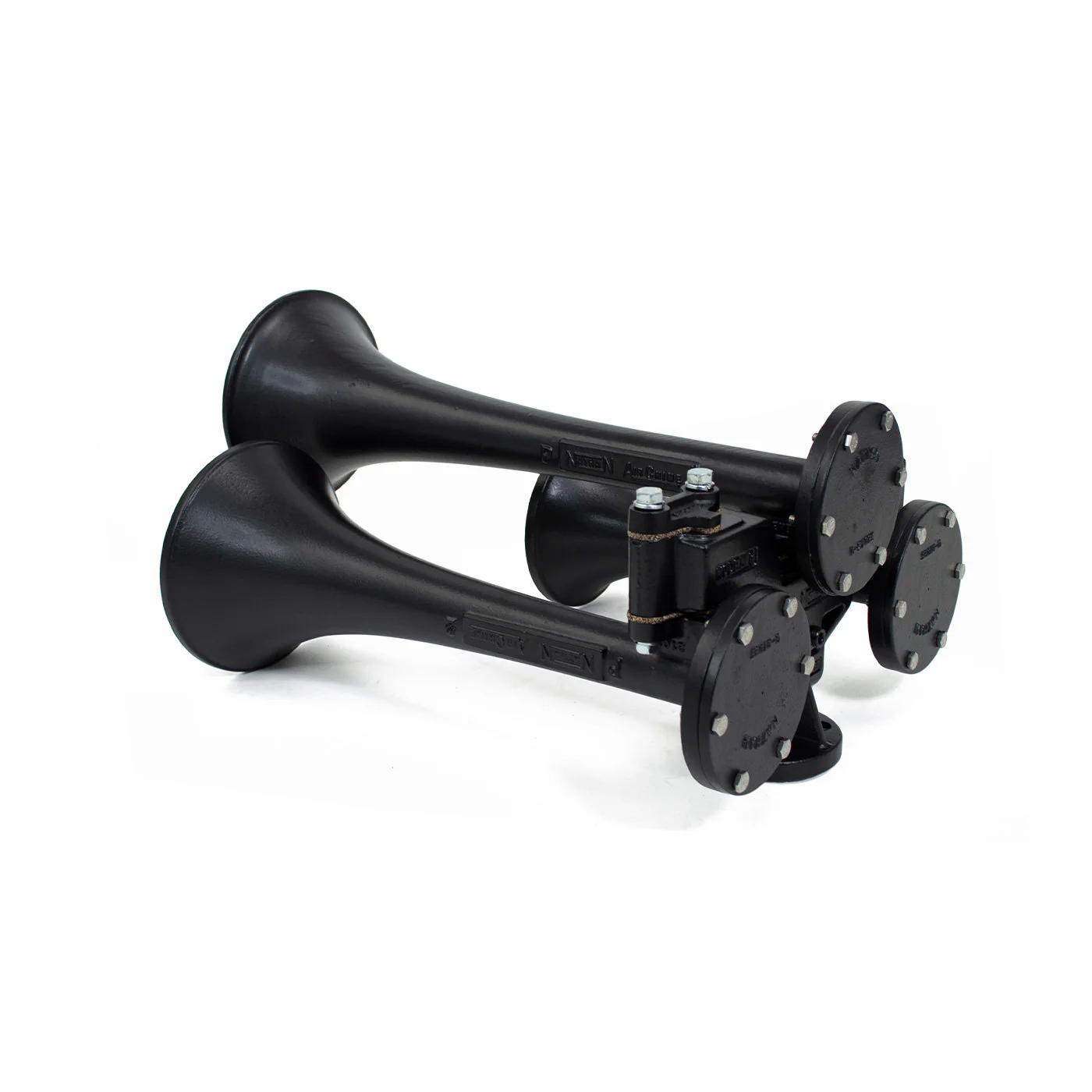
- Nathan AirChime P3 horn, reconditioned with new diffuser rings, diaphragms, and cushion rings
- Black powder-coat finish applied during reconditioning
- That’s it — this is a stand-alone horn, per HornBlasters’ own bolded warning on the listing
HornBlasters offers the missing pieces as paid add-ons: a 1/2” brass electric valve kit ($159.99), a 1/2” manual valve kit ($199.99), and a mounting bracket ($143.99). Budget for at least one valve plus a serious air system on top of the horn price.
Pros
- Genuine locomotive hardware — a reconditioned original P-series horn, not a scaled-down replica
- Authentic vintage 1950s tone associated with Illinois Central and Southern Pacific first-generation diesels
- Sand-cast aluminum manifold and bells with stainless steel diaphragms — built for decades of railroad service
- 5-year manufacturer’s defect warranty plus a 30-day satisfaction guarantee, unusually long for this category
- Reversible bells allow custom orientation and multi-directional sound
- No inflated dB marketing — the listing simply doesn’t play the decibel game
Cons
- $1,699.99 buys the horn only — valve, air line, tank, and compressor are all extra
- No published dB rating or per-bell frequency chart for the reconditioned units
- Physically enormous for a vehicle install at 19.5” × 15.5” × 12.75” and 20.25 lb
- Demands a large air system: 1-gallon tank minimum at 120 PSI with 1/2” plumbing
- Returns may carry a 15% restocking fee
Alternatives
- Nathan AirChime P5 — the five-chime big brother with a fuller, richer P-series chord; same reconditioned-original format. See our Nathan P5 review.
- Nathan AirChime K3LA — the modern three-chime standard heard on today’s locomotives; brighter, more aggressive K-series voice. See our Nathan K3LA review.
- Leslie S-3L Supertyfon — the classic rival to Nathan’s three-chimes, with its own devoted following. See our Leslie S-3L review.
Install / compatibility notes
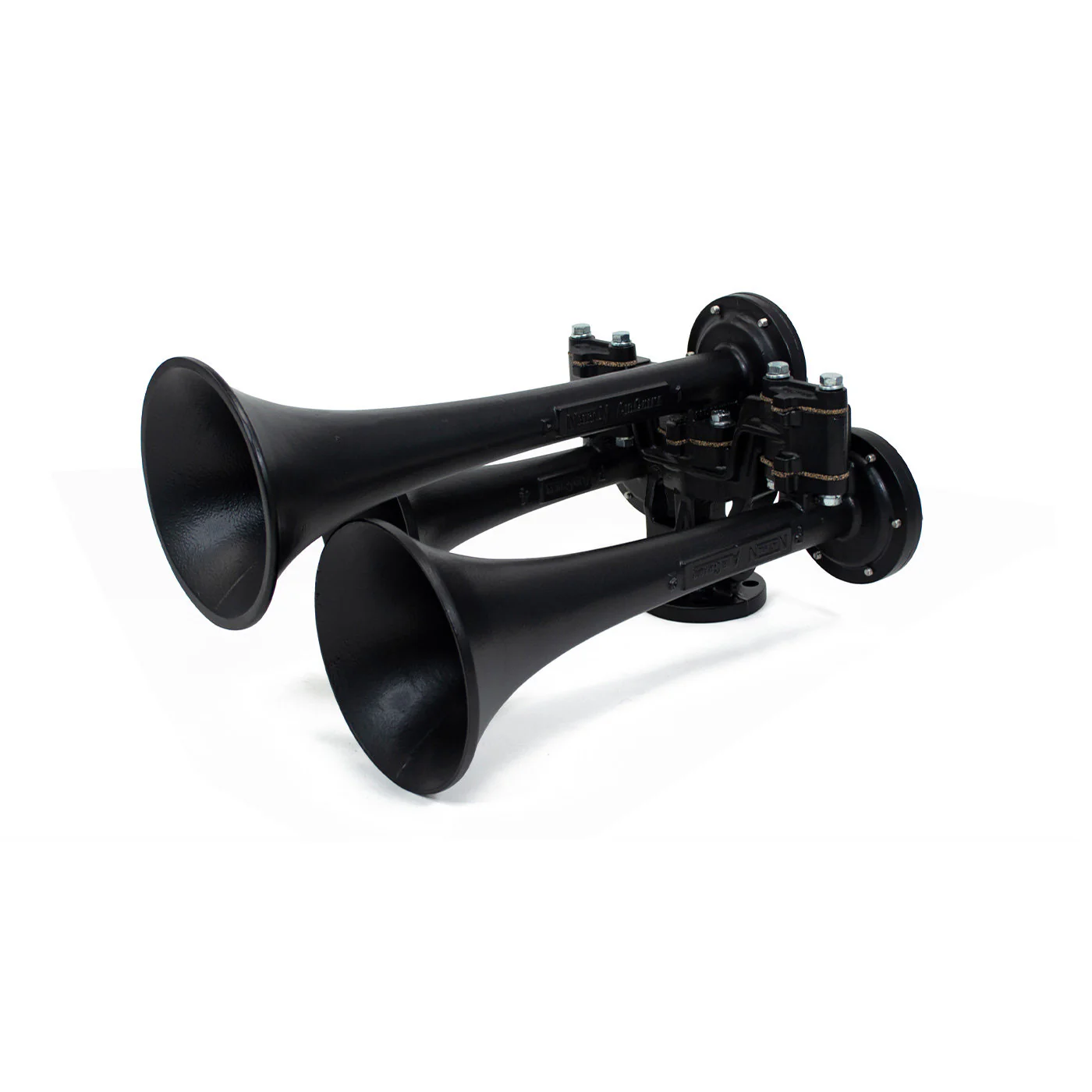
Plan the install around three constraints. First, air: the published recommendation is at least a 1-gallon tank at 120 PSI minimum, and owners of genuine locomotive horns commonly run larger tanks at higher pressure for repeated, full-voice blasts — an undersized system will choke the horn. Second, plumbing: the 1/2” NPT inlet wants 1/2” line and a 1/2” valve; necking down to 1/4” hardware will strangle airflow (our air line size guide covers why). Third, real estate: at nearly 20 inches long and over 20 pounds, this horn effectively requires a full-size pickup bed, a semi frame rail, or a flatbed — plus a bracket rated for the weight and vibration. Electrically, an electric valve kit needs a relay-protected 12V trigger circuit like any other train horn valve; see our relay wiring guide. YouTube demos of both old-cast and new-cast P3s give a good sense of the voice before you commit — links in Sources.
Sources
- HornBlasters — Nathan AirChime P3 Train Horn product page — price ($1,699.99), part number AH-P3, dimensions, 20.25 lb weight, 1/2” NPT inlet, sand-cast aluminum + stainless construction, reconditioning process, horn-only note, warranty terms, add-on valve/bracket pricing
- HornBlasters — Nathan AirChime Train Horns reference page — P-series family (P1/P3/P5), 220–554 Hz frequency range, sand-cast bells, reversible-bell naming convention
- Pure Diesel Power — Nathan Airchime P3 (AH-P3) listing — cross-check on materials and the 1-gallon / 120 PSI minimum air recommendation; lists the horn at $2,267.99
- SoundTraxx — Locomotive Airhorn History — P-series introduced in the early 1950s as an easier-to-service successor to the hand-tuned M horn; early P3 bell configuration (#1, #2, #4) on Illinois Central and Southern Pacific first-generation diesels
- YouTube — Nathan Airchime Old Cast P3 Real Train Horn — sound demonstration of an original-cast P3
- YouTube — An ICONIC Railroad Sound! Nathan Airchime New Cast P3 — sound demonstration of a new-cast P3
Train Horn Hub aggregates publicly available data. We do not test products in-house. All trademarks belong to their respective owners.
The P3 is the right pick for collectors and rail fans who want a genuine 1950s-voiced locomotive horn and already run (or will build) a 120+ PSI onboard air system. Kit shoppers wanting a bolt-on solution should look at complete consumer kits instead.
Frequently asked questions
Quick answers to the questions people ask most about this topic.
- How loud is the Nathan AirChime P3?
- Neither Nathan nor HornBlasters publishes a decibel rating for the P3, and we treat that as honest rather than evasive. It is a genuine locomotive-class horn, dramatically louder than consumer train horn kits, and hearing protection is essential at close range.
- Does the P3 come with an air system or valve?
- No. The $1,699.99 price is for the stand-alone horn only. HornBlasters sells a 1/2" electric valve kit ($159.99), a manual valve kit ($199.99), and a mounting bracket ($143.99) as add-ons, and you still need a compressor and tank.
- What air supply does the P3 need?
- The recommended minimum air supply is a 1-gallon tank at 120 PSI, fed through the horn's 1/2" NPT inlet with matching 1/2" line and valve. Larger tanks at higher pressure give longer, fuller blasts.
- Is the P3 new or used?
- Each P3 is a genuine horn sourced from a retired locomotive, then reconditioned: sandblasted, refinished in black powder coat, and rebuilt with new diffuser rings, diaphragms, and cushion rings. It carries a 5-year manufacturer's defect warranty.
- What is the difference between the P3 and the P5?
- The P3 has three chimes and the P5 has five, so the P5 produces a fuller, richer chord and costs more. Both share the same sand-cast P-series construction and mellow vintage voice; the P3 is the sound of early Illinois Central and Southern Pacific diesels.