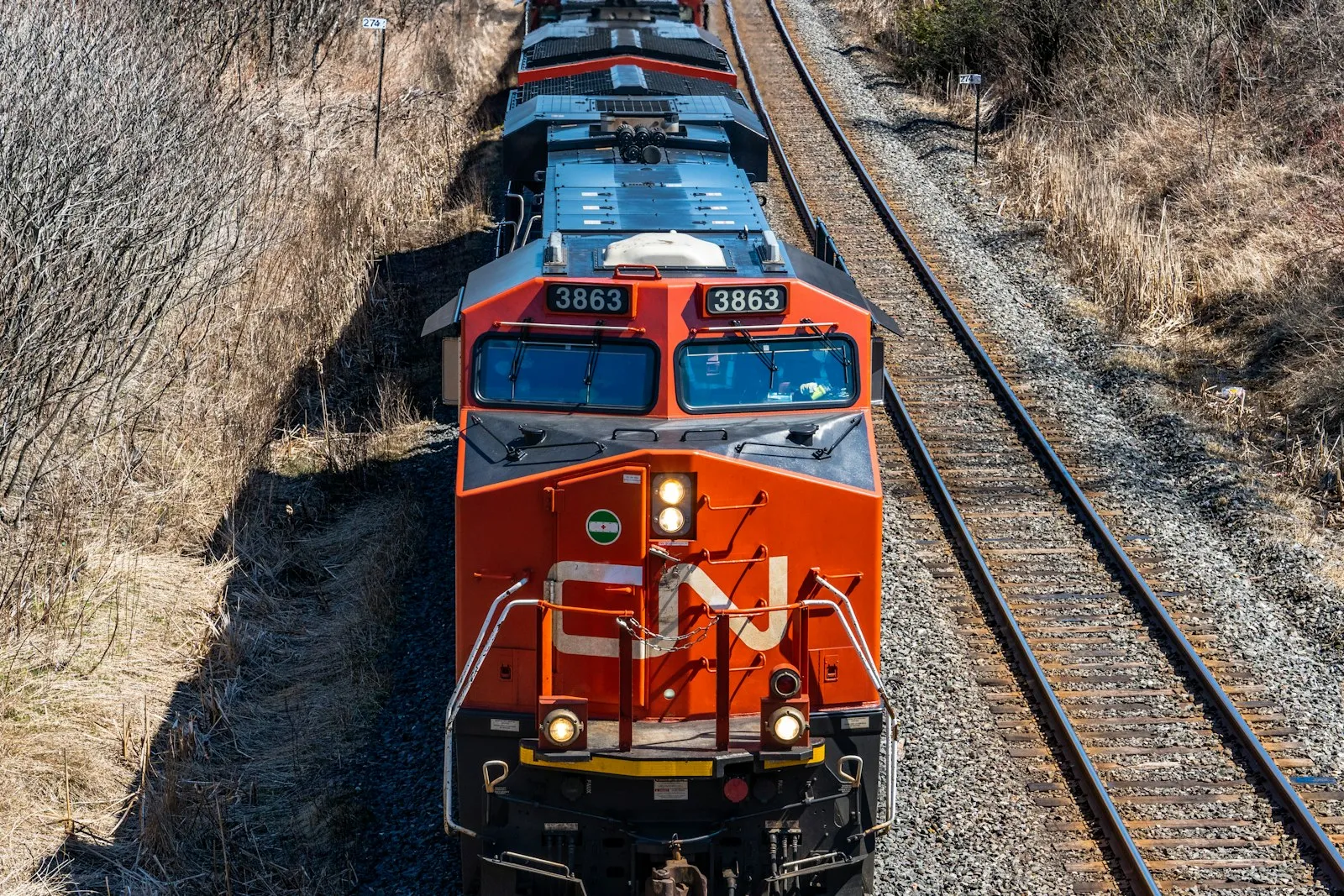
- +Genuine locomotive horn — the real Amtrak-chord sound, not an imitation
- +K5 series holds the loudest independent test result at 149.4 dB, with identical tuning to the K5HA
- +High-mount triangular manifold fits width-constrained installs a K5LA can't
- +Die-cast aluminum bells with stainless dual-disk diaphragms; wear parts replaced during reconditioning
- +2-year defect warranty plus 30-day satisfaction guarantee on reconditioned hardware
- −Horn-only price of roughly $2,800-$4,500 — air system sold separately
- −37 lb and a 19" x 18" x 12" footprint make mounting a real project
- −Needs a high-volume 150 PSI air system to perform properly
- −14-20 day reconditioning lead time before shipment
- −No per-unit dB certificate; the 149.4 dB figure is from series testing
- −Far too loud for legal street honking in most jurisdictions
Methodology
This review aggregates publicly available information from manufacturer specifications, retailer listings, and verified user reviews. We do not perform hands-on testing. Our data comes from HornBlasters’ official Nathan AirChime K5HA product page (HornBlasters reconditions and sells these horns as the primary retail source), HornBlasters’ published independent decibel testing of the K5 series, the official K-series installation manual, railroad-history references, and owner install threads. Last reviewed: July 19, 2026.
Quick verdict
The Nathan AirChime K5HA is not a train-style horn — it is an actual locomotive horn, pulled from a retired locomotive, reconditioned, and sold for road use. Its low-mount twin, the K5LA, measured 149.4 dB in HornBlasters’ independent testing — the loudest result that test has ever produced — and the K5HA is acoustically identical, differing only in manifold height. Between the four-figure price, the 37 lb of die-cast aluminum, and the 150 PSI air system it demands, this is a flagship purchase, not an impulse buy. We rate it 4.5/5: if you want the genuine article and have vertical space to mount it, nothing about it disappoints except the invoice.
What it is
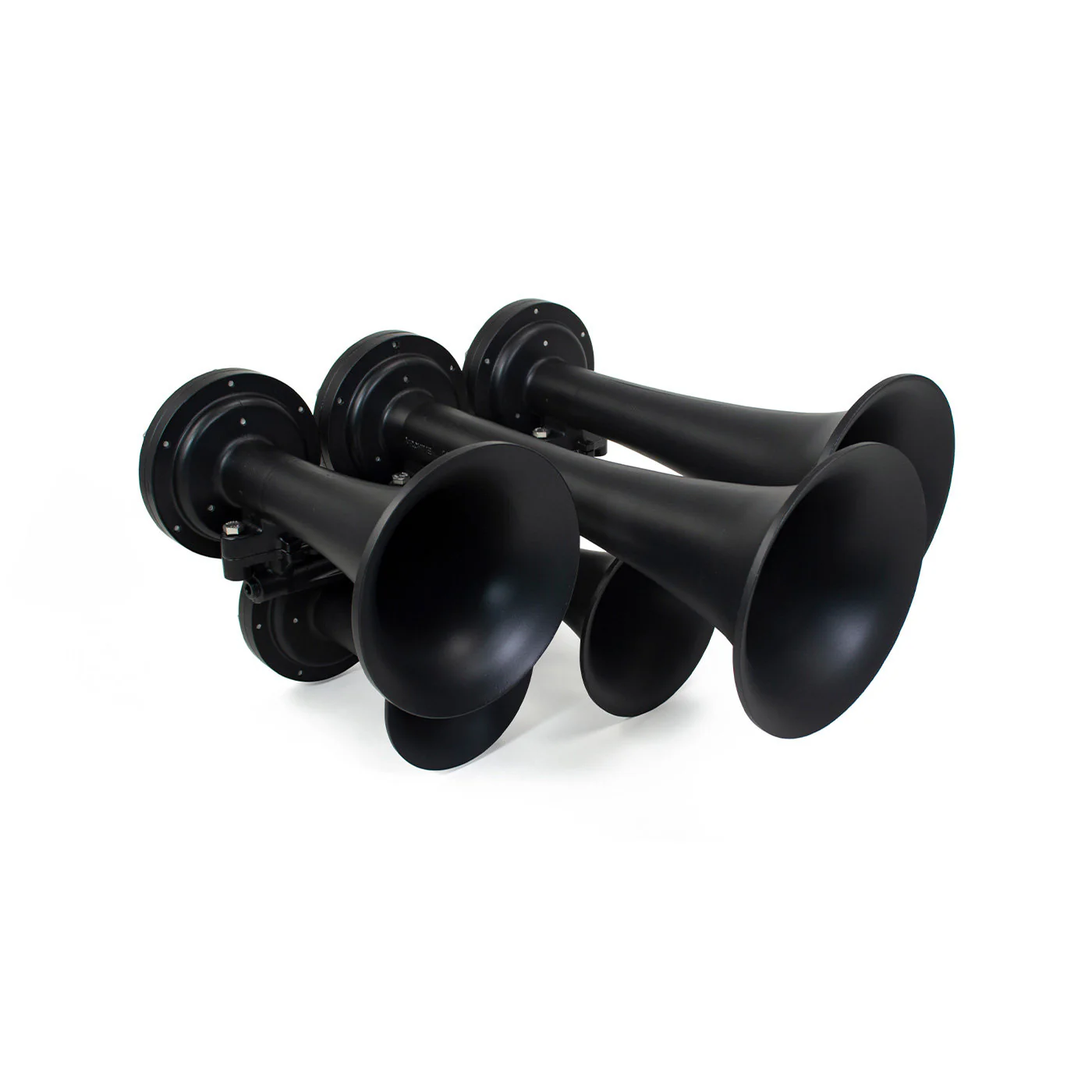
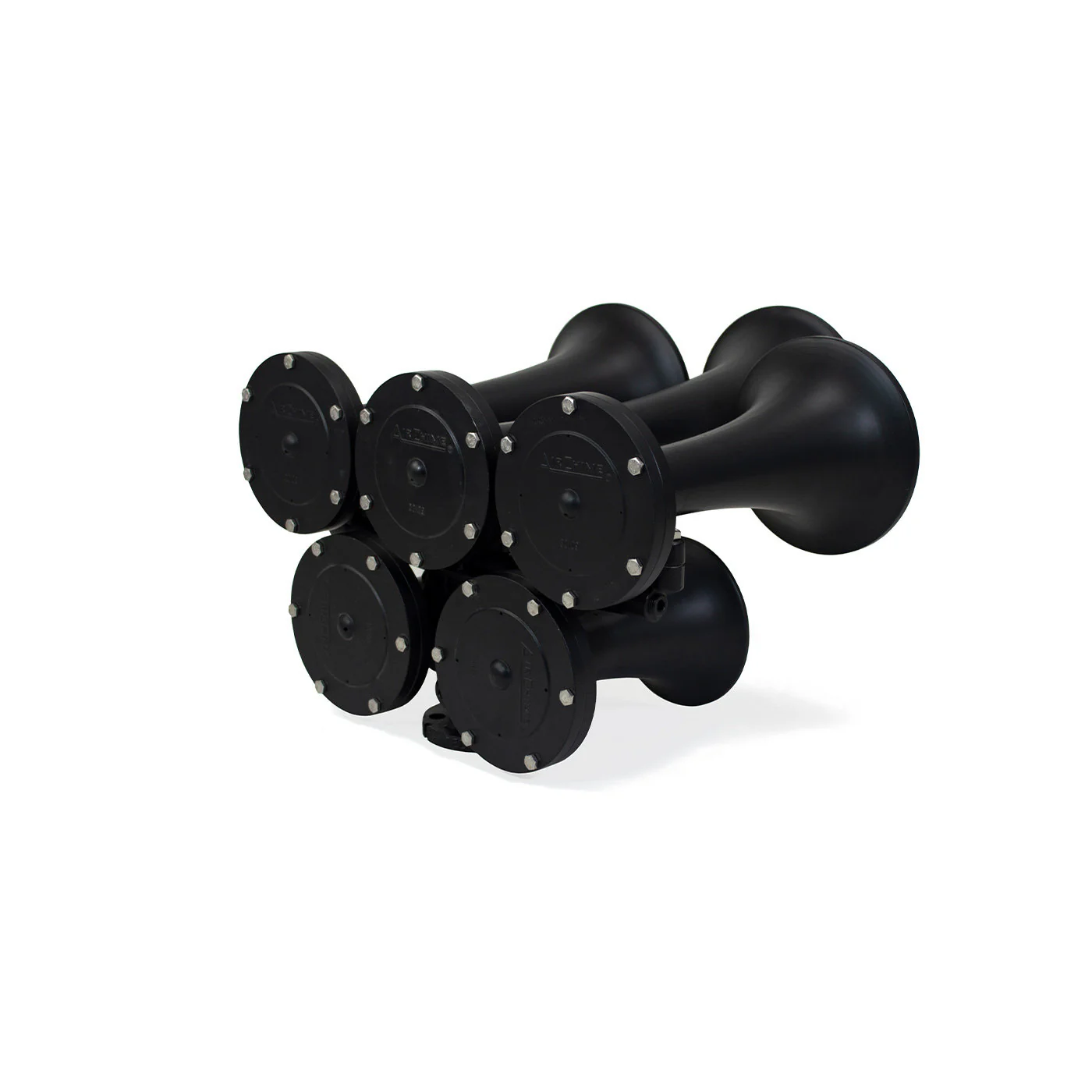
The K5HA is a five-chime locomotive air horn from the AirChime K series, the family Robert Swanson’s AirChime Ltd. began building in the 1950s. Wikipedia’s Nathan Manufacturing entry notes the original K5H debuted in 1954, and that in 1975 Amtrak’s Deane Ellsworth had the chord retuned for American rails — creating the K5LA whose B-major-6th voice became the standard horn for Amtrak, CSX, and Norfolk Southern. In K-series naming, the “H” means the bells sit on a high-mount manifold and the “A” means American tuning: a K5HA plays the exact same five notes as a K5LA, stacked on a taller, triangular five-way manifold instead of a wide flat one.
What separates a K5 from every aftermarket train horn is the chord itself. Five bells sound simultaneously, spanning roughly 311 Hz to 622 Hz, and the resulting B major 6th is the sound most Americans mean when they say “train horn” — it has announced Amtrak departures for five decades. Aftermarket four-trumpet kits imitate that voice; a K5HA simply is it, which is why owner videos of pickup installs sound uncannily like a passing passenger train rather than a loud truck horn. That authenticity is also editorially the horn’s best argument at this price: you are buying the original instrument, not a tribute.
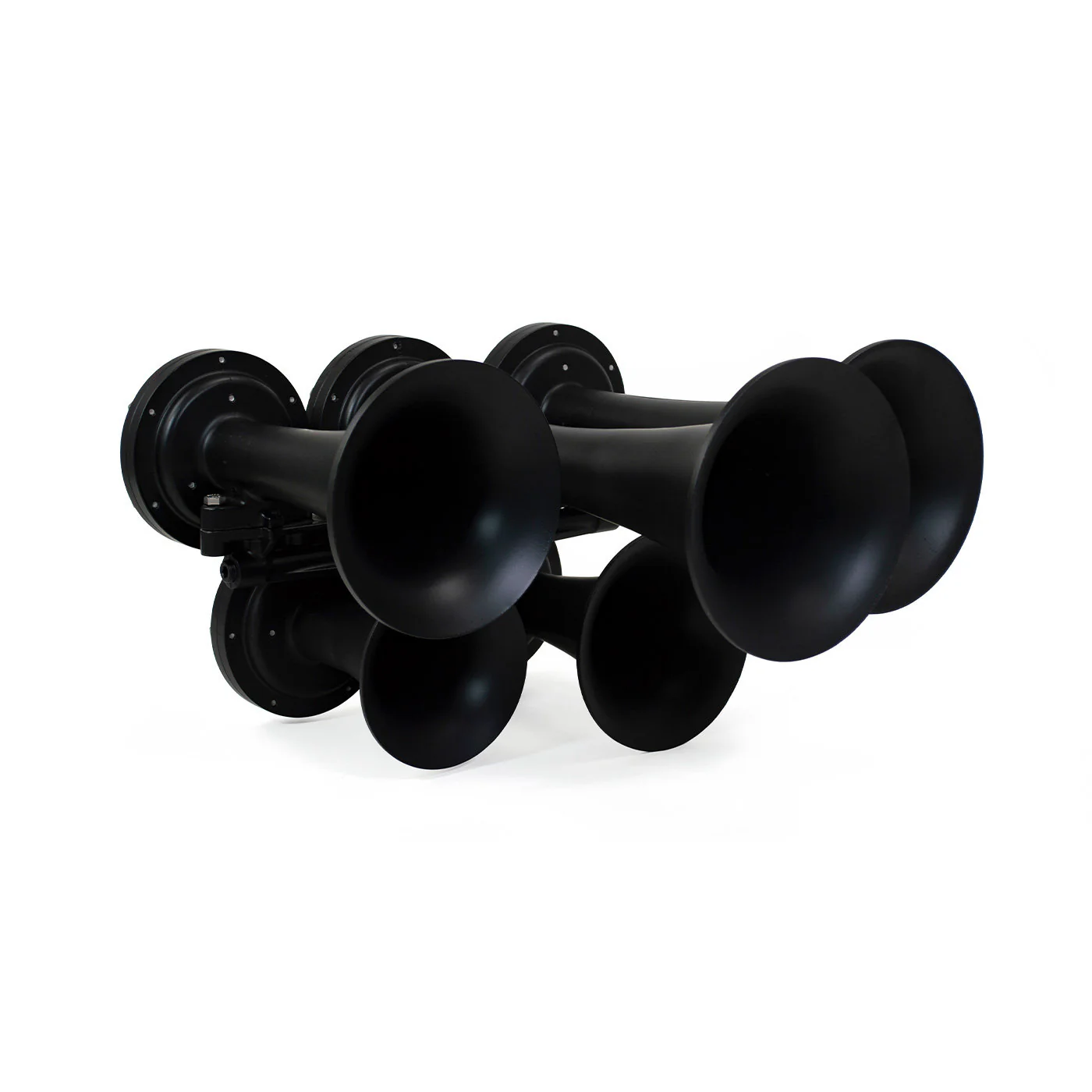
That geometry is the whole point of this variant. Per HornBlasters’ product page, the triangular manifold is made for installations where horizontal room is scarce but vertical space is available — semi-truck frame rails, headache racks, flatbed decks. The units sold today are sourced from retired locomotives and fully reconditioned: sandblasted, refinished in black powder coat, and rebuilt with new diffuser rings, diaphragms, and cushion rings. This is a horn for buyers who have decided that no replica will do — show trucks, serious diesel builds, and collectors who want the same casting that once led a freight consist.
Specifications
| Spec | Value |
|---|---|
| Sound output | 149.4 dB (independent test of the identically tuned K5LA) |
| Chord | B major 6th — D#, F#, G#, B, D# |
| Bell frequency range | ~311 Hz to ~622 Hz across the five bells |
| Chimes / bells | 5, die-cast aluminum kettle-drum design, pre-tuned one-piece construction |
| Manifold | High-mount, triangular five-way, high-flow |
| Diaphragms | Stainless steel, dual-disk |
| Dimensions | 19” L × 18” W × 12” H |
| Weight | 37 lb |
| Air inlet | 1/2” NPT |
| Air supply | High-volume system; companion 544K kit runs 110–150 PSI |
| Condition | Reconditioned (sourced from retired locomotives) |
| Part number | AH-K5HA |
| Price | $4,499.99 direct from HornBlasters; listed at $2,799.99 on Amazon |
| Warranty | 2-year manufacturer’s defect warranty + 30-day satisfaction guarantee |
What it includes
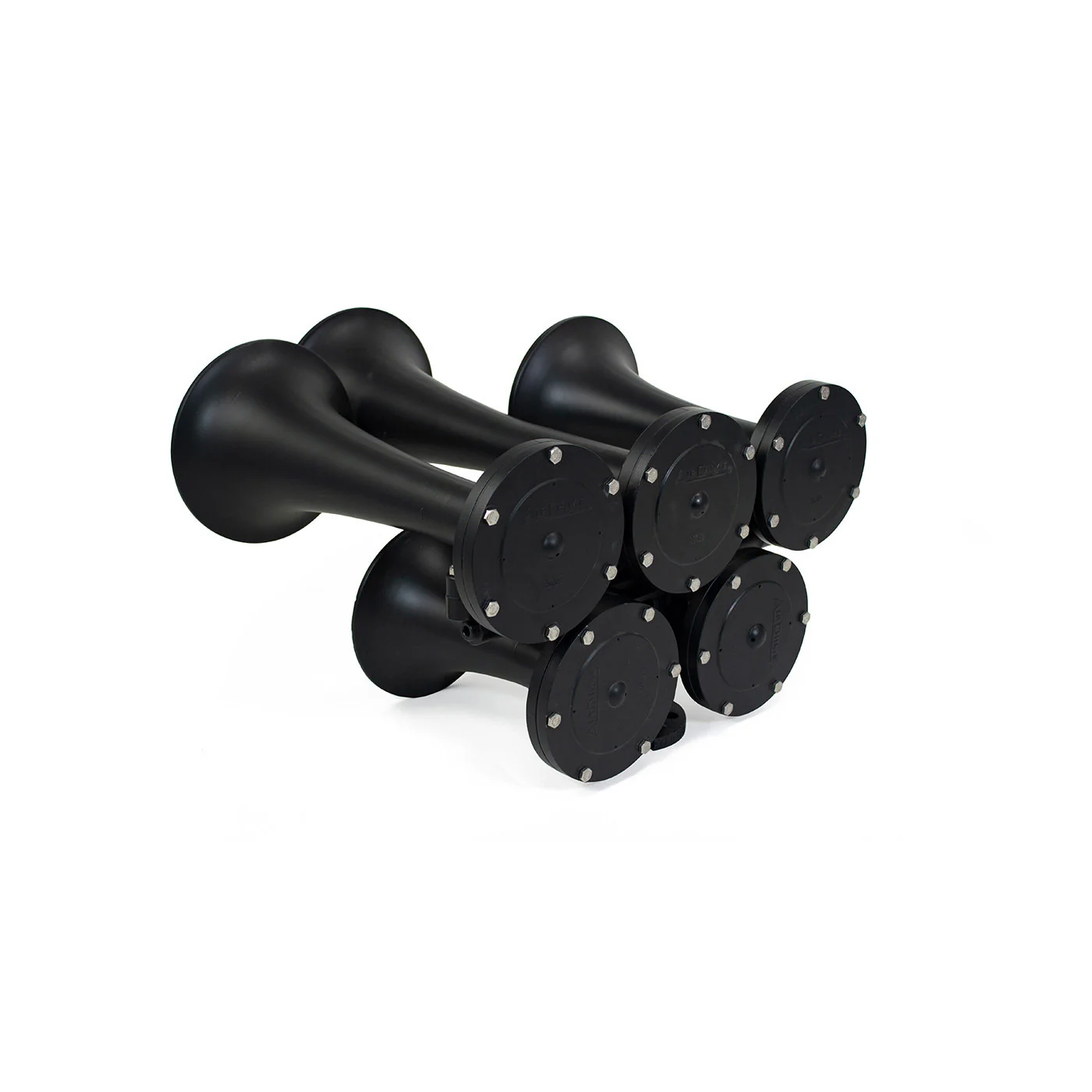
- One reconditioned Nathan AirChime K5 train horn on the high-mount five-way manifold
- All five pre-tuned bells, reversible for forward- or rear-facing orientation
- New internal components installed during reconditioning — diffuser rings, stainless dual-disk diaphragms, cushion rings
- Fresh sandblast and black powder-coat finish
Note what it does not include: this is a stand-alone horn only. HornBlasters states plainly that it requires a complete air system — compressor, tank, valve, air line, and wiring — sold separately or bundled in the Nathan AirChime K5HA 544K kit at $4,999.99 direct. Budget accordingly, and expect a 14–20 day lead time, since each horn is reconditioned to order.
Pros
- A genuine locomotive horn — the real Amtrak-chord sound, not an imitation of it
- The K5’s 149.4 dB is the loudest figure in HornBlasters’ independent testing, and the K5HA shares identical tuning
- High-mount triangular manifold solves width-constrained installs that a K5LA physically can’t fit
- Die-cast aluminum bells and stainless steel dual-disk diaphragms, with all wear parts replaced during reconditioning
- 2-year defect warranty plus a 30-day satisfaction guarantee — rare coverage for reconditioned hardware
Cons
- Horn-only pricing between roughly $2,800 and $4,500 — before you buy the air system it requires
- 37 lb and a 19” × 18” × 12” envelope make mounting a genuine engineering project
- Demands a high-volume 150 PSI air source; compact train-horn compressors won’t feed five locomotive bells properly
- 14–20 day reconditioning lead time before it ships
- No per-unit dB certificate — the 149.4 dB figure comes from series testing, not from your individual reconditioned horn
- Far too loud for legal street use in most jurisdictions; realistically a show, event, and private-property device
Alternatives
- Nathan AirChime K5LA — the same five bells and same chord on the classic low, wide manifold; the default choice when you have horizontal room. See our K5LA review.
- Nathan AirChime K5HL — the low-profile K5 variant, better suited to under-bed and low-clearance installs. See our K5HL review.
- Leslie RS-5T Supertyfon — the other legendary American five-chime, from Nathan’s historic rival; a different chord and character. See our RS-5T review.
For more reconditioned-locomotive-horn context, our Nathan AirChime hub compares the whole K and P series, and our used locomotive horn buying checklist covers what reconditioning should include.
Install / compatibility notes
Plan the air system before the horn. The manifold takes a 1/2” NPT feed, and the companion 544K kit pairs the horn with a constant-duty compressor and a 5-gallon tank running 110–150 PSI — good for roughly 5–7 seconds of continuous honk and a recharge from 110 to 150 PSI in about 1.5 minutes, per HornBlasters’ kit page. Undersized lines choke five-chime horns audibly, so keep the valve close to the horn and use 1/2” line; our air line sizing guide explains why.
The official installation manual covers the K3, K5LA, and K5HA together: 12-volt DC systems only, never fill the tank above 150 PSI, and drain moisture regularly — a reconditioned locomotive horn still hates water in its diaphragms (see our water trap guide). Mounting means dealing with 37 lb of vertical horn: owners on Train Horn Forums have documented clean pickup installs, including a 2022 Ford F-150 running the full 544K kit on HornBlasters’ AirChime mounting bracket, and ZZ Diesel’s shop-install video shows a K5HA going onto a diesel pickup. Semi trucks are arguably the natural host, since the rig’s existing 100–125 PSI air supply can feed the horn directly — our semi truck horn guide covers tapping in safely. Before you wire the button, check your state’s rules; our city noise ordinance guide explains where a horn like this can actually be sounded.
Sources
- HornBlasters — Nathan Airchime K5HA Train Horn product page — dimensions, weight, materials, manifold design, port size, reconditioning process, price, warranty, lead time, stand-alone status
- HornBlasters — The Mighty Nathan AirChime K5 (World’s Loudest Train Horns) — 149.4 dB independent test result for the K5 series
- HornBlasters — Nathan AirChime K5HA 544K Train Horn Kit — kit price ($4,999.99) and air system specs: 5-gallon tank, 110–150 PSI, ~1.5 minute recharge, 5–7 second honk time
- Amazon — Nathan Airchime K5HA Train Horn listing — retail price cross-check and 149.4 dB listing claim
- HornBlasters — Nathan AirChime K3/K5LA/K5HA 500 Series installation manual (PDF) — 544 kit contents, 150 PSI tank limit, 12V-only requirement, maintenance guidance
- Dale’s Super Store — HornBlasters Die Cast Nathan Airchime K5 Train Horn (AH-K5) — HornBlasters dealer copy confirming the die-cast kettle-drum bells and high-flow five-way manifold
- TrainWeb — The K Series Horn — K5LA/K5HA note names (D#, F#, G#, B, D#), bell frequencies (311–622 Hz), K-series tuning history
- Wikipedia — Nathan Manufacturing — AirChime company history, 1954 K5H debut, 1975 K5LA American tuning, railroad adoption
- Train Horn Forums — 2022 Ford F150 featuring the Nathan AirChime K5HA 544K kit — owner install report and mounting bracket usage
- YouTube — Nathan AirChime K5HA Install, ZZ Diesel Service Shop — pickup-truck shop install demonstration
Train Horn Hub aggregates publicly available data. We do not test products in-house. All trademarks belong to their respective owners.
The K5HA is the authentic five-chime locomotive horn for builds where vertical space beats width — the real Amtrak chord, reconditioned to like-new spec. Buy it if authenticity is the whole point and a four-figure horn budget doesn't scare you.
Frequently asked questions
Quick answers to the questions people ask most about this topic.
- How loud is the Nathan AirChime K5HA really?
- HornBlasters' independent testing measured the identically tuned K5LA at 149.4 dB — the loudest result in that test — and the K5HA shares the same bells and chord, differing only in manifold height. Treat the number as a series test figure, not a certificate for each individual reconditioned horn.
- What is the difference between the K5HA and the K5LA?
- Sound-wise, nothing: both play the same American-tuned B major 6th chord (D#, F#, G#, B, D#). The K5LA sits on a low, wide manifold while the K5HA stacks its bells on a tall triangular manifold, which suits installs with limited width but spare vertical room.
- Is the K5HA new or used?
- Each horn is sourced from a retired locomotive and reconditioned: sandblasted, refinished in black powder coat, and rebuilt with new diffuser rings, diaphragms, and cushion rings. HornBlasters backs the result with a 2-year defect warranty and a 30-day satisfaction guarantee.
- What air system does the K5HA need?
- It is a stand-alone horn with a 1/2" NPT inlet and no included air components. The companion 544K kit ($4,999.99 direct) pairs it with a constant-duty compressor and 5-gallon tank running 110-150 PSI, good for about 5-7 seconds of honk and a ~1.5 minute recharge.
- Is it legal to run a K5HA on the street?
- Installation rules vary by state, but a horn this loud is far beyond what most states allow for use on public roads. Most owners treat it as a show, event, and private-property horn — check your state and city rules before wiring it to a button.