- +Genuine Nathan K-series kettle-drum bells on the same platform as the K5LA and K5HL
- +Distinct dark 'HL' chord from the low KS-1L bell that no K3LA or truck horn reproduces
- +Lighter than a five-chime: three bells at roughly 28 lb vs. about 40 lb for a K5HL
- +Wide 90–140 PSI operating window suits aftermarket compressors and tanks
- +Refurbished with new hardware and internals at a price well below HornBlasters' reconditioned K3LA
- +Individually replaceable bells allow re-voicing or repair
- −No decibel rating published by Nathan, LPS, or HornBlasters
- −Sold out at review time; refurb stock rotates unpredictably
- −No warranty stated on the LPS listing
- −Stock photos only, with disclosed cosmetic variance and no cosmetic returns
- −Bare horn: tank, compressor, valve, and plumbing add roughly $600–$1,000
- −Chord varies by KS-1L casting vintage, so units may not sound identical
Methodology
This review aggregates publicly available information from manufacturer specifications, retailer listings, and verified user reviews. We do not perform hands-on testing. Numeric specs come from the Locomotive Parts Supply (LPS) listing for the refurbished K3HL, cross-checked against HornBlasters’ reconditioned AirChime K3 listing, Wikipedia’s Nathan Manufacturing entry, the Locomotive Wiki K-series bell tables, and the Federal Railroad Administration’s horn rule. Sound impressions are drawn from published YouTube demonstrations, not from our own meter. Last reviewed: September 3, 2026.
Availability note: at the time of this review the LPS listing showed the K3HL as Sold out. LPS sells refurbished horns pulled from retired locomotives, so stock rotates as cores come in. Treat the price below as the last listed figure, not a live quote.
Quick verdict
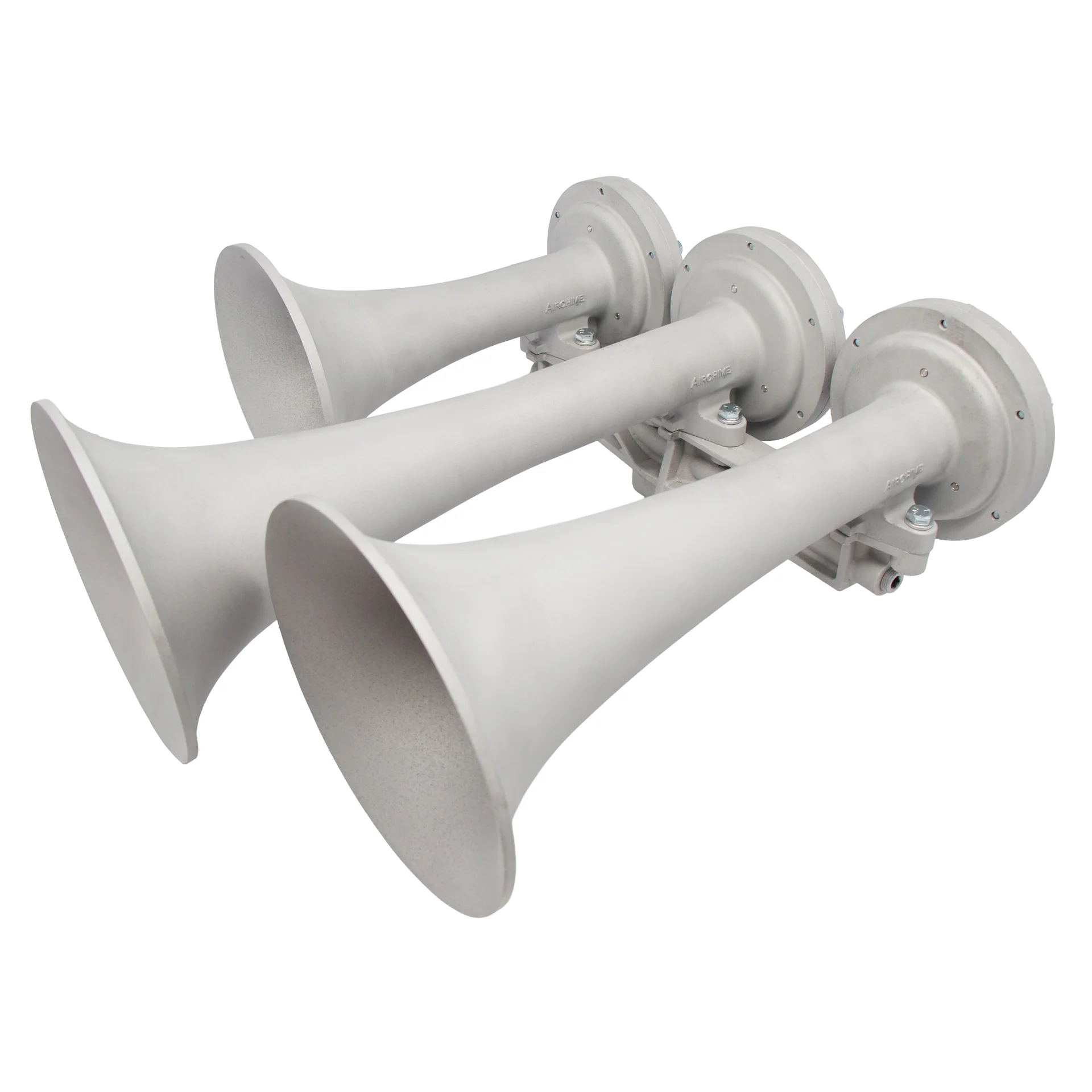
The Nathan AirChime K3HL is the three-chime cousin of the K5HL: the same cast kettle-drum bells, the same high-profile manifold, and the same low KS-1L bell that gives the “HL” horns their dark, growling character. It is the horn found on most Union Pacific AC6000 and AC44 units, per Wikipedia’s Nathan Manufacturing entry. In editorial opinion it is the most interesting K3 for the money, because it delivers a genuinely different chord from the K3LA at a refurbished price that, when in stock, undercuts the reconditioned K3LA HornBlasters sells by a wide margin. Deductions come from the usual locomotive-horn realities: no published decibel figure, no stated warranty on the refurb listing, rotating availability, and a bare horn that still needs a serious air system. We rate it 4.2/5.
What it is
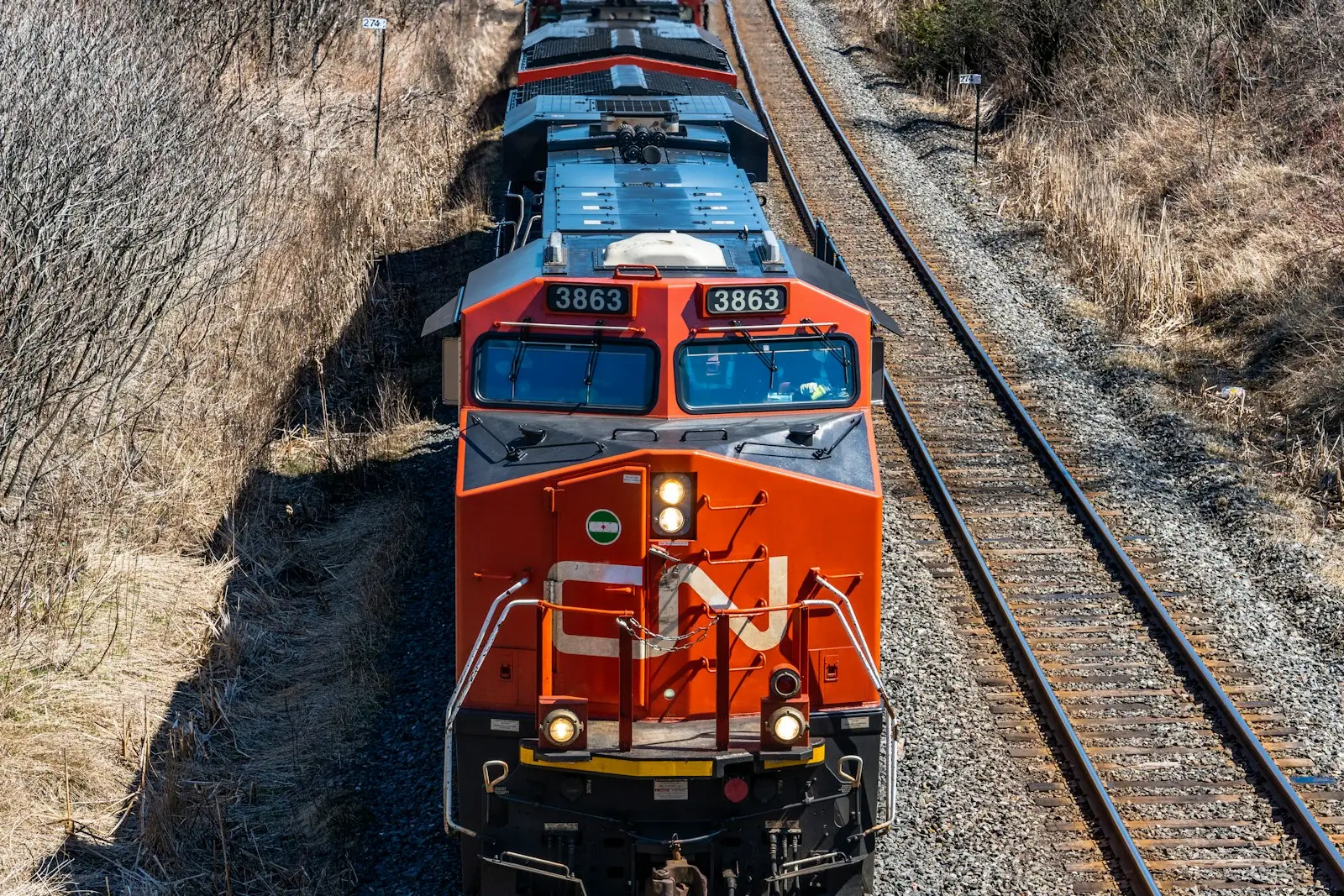
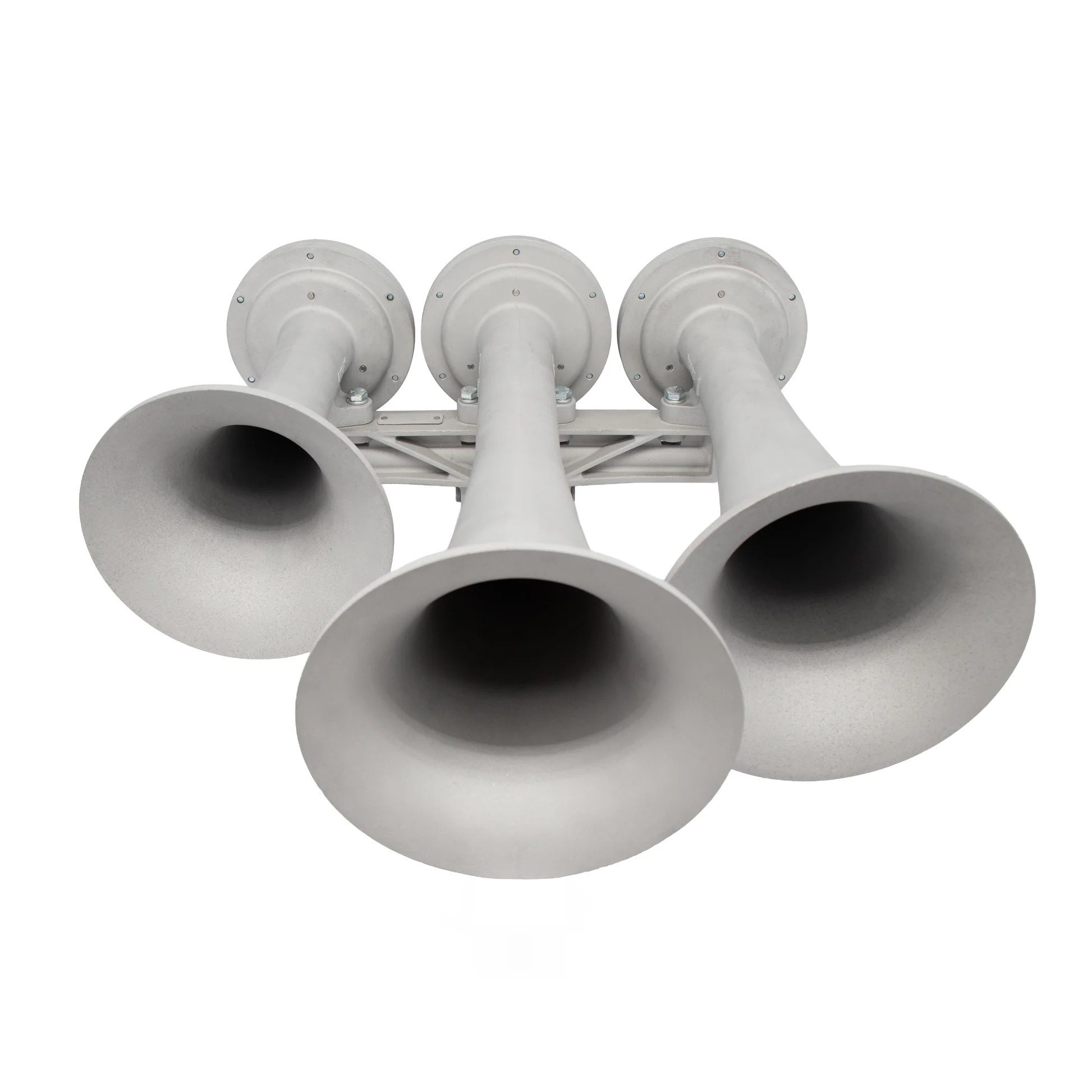
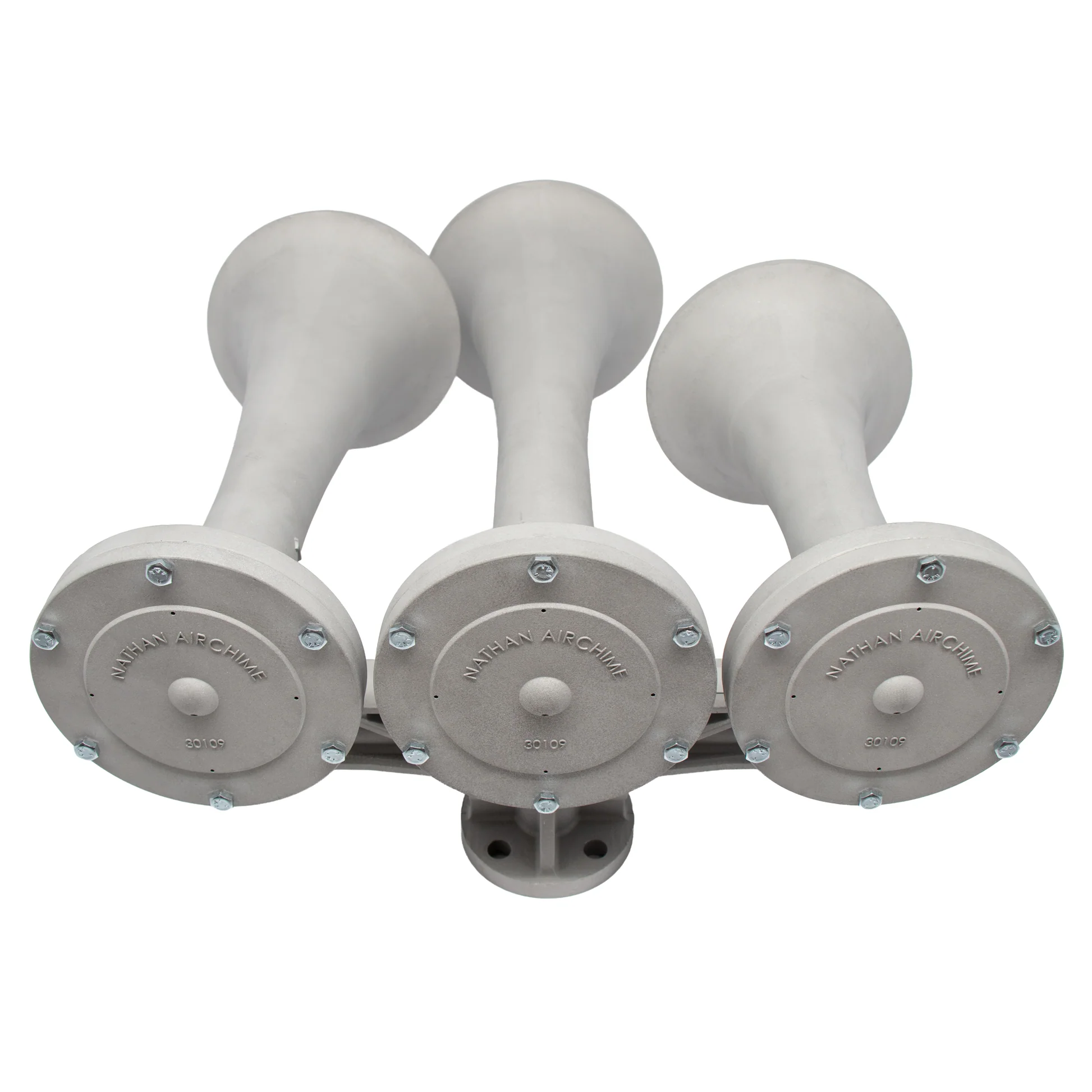
The K3HL is a three-chime cast locomotive air horn from Nathan AirChime, the K-series line first introduced in 1954 with the K5H and K3H. Per Wikipedia’s Nathan Manufacturing entry, the “K” denotes the double-diaphragm kettle-drum bell design, the “3” is the bell count, “H” refers to the high-profile manifold, and the “L” in this case marks the low KS-1L bell. Wikipedia specifically notes the K-3HL is “found on most UP AC6000/AC44,” which is why railfans associate it with big GE road power rather than the commuter cab cars that carry the K3LA.
The unit reviewed here is a refurbished horn sold by Locomotive Parts Supply. LPS describes it as bead-blasted, resurfaced, and “rebuilt with new parts,” with brand-new hardware and internal components, and each chime tested before shipping. It is a standalone horn: manifold and three bells only, with no valve, tank, compressor, or wiring. Who it’s for: collectors, restorers, and custom truck or show-vehicle builders who want the real 2000s-era Union Pacific sound rather than a stamped-trumpet imitation. For the broader picture of the brand’s catalog, see our Nathan AirChime reviews hub.
Specifications
| Spec | Value |
|---|---|
| Type | 3-chime cast locomotive air horn, high-profile manifold |
| Bells | #1L, #1, #2 (KS-1L, KS-1, KS-2) |
| Chord (nominal) | C4 · D♯4 · F♯4 (a diminished cluster on paper) |
| Bell pitches | KS-1 ≈ 311 Hz (D♯4), KS-2 ≈ 370 Hz (F♯4); KS-1L pitched at C4 |
| Operating pressure | 90–140 PSI |
| Air inlet | 1/2” NPT |
| Weight | ~28 lb (LPS listing) |
| Dimensions | 19” L × 20.25” W × 10.75” H (LPS listing) |
| Comparison: HornBlasters reconditioned K3 | 18.25” L × 16.25” W × 9.75” H, 32 lb |
| Sound output | No manufacturer or retailer dB rating published |
| Regulatory context | FRA requires 96–110 dB(A) at 100 ft for in-service locomotive horns |
| Material / finish | Cast metal bells and manifold, bead-blasted (LPS); black powder coat (HornBlasters K3) |
| Condition | Refurbished; new hardware and internals; cosmetic variance disclosed |
| Price | $1,149.95 (LPS, sold out at review); $1,949.99 (HornBlasters reconditioned K3, titled as a K3LA) |
| Warranty | None stated on LPS listing; HornBlasters K3 carries a 5-year manufacturer’s defect warranty |
| Power source | Compressed air (tank + compressor required) |
A few notes on the table. The Hz figures for bells #1 and #2 come from Wikipedia’s Nathan Manufacturing bell chart. The KS-1L is catalogued by the Locomotive Wiki as a C4 bell introduced in 2004, and C4 at concert pitch works out to roughly 262 Hz, though the wiki also notes early two-piece 1L castings played closer to a B. The two dimension rows differ because LPS and HornBlasters measure differently and because HornBlasters’ K3 is titled as a K3LA, which sits on the low-profile manifold; both are quoted verbatim.
- Bells
- #1L / #1 / #2
- Pressure
- 90–140 PSI
- Inlet
- 1/2” NPT
- Weight
- ~28 lb
- Last listed price
- $1,149.95 (refurb)
What’s in the box
- One Nathan AirChime K3HL manifold with three bells (#1L, #1, #2), rebuilt with new hardware and internal components per LPS
- Bead-blasted, resurfaced castings; each chime tested before shipping per LPS
- 1/2” NPT inlet ready for a standard air fitting
That is the entire list. There is no solenoid valve, no air line, no tank, no compressor, no mounting bracket, and no wiring. LPS also states that the listing uses stock photos, that actual castings may carry dings or scratches from service, and that cosmetic differences are not grounds for a return.
Pros
- Genuine Nathan K-series kettle-drum bells, the same platform that voices the K5LA and K5HL on Class I freight power
- Distinct “HL” chord from the low KS-1L bell that no K3LA or aftermarket truck horn reproduces
- Lighter and more compact than a five-chime: three bells, roughly 28 lb, versus about 40 lb for a K5HL
- Wide 90–140 PSI operating window tolerates aftermarket compressors and smaller tanks better than horns that need 140+ PSI
- Refurbished with new hardware and internals rather than sold as-is, at a price well below the reconditioned K3LA HornBlasters sells
- Bells are individually replaceable on the K-series manifold, so the horn can be re-voiced or repaired rather than discarded
Cons
- No decibel rating from Nathan, LPS, or HornBlasters; any “160–170 dB” figure you see on marketplace listings is not sourced
- Sold out at review time; refurb stock depends on locomotive retirements and rotates unpredictably
- LPS states no warranty on the listing, unlike the HornBlasters reconditioned K3’s 5-year coverage
- Stock photography only, with disclosed cosmetic variance and no cosmetic-based returns
- Bare horn: budget roughly another $600–$1,000 for a 5- to 8-gallon 150 PSI onboard air system and a 1/2” valve kit to feed it
- Chord varies by KS-1L casting vintage (two-piece vs. one-piece bells), so two K3HLs may not sound identical
Alternatives
- Nathan AirChime K3LA: the “American-tuned” three-chime with bells #1, #2, and #4A that plays a major chord and lives on Metra cab cars and commuter EMUs. Same platform, friendlier sound, currently $1,949.99 reconditioned at HornBlasters. See our K3LA review.
- Nathan AirChime K5HL: the five-chime version of the same idea, bells #1L through #4, listed at $1,699.95 by LPS when in stock. Darker, bigger, roughly 40 lb, and hungrier for air. See our K5HL review.
- Nathan AirChime K3HA: LPS’s other three-chime refurb, bells #1, #2, and #4A on the high manifold, last listed at $899.95 and also sold out at review. Effectively a K3LA voicing on a taller mount for buyers who want the major chord at an even lower refurbished price.
For the wider decision between three and five bells, our K3LA vs. K5LA comparison covers the size, weight, and air math that applies equally to the HL horns.
Install / compatibility notes
The K3HL is a locomotive appliance, and it wants locomotive-class air. LPS rates it for 90 to 140 PSI, and Wikipedia’s train-horn overview puts typical locomotive supply at 125 to 140 PSI, so plan the system around the top of that range if you want the full voice. In practice that means:
- Air supply. A 5-gallon or larger tank and a 150 PSI-class compressor are the realistic floor for repeated blasts; a 1-gallon truck-kit tank will give you a one-second bark and a long recharge. Our tank sizing guide walks through the math.
- Valve. The 1/2” NPT inlet should be fed by a 1/2” solenoid valve on a short, large-bore line. Necking down to 1/4” line starves the diaphragms and softens the chord. See air line sizing.
- Mounting. At roughly 28 lb on a 19” by 20” footprint, this needs a frame or roof-rack bracket, not a bumper tab. Locomotive horns bolt down through the manifold flange, so fabricate or buy a bracket that spreads the load.
- Electrical. The horn itself has no electrical parts; the valve and compressor do. Fuse and relay the compressor circuit properly per our relay wiring guide.
- Legal use. A K-series horn is far beyond what state vehicle codes tolerate on public roads. HornBlasters’ own testing page calls the Nathan K5 platform’s 149.4 dB at 3 ft “the absolute ceiling for horn loudness.” Treat the K3HL as off-road, marine, agricultural, or display equipment and check state legality before wiring it to a horn button.
On sound: The Horn King’s “Low Pressure K3HL Test” video is a useful reality check because it runs the horn below its rated window and lets you hear how the chord thins out; the same channel’s “Brand New Late 2022 K3HL” demo shows a current-production unit at full pressure, and UPking’s K3HL compilation captures the horn in service on Union Pacific power. None of these are calibrated measurements, and we cite them only for the character of the sound.
Because LPS uses stock photos and ships whichever refurbished core is on the shelf, ask which KS-1L casting your unit carries if the exact chord matters to you. The Locomotive Wiki notes early two-piece 1L bells play a B while later one-piece bells play a C, which changes the K3HL from a near-major color to the flat diminished cluster most railfans associate with modern UP units.
Sources
- Locomotive Parts Supply — Nathan Airchime K3HL Locomotive Train Horn — bells #1L/#1/#2, 90–140 PSI, 1/2” NPT, ~28 lb, 19” × 20.25” × 10.75”, $1,149.95 price, sold-out status, refurbishment process, stock-photo and cosmetic-variance disclosure, no dB or warranty stated
- Locomotive Parts Supply — Nathan Airchime K3HA Locomotive Train Horn — K3HA alternative: bells #1/#2/#4A, $899.95, sold out, same refurb process
- Locomotive Parts Supply — Nathan Airchime K5HL Locomotive Train Horn — K5HL alternative: bells #1L/#1/#2/#3/#4, $1,699.95, sold out, approx. 40 lb, 90–140 PSI
- HornBlasters — Nathan AirChime K3 Train Horn (AH-K3) — corroborating reconditioned K3 (page titled “Nathan AirChime K3LA Train Horn”): $1,949.99, in stock, 18.25” × 16.25” × 9.75”, 32 lb, 1/2” NPT, sandblast + black powder coat, new diaphragms/diffuser rings/cushion rings, 5-year defect warranty, horn-only
- HornBlasters — 12-Volt Onboard Air Systems — 5-gallon 150 PSI system $599.99 and 8-gallon 150 PSI system $819.99; 1/2” valve kit $159.99 shown as add-on on the K3 listing, backing the $600–$1,000 air-system budget
- HornBlasters — Why Fake Decibel Ratings Mislead Buyers — Nathan K5 platform measured 149.4 dB at 3 ft as the practical ceiling; test-distance framing for dB claims
- Wikipedia — Nathan Manufacturing — K-series introduced 1954 as K5H/K3H, kettle-drum double-diaphragm design, H/L manifold designations, K-3HL on Union Pacific AC6000/AC44 units, bell pitch chart (KS-1 D♯4 311 Hz, KS-2 F♯4 370 Hz), sand-cast vs. die-cast history
- Locomotive Wiki — Nathan AirChime K-series Air Horns — KS-1L bell pitched at C4 and introduced 2004, K3H/K3LA bell sets, two-piece vs. one-piece 1L bell tuning, reversible bells, K5HL chord
- Wikipedia — Train horn — typical locomotive horn operating pressure of 125–140 PSI
- Cornell LII — 49 CFR § 229.129 Locomotive horn — FRA minimum 96 dB(A) and maximum 110 dB(A) measured 100 ft forward of the locomotive
- YouTube — Low Pressure K3HL Test (The Horn King) — sound demonstration below rated pressure
- YouTube — Brand New Late 2022 K3HL Nathan Airchime (The Horn King) — current-production K3HL demonstration
- YouTube — Nathan K3HL Train Horn Compilation (UPking) — in-service recordings on Union Pacific locomotives
Train Horn Hub aggregates publicly available data. We do not test products in-house. All trademarks belong to their respective owners.
The right pick for a collector or custom-vehicle builder who specifically wants the dark Union Pacific 'HL' three-chime sound at a refurbished price well below a reconditioned K3LA — provided a refurbished unit is in stock and you already have locomotive-class air behind it.
Frequently asked questions
Quick answers to the questions people ask most about this topic.
- How loud is the Nathan K3HL?
- Neither Nathan, Locomotive Parts Supply, nor HornBlasters publishes a decibel figure for the K3HL. For context, HornBlasters reports the Nathan K5 platform at 149.4 dB at 3 ft as the practical ceiling for any horn, and the FRA requires in-service locomotive horns to measure 96–110 dB(A) at 100 ft. Any '160–170 dB' figure on a marketplace listing is unsourced.
- What chord does the K3HL play?
- It uses bells #1L, #1, and #2, which the Locomotive Wiki and Wikipedia catalog as C4, D♯4 (≈311 Hz), and F♯4 (≈370 Hz) — a diminished cluster on paper. Early two-piece KS-1L castings play closer to a B, so the exact color varies by bell vintage.
- How is the K3HL different from the K3LA?
- Both are three-chime Nathan K horns, but the K3LA uses bells #1, #2, and #4A for a major chord, while the K3HL swaps in the low #1L bell for a darker, growling sound. The K3HL is associated with Union Pacific GE road units; the K3LA with Metra cab cars and commuter EMUs.
- What does the K3HL cost and what is included?
- Locomotive Parts Supply last listed a refurbished K3HL at $1,149.95, though it was sold out at review time. That buys the manifold and three bells only; no valve, tank, compressor, bracket, or wiring is included. HornBlasters sells a reconditioned AirChime K3 for $1,949.99 with a 5-year defect warranty; its page title identifies it as a K3LA.
- What air system does the K3HL need?
- LPS rates it for 90–140 PSI through a 1/2-inch NPT inlet. Plan on a 5-gallon or larger tank, a 150 PSI-class compressor, and a 1/2-inch solenoid valve on short large-bore line to get the full chord and more than a one-second blast.